

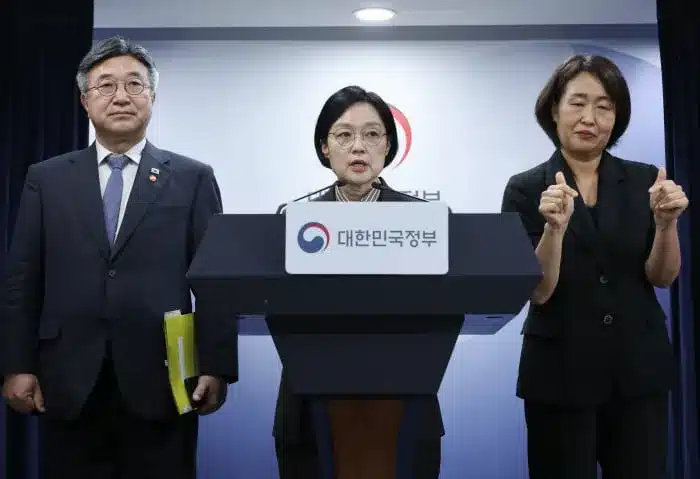
The South Korean government is set to expedite the relocation of public institutions, with a comprehensive plan announced to streamline operations and foster regional development. Prime Minister Han Duck-soo revealed the initiative, emphasizing a swift and decisive approach to moving central government agencies and public organizations out of the Seoul metropolitan area. This plan aims to consolidate functions, reduce redundancies, and inject vitality into regional economies.
Phased Relocation and Consolidation of Public Institutions
The government’s strategy, outlined in the ‘Public Institution Functional Integration Promotion Plan – Public Institution DIET 2026,’ involves a significant overhaul of the current administrative landscape. A key component is the consolidation of affiliated organizations. For instance, the Korea Sports Promotion Foundation (KSPO), a subsidiary of the Ministry of Culture, Sports and Tourism, will merge with Korea Leisure Industry Development. Similarly, the Taekwondo Promotion Foundation will be integrated with Taekwondo Won. These mergers are designed to streamline organizational structures, reduce operational costs, and enhance management efficiency.
Prime Minister Han Duck-soo stated, “We will proceed with the relocation of public institutions in the capital region with a sense of urgency.” He further elaborated that plans for relocating approximately 350 public institutions in the Seoul area would be announced in the fourth quarter of this year, with the actual relocation commencing in 2027. This phased approach is intended to minimize disruption while maximizing the benefits of decentralization.
Focus on Regional Growth and Innovation Cities
A central tenet of the relocation policy is to concentrate development in designated innovation cities, moving away from a ‘dividing and sharing’ distribution model. This strategy seeks to harness the concentrated power of regional hubs to drive innovation and economic growth. The Ministry of Land, Infrastructure and Transport is spearheading efforts to identify suitable locations, considering factors such as existing innovation clusters and development potential. This groundwork, initiated last year, includes surveys and consultations with local governments to formulate a rational relocation blueprint.
The government has pledged to thoroughly consider diverse opinions from local governments, labor unions, and other stakeholders to create a relocation plan that garners broad consensus. To support the transition, relocation expenses and residential support costs for affected institutions will be significantly increased. Furthermore, the government committed to a substantial improvement in living conditions, including education and healthcare facilities, in the designated relocation areas.
Streamlining Operations and Enhancing Competitiveness
Beyond relocation, the government plans to aggressively reform the functions of public institutions. This includes strategic restructuring for enhanced global competitiveness, the integration of similar or overlapping functions, and the consolidation of smaller institutions. The goal is to reduce the number of public institutions by up to 109, creating a more efficient and agile administrative framework.
Job security for public institution employees will be guaranteed, alongside enhanced welfare benefits and incentives, including comprehensive support packages. The overarching objective is to alleviate the excessive concentration of population and economic activity in the capital region, unlock the growth potential of local areas, and usher in an era of balanced and equitable national development.
Minister of Land, Infrastructure and Transport Kim Hyun-mee echoed this sentiment, stating, “We will minimize the concentration of public institutions in the capital region. Any institution that is not essential to remain in the capital will be included in the relocation targets.”
Accelerated Relocation and Support Measures
The plan emphasizes swift action, with a focus on consolidating functionally related institutions in designated areas. Unlike the first phase of relocation, which awaited new construction, this phase will begin immediately by utilizing existing private buildings and implementing pilot relocations starting next year. Institutions that relocate faster and further will receive enhanced support. Practical housing support measures will be developed for institutions undergoing rapid relocation to new living environments.
A rational relocation plan is expected to be finalized and announced within the year. This initiative extends to sports-related public institutions, which have long been subject to relocation rumors. The Korea Sports Promotion Foundation, the Korean Sport & Olympic Committee, and the Korea Paralympic Committee are among those being considered for relocation to innovation cities, with Chungju in Chungcheongbuk-do emerging as a strong candidate due to its proximity to the national team training center.
Challenges and Considerations for Sports Organizations
The relocation policy presents unique challenges for sports organizations. The integration of KSPO and Korea Leisure Industry Development, and the Taekwondo Promotion Foundation with Taekwondo Won, aims for organizational efficiency and cost savings. However, the potential dispersal of sports organizations from Seoul raises questions about their operational effectiveness and the impact on national sports diplomacy.
Organizations like the Korean Sport & Olympic Committee (KOC) and the Korea Paralympic Committee (KPC), currently located within the Olympic Park in Seoul, benefit from their proximity to historical venues and a concentration of sports-related entities. This synergy fosters collaboration and efficiency. Moving these organizations to regional centers might disrupt existing cooperative frameworks and affect their international engagement capabilities.
The KOC, for example, has established training and education centers in various regional locations, including Chungju, Pyeongchang, and Jangheung. The current concentration in Seoul facilitates seamless communication and cooperation with these regional branches. Furthermore, the symbolic significance of these organizations being housed in facilities built with the legacy of the 1988 Seoul Olympics and Paralympics holds considerable meaning for the sports community.
While the government’s objective of regional revitalization is acknowledged, concerns exist regarding the practical implications for sports organizations. The efficiency gained from co-location within Olympic Park, where various sports federations and related bodies operate in close proximity, is substantial. This close collaboration is crucial for swift decision-making and problem-solving, particularly in cases of incidents or emergencies within affiliated sports federations.
The International Olympic Committee (IOC) also maintains close ties with International Federations (IFs) in Lausanne, Switzerland, fostering a collaborative environment. The existing decentralized network of sports facilities and centers across South Korea, established by the KOC, highlights a precedent for regional presence. However, the strategic importance of Seoul as a hub for international sports diplomacy and the administrative functions housed within the Olympic Park warrants careful consideration to ensure the continued effectiveness of South Korea’s sports governance and international relations.
A related official noted, “While we cannot oppose the government’s policy aimed at revitalizing local areas, the relocation of organizations like KSPO and KOC, which were established with the legacy of the Seoul Olympics and are currently operating from the historic Olympic Park, holds significant meaning for athletes and sports officials. Their current location enhances both work efficiency and national pride.” This sentiment underscores the complex balance between national decentralization goals and the specific operational and symbolic needs of the sports sector.
