

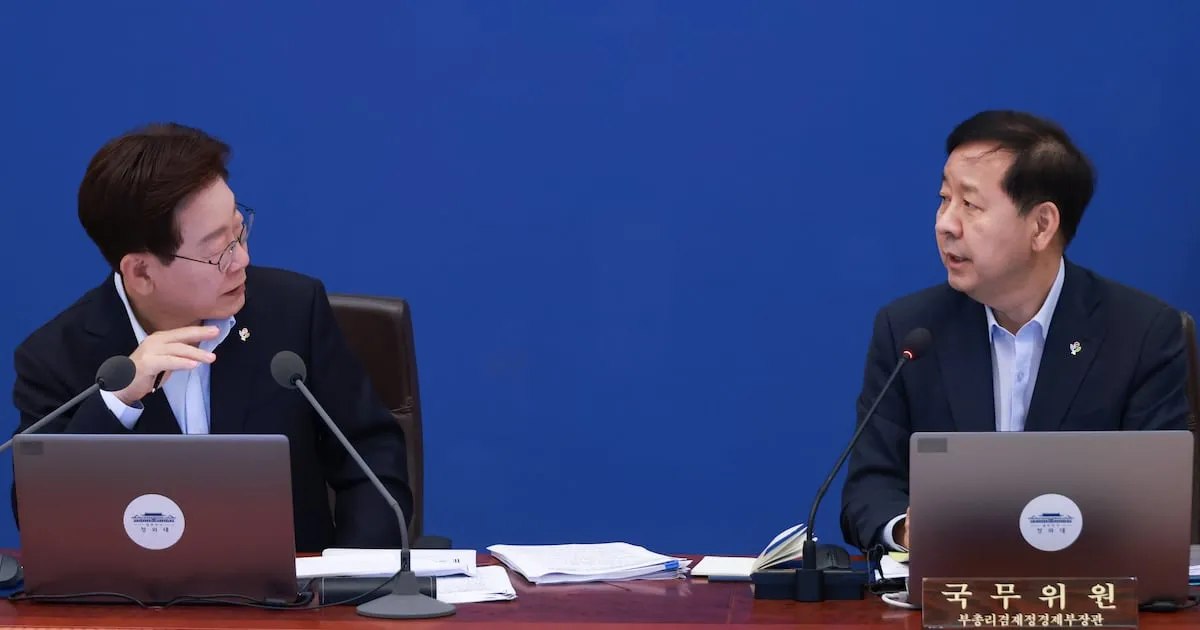
Amidst significant public opposition to the government’s proposed property tax revisions, President Yoon Suk Yeol made a remark to Finance Minister Choo Kyung-ho, suggesting he “just walk hunched over.” This comment, made during a National Assembly session, was interpreted as advice for the minister to adopt a more humble demeanor in light of negative public sentiment. However, the exchange has drawn criticism, with some arguing that the lighthearted banter between high-ranking officials trivializes the public’s concerns regarding tax burdens.
Government’s Stance on Tax Reform
Minister Choo Kyung-ho addressed the recent controversy surrounding the proposed tax changes, outlining the government’s approach during the legislative pre-announcement period. He clarified that the current proposals are not the final version and that the period from August 3rd to August 20th is designated for public input. “We will thoroughly review the opinions submitted by citizens on the tax bills we have proposed, make further adjustments, and then submit them to the National Assembly,” Choo stated. He emphasized the government’s commitment to actively incorporating and reflecting public feedback during this period, and further refining the proposals during parliamentary deliberations to enhance their completeness.
President Yoon’s “Hunched Over” Remark
President Yoon Suk Yeol, acknowledging the strong public backlash against the tax revisions, directed his remark to Minister Choo. “The Minister of Economy and Finance must understand this. Anyone who touches taxes will inevitably be cursed at,” the President said. He continued, “Those who benefit from the changes will remain silent, but those who face increased burdens will vehemently oppose them. Therefore, you must just walk hunched over.” Minister Choo responded with a laugh, saying, “Yes, I understand.”
The President’s comment, suggesting a posture of humility or perhaps resignation in the face of public discontent, has been interpreted in various ways. While some see it as a candid acknowledgment of the political difficulty involved in tax policy, others view it as dismissive of the genuine anxieties of taxpayers. The phrase “walk hunched over” implies enduring criticism and potential backlash, a sentiment that resonates with the current public mood concerning the proposed tax adjustments.
Widespread Opposition to Tax Proposals
The government’s proposed tax reform has ignited opposition not only from real estate owners but also from diverse demographic groups. This includes married couples who jointly own a single home, younger individuals who have invested in Individual Savings Accounts (ISAs), and others concerned about tax fairness and excessive tax burdens. Public opinion surveys indicate a significant level of discontent.
According to a survey conducted by the polling firm Real Research, 43.9% of respondents opposed the government’s real estate tax revision plan, while only 37.9% supported it. This indicates a 6.0 percentage point gap favoring opposition. The opposition was particularly pronounced in Seoul, a key region for real estate policy, where 45.3% opposed the plan compared to 36.7% in favor, a difference of 8.6 percentage points. Strong opposition was also observed among younger demographics (20s and 30s) and those without strong party affiliations, with 55.9% opposing and only 17.0% supporting the proposals.
Criticism of Official Response
In light of this widespread public dissatisfaction, the casual exchange between the nation’s top leader and a key cabinet minister during an official parliamentary session has faced sharp criticism. Critics argue that framing the tax resistance as simply the inevitable “curses” one receives for “changing taxes” and making light of it with laughter trivializes the public’s financial hardships and their anxieties. This perceived nonchalance from the highest levels of government has led to accusations that the administration is not taking the public’s tax-related grievances seriously.
Context of Property Tax Policy
The government’s proposed tax revisions are part of a broader effort to adjust fiscal policies. Historically, property taxes have been a sensitive issue, directly impacting household wealth and financial stability. Changes to these taxes often elicit strong reactions, as they can significantly alter the financial landscape for homeowners and investors alike. The current proposals appear to have touched upon sensitive areas, leading to the broad-based opposition observed in recent surveys.
The government’s stated intention is to gather public opinion and refine the proposals. However, the public’s reaction, amplified by the seemingly flippant exchange between the President and the Finance Minister, suggests a significant disconnect between the administration’s perception of the issue and the public’s lived experience. Moving forward, the government faces the challenge of not only revising the tax laws but also rebuilding public trust and demonstrating a genuine understanding of the economic pressures faced by its citizens.
Conclusion
The remarks made by President Yoon and Minister Choo during the National Assembly session have inadvertently highlighted the contentious nature of the proposed property tax reforms. While the government emphasizes its commitment to public consultation, the public perception, fueled by the officials’ exchange, leans towards a feeling of being unheard or underestimated. Addressing this sentiment will be crucial for the successful implementation of any tax policy changes and for maintaining public confidence in the government’s economic stewardship.
