

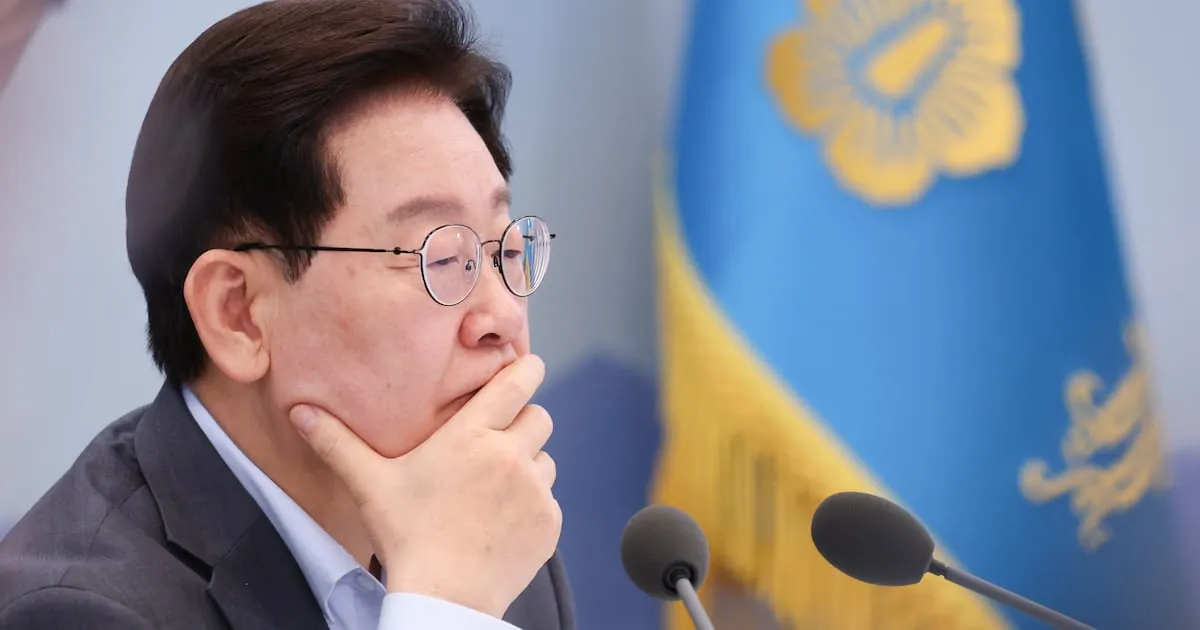
The head of a national police officers’ union has stated that remarks made by President Lee regarding the revised Criminal Procedure Act have caused deep emotional wounds among frontline police officers. Min Gwan-gi, the head of the National Police Directors Association (Police Directors Association), expressed his dismay on October 6th, following President Lee’s comments at a National Assembly session where the president reportedly stated, “Although I have been a lawyer for a long time, I cannot trust police investigations, let alone prosecutorial investigations.”
President’s Comments Spark Outrage Among Police
Min Gwan-gi emphasized that the President’s words were not merely a personal opinion. He acknowledged that if there were instances of flawed investigations, accountability should be pursued and corrections made. However, he argued that making such a statement publicly, suggesting a general distrust of police investigations based on isolated incidents or a few officers, was inappropriate for the nation’s highest leader and required greater caution.
“The President’s remarks, which can be interpreted as a lack of trust in police investigations at a time when investigations and indictments are clearly separated under the Korean Criminal Procedure Act system, can cause confusion and anxiety among the public regarding the criminal justice system,” Min stated.
Highlighting Police Dedication and Sacrifice
Min further highlighted the significant contributions and sacrifices made by countless frontline police officers in establishing South Korea as a global leader in public safety. He asserted that the dedication and hard work of the majority of officers, who continue to do their utmost to protect citizens’ lives and safety, should not be undermined.
“A single word from the President can carry more weight than an order for frontline officers, and it can also shatter the pride they have maintained throughout their careers,” Min explained. “The words of the nation’s top leader must not only contain clear directives but also demonstrate respect and trust towards the many officers who diligently serve the public.”
Context of the Criminal Procedure Act Reform
The revised Criminal Procedure Act, set to take effect on October 2nd, will eliminate the direct investigation and supplementary investigation rights of the prosecution. Under the new system, the police will be responsible for investigating most cases, including those involving allegations of injury, assault, and complaints or reports.
The President’s earlier directive, made during briefings from the Ministry of the Interior and Safety and the Ministry of Justice the previous day, urged preparations for a surge in serious crime investigations without limitations, and measures such as a plan for handling cases of police corruption. This directive was made in the context of the upcoming shift in investigative powers.
Broader Implications for Public Trust
The Police Directors Association’s strong reaction underscores the deep-seated concerns within the police force regarding public perception and the integrity of their investigative processes. The union leadership believes that public statements questioning the reliability of police investigations can have a detrimental effect on the public’s confidence in the entire criminal justice system.
Min Gwan-gi’s statement serves as a call for greater recognition of the police’s role and responsibilities, particularly as they assume a more central position in criminal investigations following the legislative changes. The union’s stance emphasizes the importance of fostering a relationship built on trust and respect between the government, the public, and law enforcement agencies.
The union’s position is that while accountability for misconduct is essential, broad generalizations that cast doubt on the entire police force are counterproductive and demoralizing. They advocate for a balanced approach that acknowledges the challenges and complexities of police work while upholding the professionalism and dedication of the vast majority of officers.
The upcoming implementation of the revised law marks a significant transition in South Korea’s legal landscape, and the debate surrounding the President’s remarks highlights the sensitive nature of public trust in law enforcement and the judiciary during such periods of change.
