

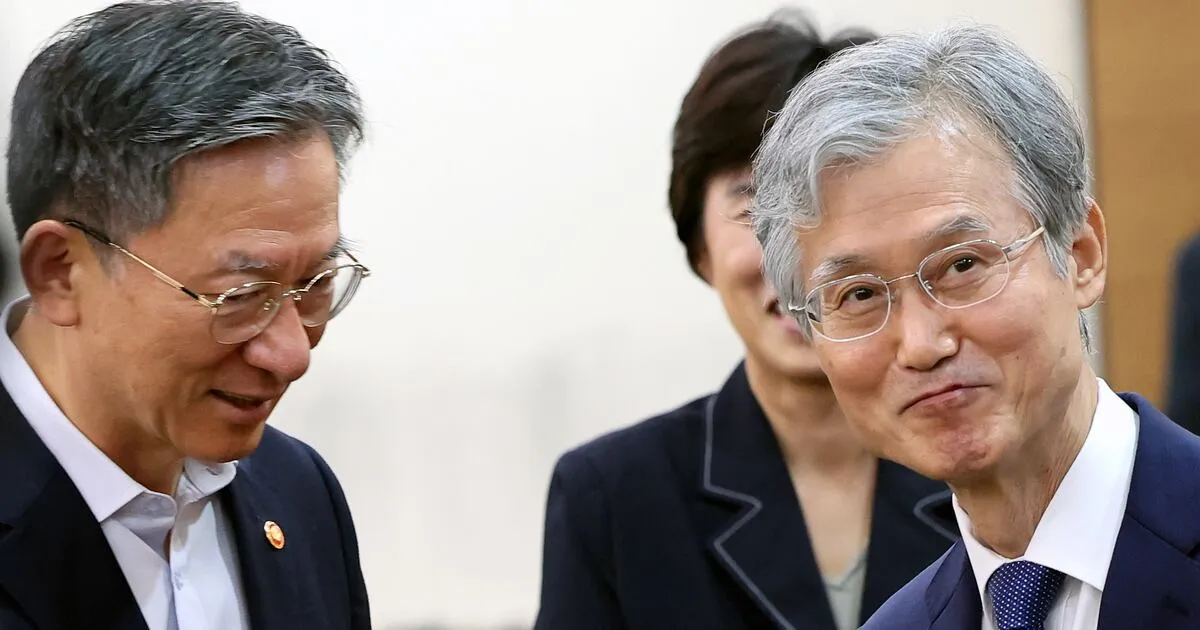
Justice Minister Jeong Seong-ho has voiced significant concerns regarding the recently revised Criminal Procedure Act, particularly its implications for prosecutorial investigation rights. He stated on April 4th that the changes, which effectively abolish the prosecutor’s right to initiate investigations in certain cases, are likely to lead to numerous problems. Minister Jeong suggested that if prosecutors are unable to complete investigations adequately due to the altered legal framework, judges would need to re-examine cases and conduct their own investigations.
Concerns Over Revised Criminal Procedure Act
The revised Criminal Procedure Act was deliberated and passed by the National Assembly on the same day, reportedly under the initiative of President Lee Jae-myung. Minister Jeong made his remarks during a meeting with other committee members prior to a hearing for Supreme Court Justice candidates at the Supreme Court in Seocho-gu, Seoul. The Supreme Court Justice Recommendation Committee consists of ten members, including the Justice Minister as an ex-officio member.
Minister Jeong expressed his apprehension, noting that the legislation was amended at an exceptionally rapid pace, describing it as being done “at the speed of light.” He emphasized the future challenges, stating, “What will happen next is the problem.” He further elaborated on the need for meticulous procedures to ensure that the principle of proportionality is not undermined. “Even with such a complete change, if only a few supplementary investigations are conducted (and the law is amended), how will we handle the repercussions?” he questioned, highlighting the potential for unforeseen negative consequences.
Acknowledging the political context, Minister Jeong added, “Given the Democratic Party’s position, I cannot say much more.” As a current member of the National Assembly, Minister Jeong did not participate in the plenary session vote on the bill held on March 31st.
Potential Ramifications of Investigation Right Abolition
Minister Jeong has previously expressed, both directly and indirectly, his belief that abolishing the prosecutor’s supplementary investigation rights could make it more difficult to determine the truth of criminal cases and potentially exacerbate the problem of criminals evading justice. He reiterated these concerns on April 3rd, following a press conference after the appointment of new prosecutors at the Government Complex in Gwacheon. At that time, he remarked to reporters, “This is the first time the Criminal Procedure Act has been revised at such a rapid speed.” He added, “If unforeseen side effects or problems arise, we must respond swiftly to rectify them.”
Background of the Legislative Change
The legislative push to reform the prosecution’s investigative powers has been a significant political issue. Proponents of the reform argued that it was necessary to balance power within the justice system and prevent potential abuses. The aim was to shift more investigative authority to the police, thereby creating a system where the prosecution’s role would focus more on indicting and overseeing cases rather than conducting primary investigations.
However, critics, including Minister Jeong, have raised alarms about the speed and manner of the revision. Their primary concern centers on the potential for a decline in the thoroughness of investigations. The argument is that prosecutors, with their specialized training and experience, are crucial in complex cases that require in-depth examination. Removing or significantly curtailing their ability to conduct supplementary investigations could leave gaps in evidence gathering, potentially leading to wrongful acquittals or making it harder to secure convictions in difficult cases.
The Role of Prosecutors and Judges
The debate touches upon the fundamental roles of different branches within the legal system. Prosecutors are tasked with investigating crimes, gathering evidence, and bringing charges. Judges, in turn, preside over trials, ensuring fairness and determining guilt or innocence based on the evidence presented. The revised law, by limiting prosecutorial investigation powers, implicitly places a greater burden on the police for initial investigations and potentially on the courts to ensure that all necessary investigative steps are taken, even if it means judges having to play a more active role in scrutinizing the investigative process itself.
Minister Jeong’s comments underscore a sentiment that the legislative process may have outpaced a full understanding of its practical consequences. His analogy of needing judges to “re-examine and investigate” suggests a concern that the new law might necessitate a judicial intervention in the investigative phase that is not typically part of a judge’s role, potentially blurring lines of responsibility and efficiency.
Future Outlook and Potential Adjustments
The Justice Minister’s candid remarks signal ongoing debate and potential challenges in implementing the revised law. While the legislation has passed, the practical application and its effectiveness will likely be subject to continuous scrutiny. The call for swift responses to any emerging issues suggests an openness, at least from the Ministry of Justice, to making necessary adjustments or supplementary measures to mitigate any negative impacts.
The coming months will be critical in observing how the prosecution service, the police, and the judiciary adapt to the new legal landscape. The effectiveness of the revised Criminal Procedure Act in achieving its intended goals while minimizing unintended consequences remains a key question for the South Korean legal system.
