

South Korea’s economy is showing strong potential for achieving a 3% annual growth rate and a per capita Gross National Income (GNI) of $40,000 this year, according to a senior government official. This optimistic outlook comes on the heels of a robust second-quarter GDP performance, signaling sustained economic momentum.
Economic Performance and Growth Projections
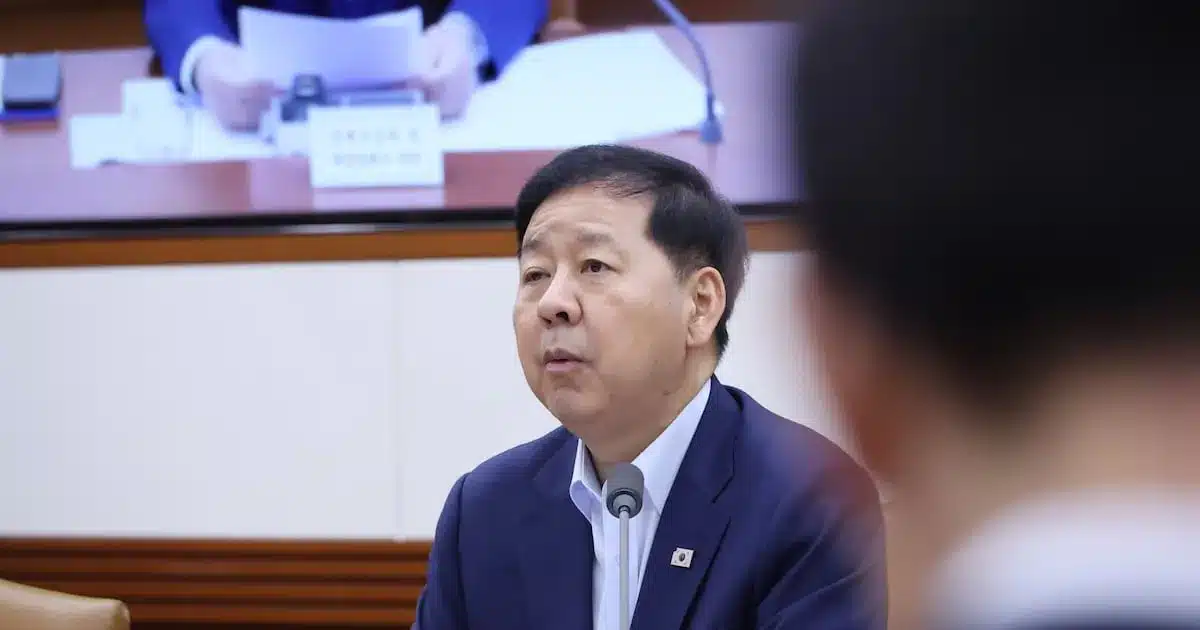
Goo Yoon-cheol, Deputy Prime Minister and Minister of Economy and Finance, expressed confidence in the nation’s economic trajectory. Speaking at a meeting of the Living Economy Special Management Task Force on July 24th, he highlighted the 0.6% quarter-on-quarter GDP growth recorded in the second quarter, as announced by the Bank of Korea the previous day. This figure follows a solid performance in the first quarter, indicating a persistent growth momentum.
“The growth momentum is continuing strongly, following the first quarter,” Goo stated. He further elaborated on the government’s ambitious “3-4-5 Vision,” which aims to achieve a 3% growth rate, strengthen exports, and reach a per capita GNI of $50,000. While the immediate focus is on the $40,000 GNI target for this year, the broader vision underscores the government’s commitment to sustained economic advancement.
Navigating Global Challenges: Geopolitical Risks and Economic Stability
The Deputy Prime Minister acknowledged the escalating geopolitical tensions, particularly the renewed conflict in the Middle East. He recognized that such developments could lead to increased global oil prices and heightened market volatility, posing potential challenges to inflation and supply chains.
“As there is a possibility of facing difficulties in terms of prices and supply chains due to the escalation of the Middle East conflict, which could lead to rising international oil prices and increased volatility, we will maintain a high level of vigilance and prepare thoroughly,” Goo assured. The government is committed to not letting down its guard and is actively preparing contingency plans to mitigate the impact of these external shocks.
Strengthening Economic Resilience and Policy Effectiveness
In response to the challenges posed by geopolitical instability, Goo emphasized the government’s proactive approach to reinforcing its economic defense mechanisms. He indicated that the government would actively improve institutional frameworks that have been identified and strengthened during the response to the Middle East conflict.
The objective is to enhance the effectiveness of supply chain response systems and price stabilization policies. By learning from recent experiences and making necessary adjustments, South Korea aims to build a more resilient economy capable of withstanding external pressures. This includes strengthening cooperation with international partners and diversifying supply sources to reduce dependency on single markets.
Key Policy Areas for Economic Stability
The government’s strategy involves a multi-pronged approach to ensure economic stability:
- Monitoring Global Markets: Close observation of international oil prices and commodity markets to anticipate and respond to potential disruptions.
- Supply Chain Diversification: Exploring new sourcing options and strengthening partnerships with reliable suppliers to ensure the steady flow of essential goods and raw materials.
- Inflation Control Measures: Implementing targeted policies to manage price pressures and protect consumers from excessive cost increases. This may include temporary subsidies or tax adjustments on essential goods.
- Export Promotion: Continuing efforts to boost national exports through trade agreements, market development initiatives, and support for export-oriented industries. A strong export sector is crucial for achieving the overall growth targets.
- Fiscal Prudence: Maintaining a balanced approach to government spending and revenue generation to ensure long-term fiscal sustainability, even amidst efforts to stimulate growth.
Looking Ahead: Sustaining Growth and Achieving National Goals
The positive economic indicators and the government’s proactive policy stance suggest a favorable outlook for South Korea’s economy. The focus remains on leveraging the current growth momentum while diligently preparing for potential headwinds. The pursuit of the “3-4-5 Vision” signifies a long-term commitment to enhancing national prosperity and global economic standing.
Achieving the $40,000 per capita GNI milestone would represent a significant economic achievement for South Korea, reflecting years of industrial development, technological innovation, and strategic economic planning. The government’s commitment to addressing both domestic growth drivers and external risks is crucial for realizing these ambitious national objectives and ensuring continued economic well-being for its citizens.
