

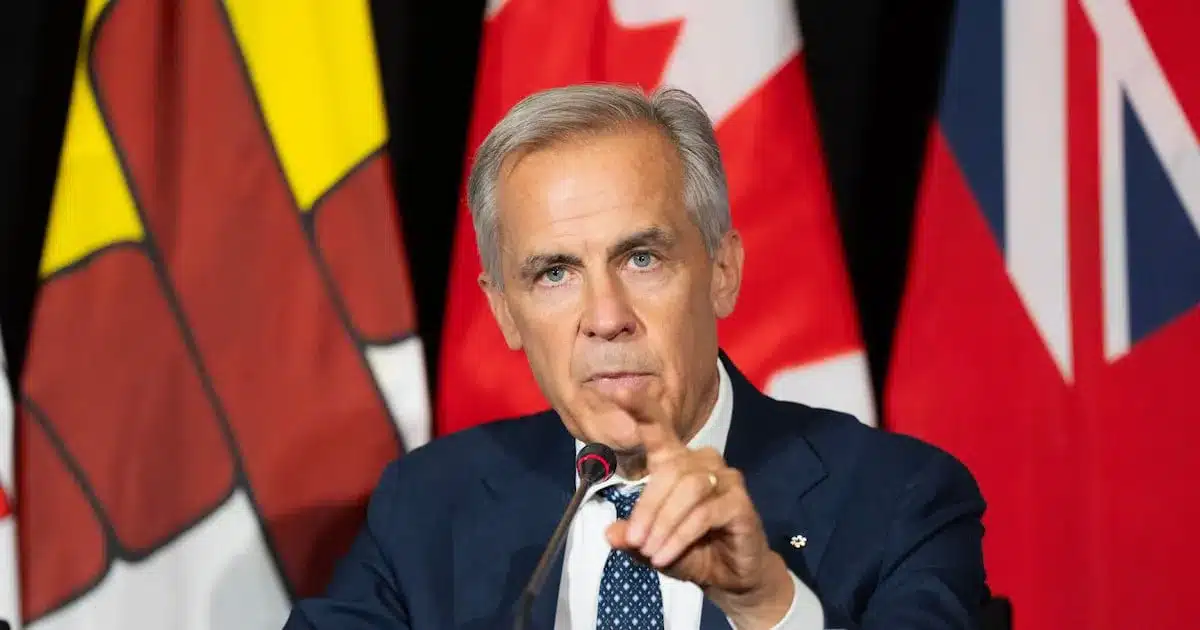
Canadian Prime Minister Justin Trudeau is reportedly exploring all possible responses should the United States impose a threatened 50% tariff on Canadian goods. The potential tariff, announced by former U.S. President Donald Trump, looms over ongoing trade negotiations between the two North American nations.
Canada Reviewing All Options in Trade Dispute
Speaking to reporters in Charlottetown, Prince Edward Island, after concluding a meeting with provincial leaders, Prime Minister Trudeau stated that if a trade agreement with the U.S. cannot be reached, “all options are on the table.” While Trudeau did not elaborate on specific retaliatory measures Canada might consider, his remarks signal a firm stance in the face of potential U.S. protectionist actions. The Prime Minister emphasized that negotiations are currently underway, covering all existing tariffs and trade measures between the two countries.
When questioned whether Trump’s tariff threat was a tactic to secure a better deal or a genuine negotiation strategy, Trudeau indicated it could be both. He referenced historical U.S. trade negotiations, noting that such discussions often have deadlines and can involve significant tariff levels.
Background of the Proposed U.S. Tariffs
The proposed 50% tariff by the former U.S. President Trump, citing Section 338 of the U.S. Tariff Act of 1930—a law enacted during the Great Depression—targets a range of Canadian products. These include beer, lumber, and electrical equipment, among others. This measure, if implemented, would affect approximately 5% of Canada’s exports to the United States. The proposed tariff is slated to take effect on the 19th of the following month.
This development comes after Canada largely rescinded retaliatory tariffs on U.S. goods in September of the previous year. However, certain tariffs on steel and aluminum, as well as some automotive products, remain in place. Additionally, some provincial governments have continued to suspend the sale of U.S.-made gasoline at government-run retail outlets, reflecting the ongoing complexities in bilateral trade relations.
Economic Implications and Trade Dynamics
The potential imposition of a 50% tariff by the U.S. on a wide array of Canadian goods represents a significant escalation in trade tensions. Historically, the U.S. and Canada have maintained one of the world’s largest trading relationships, underpinned by agreements like the North American Free Trade Agreement (NAFTA) and its successor, the United States-Mexico-Canada Agreement (USMCA). These agreements have aimed to reduce trade barriers and foster economic integration.
However, periods of protectionist sentiment in the U.S. have frequently led to trade disputes. The specific mention of Section 338 by former President Trump is notable, as this provision allows the U.S. President to impose tariffs or other restrictions on goods from countries deemed to be engaging in unfair trade practices or accumulating trade surpluses. The broad scope of the proposed tariffs suggests a wider strategy to pressure Canada on various trade fronts.
Canada’s Stance and Negotiation Strategy
Prime Minister Trudeau’s administration has consistently advocated for a rules-based international trading system and has sought to resolve disputes through negotiation and dialogue. The current trade talks are crucial for defining the future terms of trade between Canada and the U.S. The inclusion of existing tariffs and trade measures in the negotiation scope indicates a comprehensive effort to address outstanding issues.
The Canadian government’s position is that a stable and predictable trade environment benefits both nations. While Canada is prepared to defend its economic interests, it also seeks a mutually beneficial resolution. The exploration of “all options” suggests a readiness to respond assertively if negotiations fail to yield a satisfactory outcome, while also keeping the door open for a diplomatic solution.
Potential Impact on Industries
The specific industries targeted by the proposed 50% tariff, such as lumber, beer, and electrical equipment, could face significant challenges. For the lumber industry, U.S. tariffs have been a recurring issue, impacting housing construction and related sectors in both countries. Similarly, tariffs on manufactured goods like electrical equipment could disrupt supply chains and increase costs for consumers and businesses.
The automotive sector, which has complex cross-border supply chains, has also been a focal point in past trade discussions. While some automotive tariffs remain, further broad-based tariffs could have far-reaching consequences for this vital industry. The Canadian government will likely be assessing the precise economic impact on these sectors as part of its response strategy.
Conclusion: Navigating Trade Uncertainty
As Canada and the United States engage in critical trade negotiations, the threat of significant U.S. tariffs hangs over the discussions. Prime Minister Trudeau’s assertion that all options are being considered underscores the seriousness with which Canada views the situation. The coming weeks will be pivotal in determining whether a mutually agreeable trade framework can be established or if escalating trade actions will define the bilateral economic relationship.
