

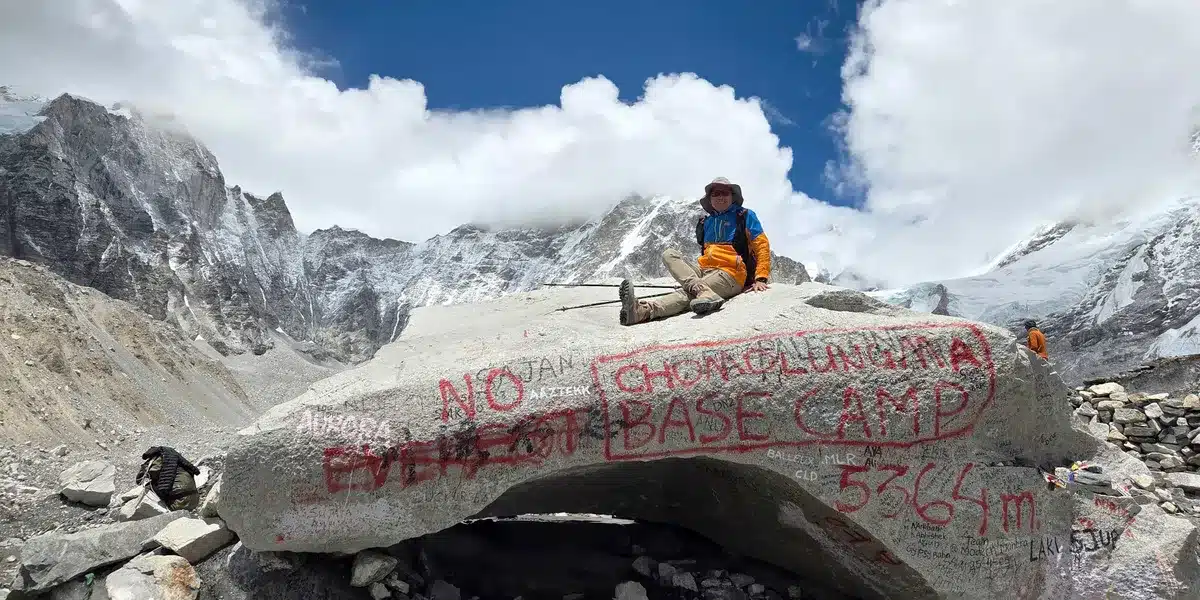
Everest Base Camp Trek: Survival Secrets from Um Hong-gil
The Everest Base Camp (EBC) trek, a dream destination for many, attracts approximately 45,000 to 60,000 foreign visitors annually to Nepal’s Sagarmatha National Park. A significant portion of these trekkers, including around 10,000 South Koreans each year, are drawn to the EBC route. Following a surge in travel demand and a renewed interest in trekking, South Korean visitor numbers reached a record high of approximately 10,500 last year, with most opting for the EBC trail.
The Journey to the ‘Himalayan Everest’
The EBC trek, often referred to as the ‘Garden of the Gods,’ is a challenging 12-day endeavor that requires overcoming harsh terrain and unpredictable weather. Despite the physical toll, the sense of accomplishment and joy upon reaching the destination is immense. Many consider this trek a bucket-list item, yet the daunting nature of the journey often deters them from taking the first step.
The prime trekking seasons for EBC are autumn (October-November) and spring (March-May), when the weather is most stable. South Koreans often leverage the Chuseok holiday or spring vacation periods to undertake this journey. While approximately 10,000 South Koreans trek to EBC annually, only a small fraction, typically in the hundreds, attempt to summit the actual Mount Everest (8,848.86m). The vast majority are trekkers aiming for the base camp.
Why the Allure of EBC?
The appeal of EBC lies in its status as the highest accessible point on Earth, marking a boundary of human endurance. Each year, an estimated 40,000 to 60,000 trekkers from around the globe embark on this journey, not necessarily as professional mountaineers, but to witness the awe-inspiring grandeur of nature firsthand.
Trekking to EBC offers unparalleled views of some of the world’s highest peaks, including Mount Everest (8,848m), Lhotse (8,516m), and Nuptse (7,861m). The panorama of these sacred mountains of the Sherpa people provides a profound experience of human insignificance against the backdrop of nature’s immense power.
Many who have completed the EBC trek describe their lives as distinctly divided into ‘before’ and ‘after’ the experience, highlighting the transformative impact of the journey and the deep respect it instills for nature.
Another significant attraction is the opportunity to engage with Sherpa culture. Passing through the Khumbu region, the homeland of the ‘Tigers of the Himalayas,’ offers a chance to experience their unique Tibetan Buddhist culture and their profound reverence for the mountains.
For many trekkers, the EBC journey is a moving meditation, a period of intense physical exertion focused solely on walking. Disconnected from the noise of civilization, this time allows for profound self-reflection and a unique form of healing. However, reaching EBC is far from easy, presenting a multitude of physical challenges.
Navigating the trails involves adapting to the everyday presence of yaks and their droppings, which are to be accepted as part of the natural environment. Walking with this acceptance lightens the spirit. Treks during the monsoon season can be particularly arduous.
The First Barrier: Food
While the breathtaking scenery is a fleeting reward, the persistent challenges of food and altitude sickness pose significant hurdles to survival. Over 90% of trekkers who abandon their journey and require helicopter evacuation do so due to these two issues.
As altitude increases, the quality of food deteriorates, while prices soar. More critically, altitude sickness can lead to a complete loss of appetite and impaired stomach function.
At local eateries, a strict dietary recommendation is to opt for vegetables over meat. In areas above 3,000 meters, the slaughter of animals is religiously prohibited. Any meat served has likely been transported from lower villages by porters or yaks over several days without refrigeration. In high altitudes, food poisoning or any gastrointestinal distress can exacerbate altitude sickness due to dehydration, making it life-threatening.
Hikers should also prepare for the challenges of cooking rice and dealing with the taste of local food. At high altitudes, the lower atmospheric pressure causes rice to cook unevenly or become mushy. Even local staples like ‘Dal Bhat’ (lentil soup with rice) and potato dishes can become unappetizing after a few days.
To combat these issues, a strategic approach to packing essential Korean food items is recommended. In high-altitude regions where carbohydrate intake is crucial, having a few portable food options can be immensely helpful for times when appetite is diminished. Instant soup mixes (like dried radish or seaweed soup) can be easily prepared with hot water, providing a comforting Korean-style soup. For those struggling with cooked rice, simple roasted rice (‘nurungji’) can be mixed with local rice for a familiar taste.
If digestive functions are severely impaired, requesting the lodge kitchen to cook instant noodles or rice can be a viable option, offering a nourishing meal.
Energy gels and glucose candies are also beneficial. Hunger at high altitudes can accelerate the onset of altitude sickness. Therefore, consuming energy, even without a strong appetite, is essential.
The Second Barrier: Altitude Sickness (AMS)
Preventing altitude sickness (AMS) is directly linked to survival. AMS is not dependent on physical fitness; marathon runners can be affected, while those who rarely exercise might remain unaffected. It is primarily determined by acclimatization speed and individual physiology.
The golden rule for preventing AMS is to ascend slowly: above 3,000 meters, it’s advised not to increase sleeping altitude by more than 500 meters per day. For instance, after sleeping at 3,440 meters, the next day’s sleep should not exceed 3,860 meters.
Staying hydrated is also critical. Medical professionals recommend consuming at least 4 liters of fluids daily. The dry climate at high altitudes leads to significant water loss through respiration. Dehydration thickens the blood, hindering oxygen transport and potentially leading to AMS. Electrolyte powder mixed with water can aid hydration.
Alcohol, smoking, and sleeping pills are strictly prohibited. Alcohol and nicotine drastically reduce blood oxygen levels. Furthermore, using sleeping pills for headaches caused by AMS can suppress breathing, leading to potentially fatal consequences during sleep.
Mountaineering experts also recommend preventative medication for altitude sickness, such as Diamox, which can be prescribed by domestic hospitals or obtained from pharmacies in Kathmandu. Typically, half a tablet is taken in the morning and evening starting the day before entering altitudes above 3,000 meters. While side effects like tingling in the extremities and frequent urination are common, they are considered normal acclimatization responses. Among seasoned climbers, the ability to urinate frequently and without difficulty is seen as a sign of good acclimatization.
For mild headaches, a sign of early AMS, taking Tylenol is advisable. However, if headaches persist or worsen despite medication, it indicates that AMS has progressed significantly.
Drawing from personal experience during the EBC trek, guides consistently advise, “Bis-tari, bis-tari” (slowly, slowly). Fellow Sherpas also emphasize the importance of maintaining one’s own pace, stating, “Never compete with other trekkers to ascend faster.” They explain that those who maintain a steady, unhurried pace, even if it feels slow, are the ones who reach EBC on their own two feet without needing a rescue helicopter. “In the Himalayas, each extra spoonful of rice and each extra sip of water is a source of strength and life itself,” they stress, emphasizing that internalizing and acting on this principle is the key to a successful EBC trek.
The journey to EBC is not about conquering the summit, but about the profound experience of the trek itself. The relentless rhythm of walking for five to seven hours daily, focusing solely on the act of putting one foot in front of the other, provides a unique opportunity for self-discovery and healing, far removed from the distractions of modern life.
