

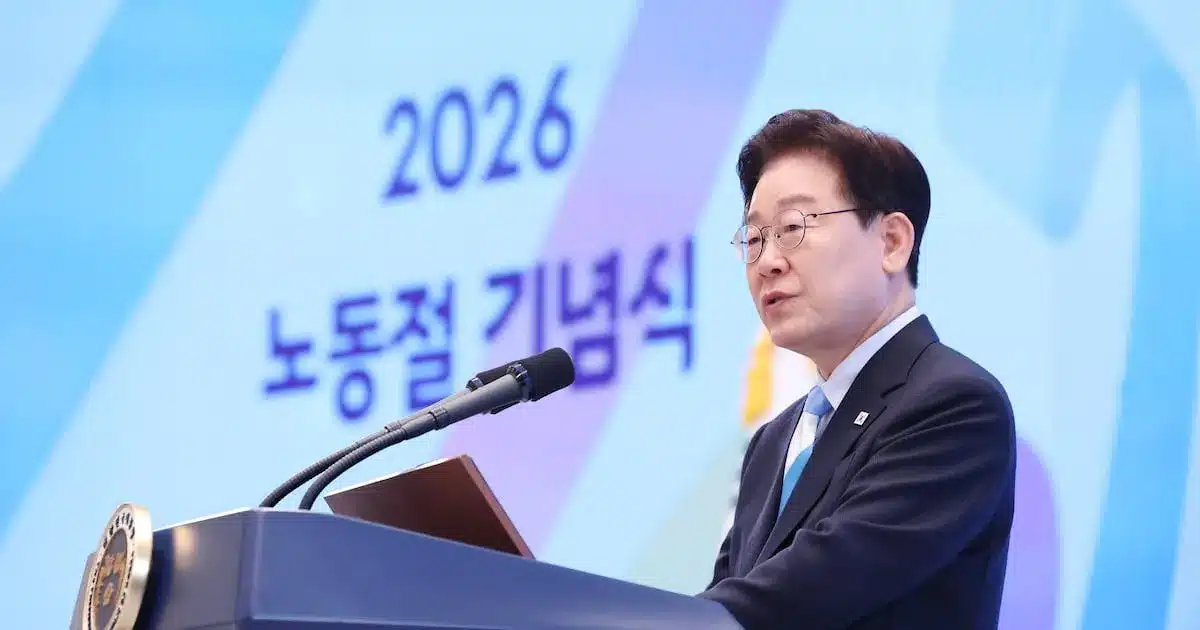
Opposition leader Lee Jae-myung met with hunger-striking labor union representatives protesting a confirmed labor law revision bill reached through arbitration. The meeting took place at the former presidential office on May 1.
Emphasizing Labor’s Central Role
Lee highlighted labor’s vital position in national development, stating, “Labor, as the primary agent of production, drives economic growth and conveys the deep concerns of the nation’s working majority to those in power.” He added, “Labor sustains individual lives and evokes public sympathy, nurturing a foundation for collective action.”
Addressing the interplay between labor and business, Lee asserted, “True value creation requires both labor and enterprise working together. A labor-only approach neglects this reality—there is no enterprise without labor, and no labor without enterprise.”
Vision for Balanced Growth
Lee outlined a path to “true growth” through positive cycles of labor and business, fairness and cooperation, as well as growth and distribution. “Labor-centered efforts can revitalize the scale of production,” he noted.
He acknowledged technological shifts as inevitable but understandable sources of anxiety, saying, “Changes from technology pose risks, yet they demand that labor’s substantial share expands amid capital surges from innovation and demographics.”
Lee warned against unilateral impositions, stating, “Forcing one-sided changes on workers solely for corporate convenience is unacceptable. A leadership ignoring the future of the majority’s laborers cannot claim to be truly progressive.”
Addressing Job Security and Rights
Regarding factory automation like robot introductions by major conglomerates, Lee stressed the need to safeguard universal labor rights amid rising job insecurity. “Absolute job protection is not realistic—even without workers losing their voice, this remains a political matter,” he explained. “Fixating on job preservation strays from mainstream views; nations and businesses must clarify their fundamental duties on employment instability.”
Lee criticized responses to the labor bill as “a selfish act severing life’s lifeline.” He observed, “This is not isolated; labor and business now shoulder roles once held by government. The prior administration self-diagnosed similar self-serving pulls on production’s lifeline, marking today’s labor crisis’s core cause.”
Concluding the brief session, Lee affirmed, “These shifts from here will drive rightful policies to boost public incomes.”
