

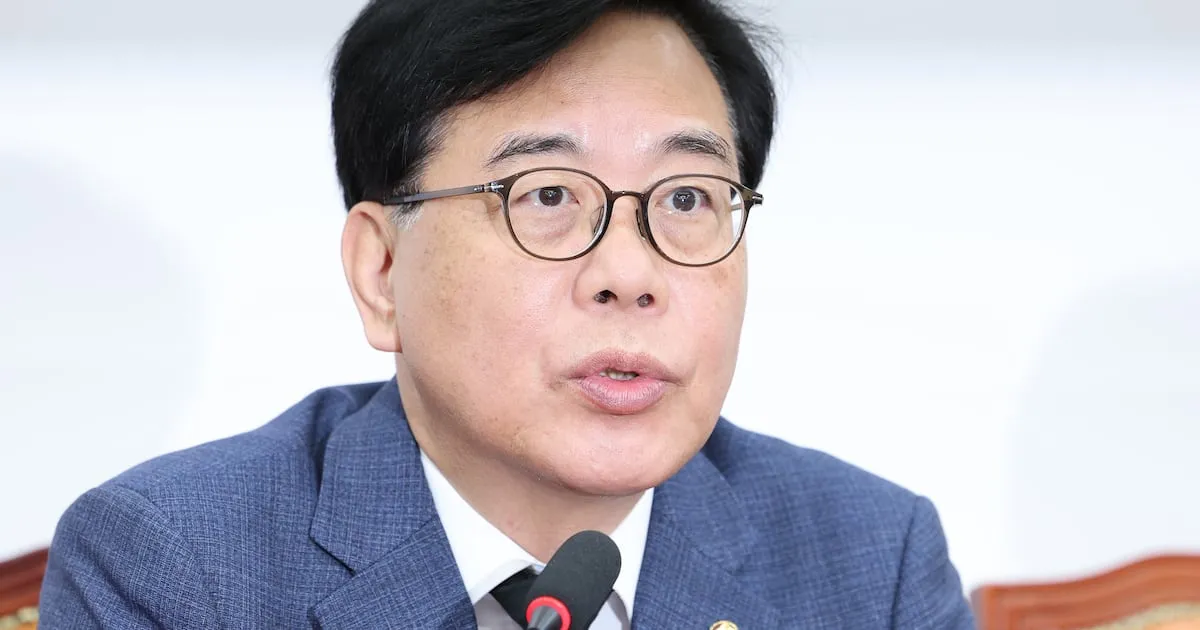
Song Eon-seok, chief of staff for a leading ruling party presidential contender, warned that Unification Minister Jeong Dong-young’s approach to foreign affairs has crossed a dangerous threshold amid revelations about North Korea’s nuclear activities. He urged a sharper, more resolute policy stance.
Song’s Sharp Rebuke on Diplomatic Risks
Song highlighted North Korea’s operation of a third uranium enrichment facility, confirmed through U.S. intelligence shared with allies. This development surfaced during International Atomic Energy Agency (IAEA) Director General Rafael Grossi’s recent visit to South Korea’s National Assembly. “Major powers’ unseen diplomatic risks from this administration have surpassed critical levels,” Song stated on social media. “A decisive policy pivot is essential now.”
He noted that the U.S. has intensified intelligence-sharing with partners, underscoring North Korea’s moves despite no overt provocations toward Washington. Song described North Korea’s reactions—such as heightened vigilance along the DMZ amid Yemen-related U.S. responses—as signs of broader instability. “The time demands urgent alignment of intelligence with allied strategies,” he added.
IAEA Findings and North Korean Advances
The IAEA report detailed North Korea’s blockage of three key sites for uranium enrichment, construction, and reinforcement. It also corrected earlier assessments, revealing the extraction of 16 kg of plutonium from spent fuel at the Yongbyon complex. These updates came during Grossi’s briefing to National Assembly members on Jinan 6.
U.S.-South Korea ties prompted the release of this intelligence. However, the Unification Ministry has rejected claims of any policy shifts based on the data, maintaining its position that no alterations are underway.
Song framed the disclosures as a direct reflection of current leadership challenges, calling for immediate rectification to mitigate escalating risks.
