

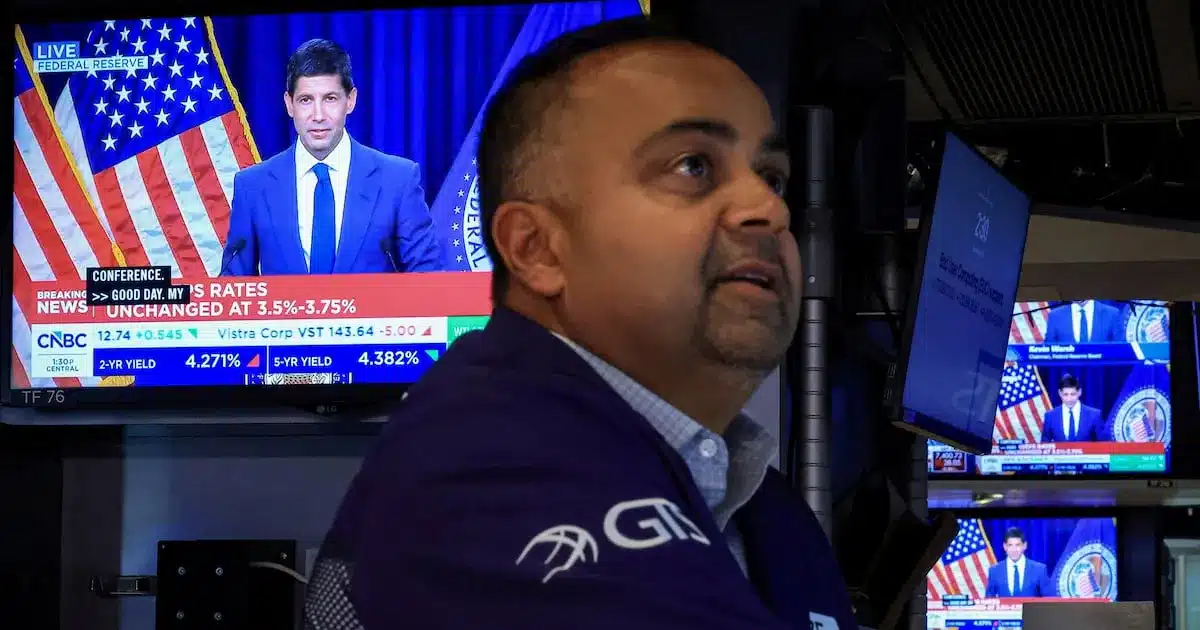
New York’s stock market experienced a downturn as tensions between the United States and Iran resurfaced after a month-long lull. The Dow Jones Industrial Average, the S&P 500, and the Nasdaq Composite all saw declines in early trading on May 31st, reflecting investor apprehension over the escalating conflict in the Middle East.
Geopolitical Tensions Weigh on Investor Sentiment
The primary driver behind the market’s negative trajectory was the renewed military confrontation between the U.S. and Iran. On May 30th, U.S. forces conducted airstrikes targeting two rocket launch sites belonging to Iran’s Islamic Revolutionary Guard Corps (IRGC) in Iraq. This action prompted a retaliatory response from Iran on May 31st, with attacks directed at facilities in Jordan and the United Arab Emirates (UAE) that host U.S. military personnel.
The situation was further exacerbated by statements from U.S. President Donald Trump, who signaled a strong U.S. response. In an interview with Fox News, President Trump stated, “We will be responding to Iran,” and vowed to “hit them very hard.” This rhetoric heightened concerns about a broader conflict, dampening investor confidence and leading to a sell-off across major indices.
The Dow Jones Industrial Average fell by 352.62 points, or 0.66%, to trade at 53,207.37. The S&P 500 index was down 36.97 points, or 0.48%, reaching 7,674.51. The Nasdaq Composite also registered a loss, dropping 121.18 points, or 0.46%, to 26,281.25.
Federal Reserve Policy Uncertainty Adds to Market Pressure
In addition to the geopolitical instability, renewed speculation about the Federal Reserve’s monetary policy added further pressure to the stock market. Comments from Federal Reserve Governor Kevin “Quincy” Waller at the Jackson Hole Economic Policy Symposium suggested a potential shift towards a more hawkish stance.
Waller remarked, “We need to have confidence that inflation is moving in a way that is clearly, and at a substantial pace, toward our goal. If that’s not happening, then we have work to do.” This statement fueled expectations that the Fed might consider further interest rate hikes, contrary to earlier market expectations of a pause or even cuts.
The CME FedWatch tool, which tracks market expectations for the federal funds rate, indicated that the probability of a rate cut in September had significantly decreased. As of May 31st, the market priced in only a 35.9% chance of a hold, a substantial drop from the nearly 60% probability seen the previous week. This increased uncertainty surrounding future interest rate policy contributed to the cautious sentiment among investors.
Market Reaction and Outlook
The dual pressures of escalating Middle East tensions and evolving Federal Reserve policy created a challenging environment for the stock market. Investors are closely monitoring developments in the U.S.-Iran conflict, seeking clarity on the potential for further escalation or de-escalation. Simultaneously, they are scrutinizing economic data and Fed communications for signals regarding the future path of interest rates.
The immediate impact was a broad-based decline across the major U.S. stock indices. Analysts suggest that the market’s reaction underscores its sensitivity to geopolitical risks and shifts in monetary policy expectations. The coming days and weeks will likely see continued volatility as markets digest these complex factors.
The renewed military engagements between the U.S. and Iran, coupled with President Trump’s assertive stance, raise concerns about potential disruptions to global oil supplies and broader economic stability in the region. Any significant escalation could lead to further market sell-offs and increased demand for safe-haven assets.
On the domestic front, the Federal Reserve’s next moves will be crucial. If inflation proves more persistent than anticipated, the Fed may indeed need to maintain a tighter monetary policy, which could further constrain economic growth and weigh on corporate earnings. Investors will be keenly awaiting upcoming economic reports and Fed officials’ statements for more definitive guidance.
In conclusion, the confluence of heightened geopolitical risks in the Middle East and evolving expectations regarding U.S. monetary policy has cast a shadow over the financial markets. The stock market’s performance will likely remain closely tied to the unfolding dynamics of both the international security situation and the Federal Reserve’s commitment to its inflation targets.
