

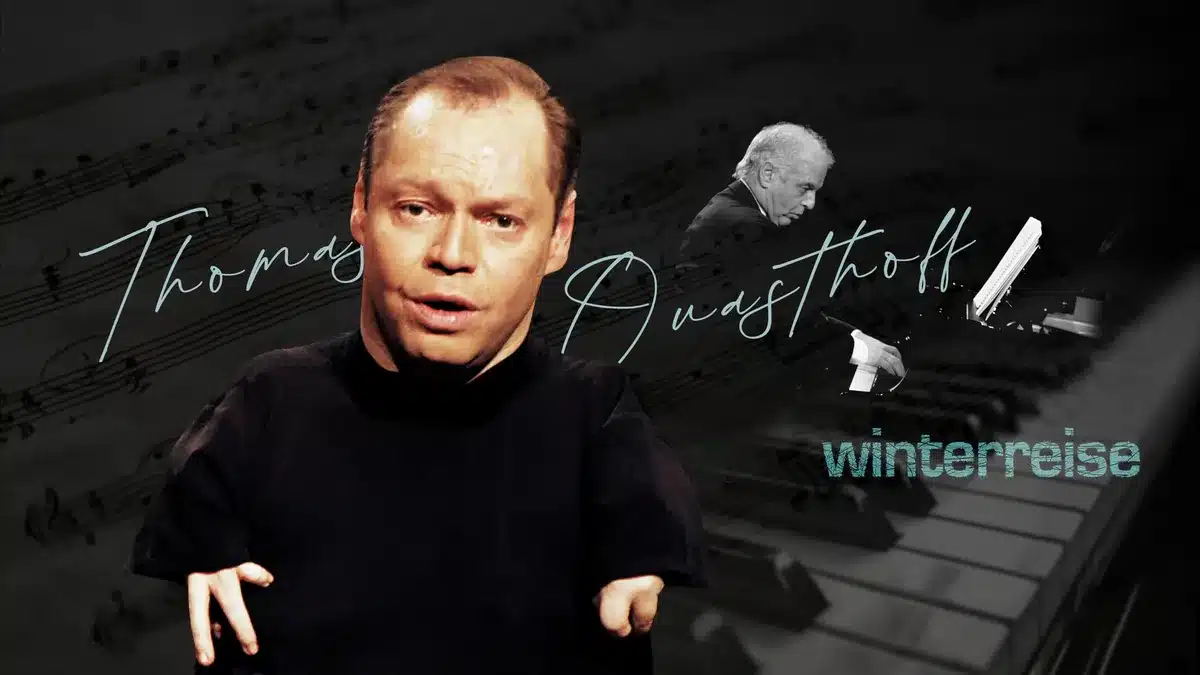
Berlin Baritone Thomas Quasthoff Delivers Stunning ‘Winterreise’
On March 22, 2005, Berlin Philharmonic Hall hosted a mesmerizing performance of Franz Schubert’s song cycle ‘Winterreise’ by baritone Thomas Quasthoff. Measuring just 1.32 meters tall with a body shaped by profound physical challenges, Quasthoff captivated audiences through sheer vocal power and emotional depth. Observers noted his unyielding presence, proving that true artistry transcends physical form.
Quasthoff’s Remarkable Journey
Quasthoff emerged in 1959 amid West Germany’s thalidomide tragedy, which scarred a generation. His distinctive appearance—short stature, handless arms—did not deter him. Instead, he channeled these traits into a career-defining force. Lacking conventional beauty, he relied on intellectual rigor and profound musical insight to connect with listeners.
Free from self-pity, Quasthoff embraced his reality. He studied diligently, honing his voice to pierce hearts directly. World-renowned conductors recognized his gift: “A singer’s essence lies in captivating the audience with their voice.” His lifelong dedication to vocal chains underscored this commitment.
From Stage to Global Stages
After formal studies, Quasthoff joined the Hannover State Opera in 1977 before freelancing. He savored simple pleasures like music and quiet reflection but never sought pity. Crowds discovered him at a 1988 Munich ARD competition, where his performances stunned judges. “This singer possesses the power to enchant any audience,” they declared.
Collaborations followed with Berlin Philharmonic, Vienna Philharmonic, New York Philharmonic, and others. Far from a mere curiosity, Quasthoff earned acclaim as a corporate artist through unwavering excellence.
‘Winterreise’: A Universal Cry
Quasthoff’s interpretation of Schubert’s ‘Winterreise’ stands out. Pianist Daniel Barenboim noted its dual appeal in Finland. Quasthoff remarked, “True talent lets even the flawed convey profound emotion.” This cycle transcends specific pain, embodying human solitude stripped bare.
Music scholars rank ‘Winterreise’ among Schubert’s top song cycles alongside ‘Der Lindenbaum.’ Yet its raw vulnerability sets it apart—love’s journey yields not warmth but isolation. Schubert captured this duality: “Sing of love, and sorrow follows; sing of sorrow, and love emerges. Thus, they tore me in two.”
The Depths of Schubert’s Masterwork
‘Winterreise’ weaves 24 songs into a narrative of heartbreak and wandering. Its first, ‘Gute Nacht,’ shatters illusions of warmth, launching a nocturnal trek through despair. The recurring theme ‘Fremd’ (strange) evokes alienation amid familiar sights.
Central song ‘Der Lindenbaum’ offers fleeting solace—a tree beckons rest—but the wanderer presses on. Schubert avoids easy resolutions, immersing listeners in relentless solitude. The finale, ‘Der Leiermann,’ confronts a hurdy-gurdy man in frozen silence, mirroring life’s unanswered echoes.
Quasthoff’s rendition amplifies these themes. Music critic Stephan Howeier observed, “One’s own pain becomes universal through Schubert.” Even in love’s absence, profound emotions compel forward motion.
