

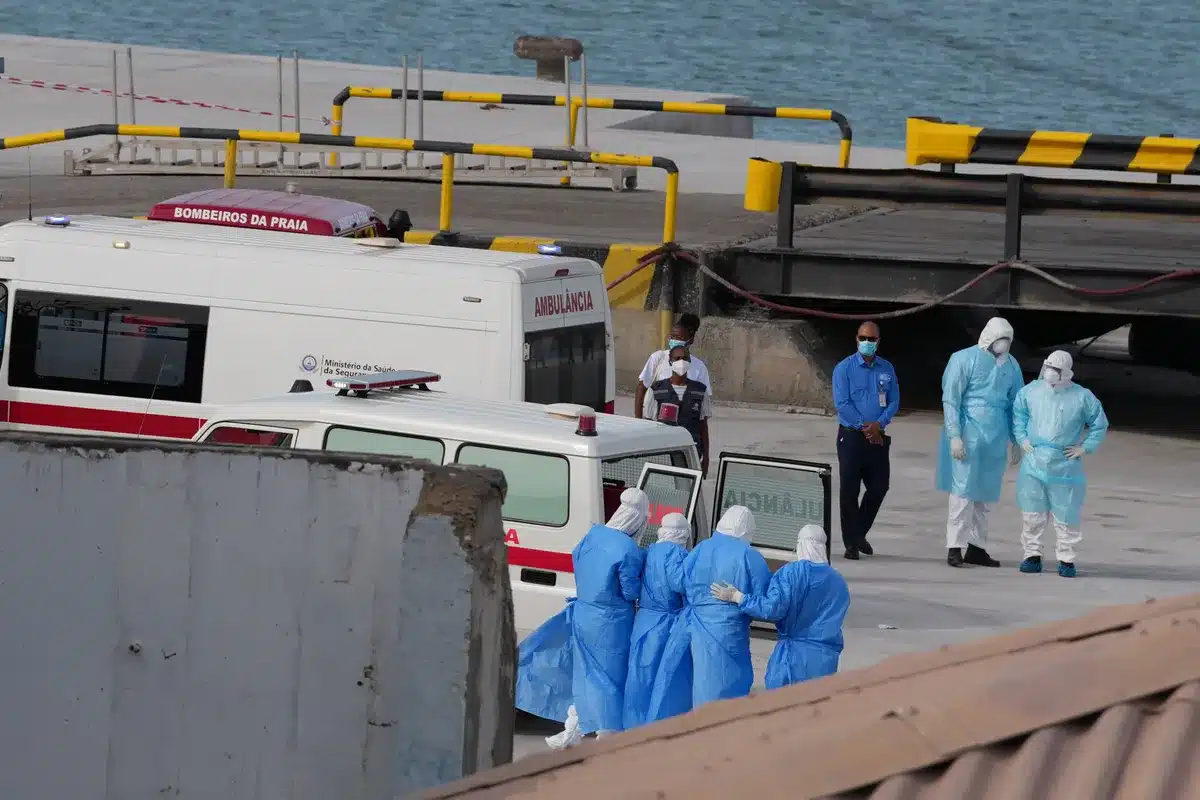
Cruise Ship Faces Hantavirus Crisis
Several passengers and crew aboard a cruise ship bound for Southeast Asia have tested positive for hantavirus, prompting the World Health Organization (WHO) to draw parallels to the early stages of the COVID-19 pandemic. Officials highlight a similar pattern of rapid spread and heightened risks.
On May 6 (local time), the Netherlands-operated vessel MV Hondius, currently near Cape Verde in South Africa, reported three crew members in critical condition after severe hantavirus infections. The ship rerouted toward Spain’s Canary Islands. The front section of the vessel holds 146 cases, including fatalities.

Patient Details and Spread
The three critically ill crew members hailed from Europe—Netherlands, UK, and Germany—and were detained upon arrival. Overall, eight patients remain under care, with three in critical condition receiving treatment at South African public hospitals. Among them, a UK national contracted the virus through changes in rodent populations.
Similar rodent-related shifts appeared in Switzerland. Analysis confirms the same variant circulating in South Africa, Switzerland, and the Canary Islands.
Government Actions and Alerts
The outbreak originated from an April 1 departure from Argentina, passing South American regions. Cape Verde authorities imposed an entry ban, while Spain’s indigenous leaders followed suit with additional restrictions. Infected locals include one Dutch national and one German, totaling three.
Monika Garzia, Spain’s health ministry official, stated, “Currently, the death toll in South remains low.” She added, “The ship will dock safely at my Tenerife as planned.” Spanish officials plan to repatriate 14 nationals to the mainland.
WHO’s Global Monitoring
WHO tracks 69 suspected cases worldwide. Director-General Tedros Adhanom emphasized, “Government concerns emerge comprehensively this time,” noting, “This differs from the COVID-19 initial phase.” He further remarked, “Shipping firms and countries collaborate to monitor case developments effectively.”
Maria Van Kerkhove, WHO technical director, explained, “Cases arise from individual risk factors like personal hygiene and housing environments.” She clarified, “This fundamentally differs from COVID-19 and influenza in all aspects.”
