

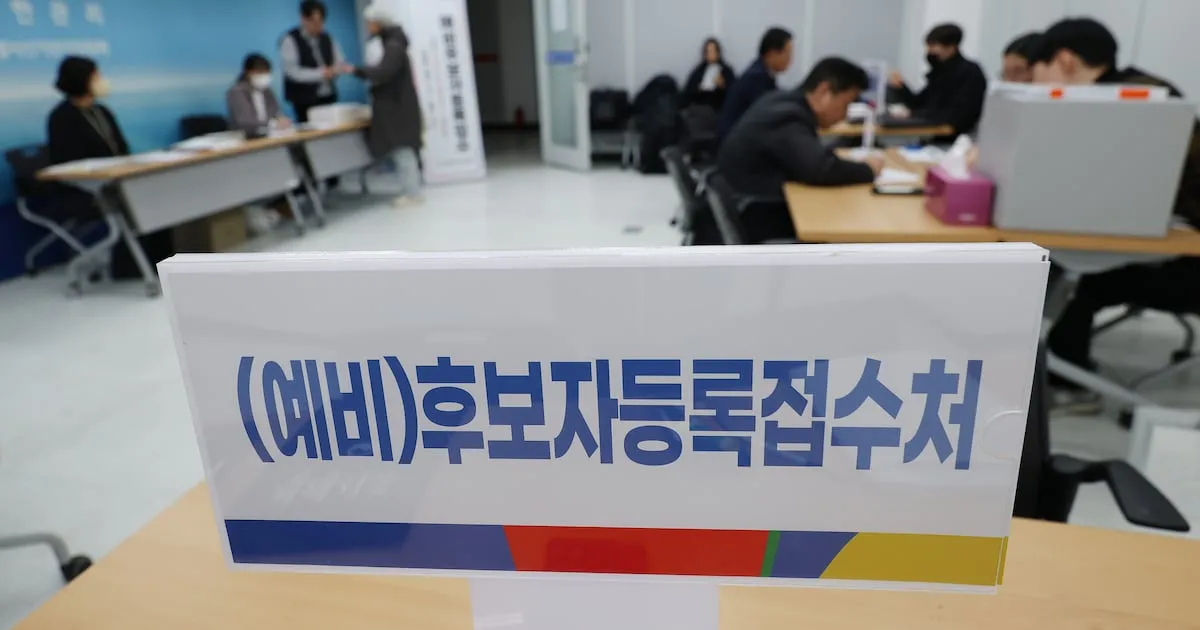
Nearly 28% of preliminary candidates vying for education superintendent positions across South Korea’s 16 cities and provinces carry criminal records, including assault and embezzlement convictions. This marks a sharp rise from 21.8% in the 2022 elections, where 17 out of 78 candidates had prior offenses.
Rising Trend in Criminal Backgrounds
Recent data from the first preliminary candidate lists reveal 22 out of 80 nominees (27.5%) hold full-time jobs despite their records. Officials note this surge stems from election laws barring candidates with fines over 1 million won from public races for five years. However, reserves face fewer hurdles, allowing those with past convictions—such as assaults on police officers causing injury or financial embezzlement—to pursue these roles.
Analysis shows the trend persists even in non-competitive districts now drawing larger fields. To secure nominations from committees offering prizes up to 100 million won, candidates endure audits, but lingering business penalties enable their entry into education oversight.
Prominent Cases Spotlighted
Kim Young-bae, a conservative nominee for Seoul’s education office, received a two-year housing benefit in 2020 from a non-profit tied to unverified teacher hiring claims. He previously netted 500 million won in construction prizes in 2009 and a one-year housing perk in 2005 from road school bus operations. “Operating such ventures demonstrates real capacity to hire the most teachers,” Kim stated.
Jo Yo-jeong-sik’s affiliated offices collected funds from a 2016 half-school bus overhaul (200 million won) and 2010 nameplate awards (100 million won). Jo remarked, “Even teachers running happy bus services—something the government overlooked—qualify.” Four offices under Jo also gained from Im Ju-jeon of Doro School Bus fame.
Im Seong-mu, former nationwide teachers’ union Daegu branch chief, secured 100 million won from apartment management in 2010 and 500 million won in 2012 from public housing violence, chief management, and similar ventures. “As a major union deputy focused on bold education reforms, this occurred,” Im explained. The education ministry scrutinized his case, deeming it a “proper heavy penalty violation.”
Other examples include An Min-seok of Gyeonggi Education Office, who oversaw three assault-related demolitions in 2008 disguised as warehouse changes, netting 300 million won in 2011 and 200 million won in 2020 from gibu gold foam businesses. Multiple reserves, like those under Hong Je-nam and Im Byeong-gu, show repeat offenses.
Jo Hoi-yeon, former Seoul education vice director, claimed two-year housing benefits in 2023 via direct power youth and national public housing commissions. One office tallied 565 million won in next-term fees after securing a “full-time teacher replacement” contract.
Expert Warnings on Teacher Shortages
Education offices distribute billions annually—Seoul alone handles 13 trillion won, Gyeonggi 24 trillion—but teacher shortages drive reliance on questionable hires. Professor Jang Seong-hyuk of Korea Teachers College warns, “Operators with records in embezzlement or violence crowd these roles due to deficits, yet concentrating massive contracts on networked individuals harms integrity.”
“Even sole operators receiving huge project shares reveal flawed hiring amid shortages,” Jang added. “How can trust endure?”
