

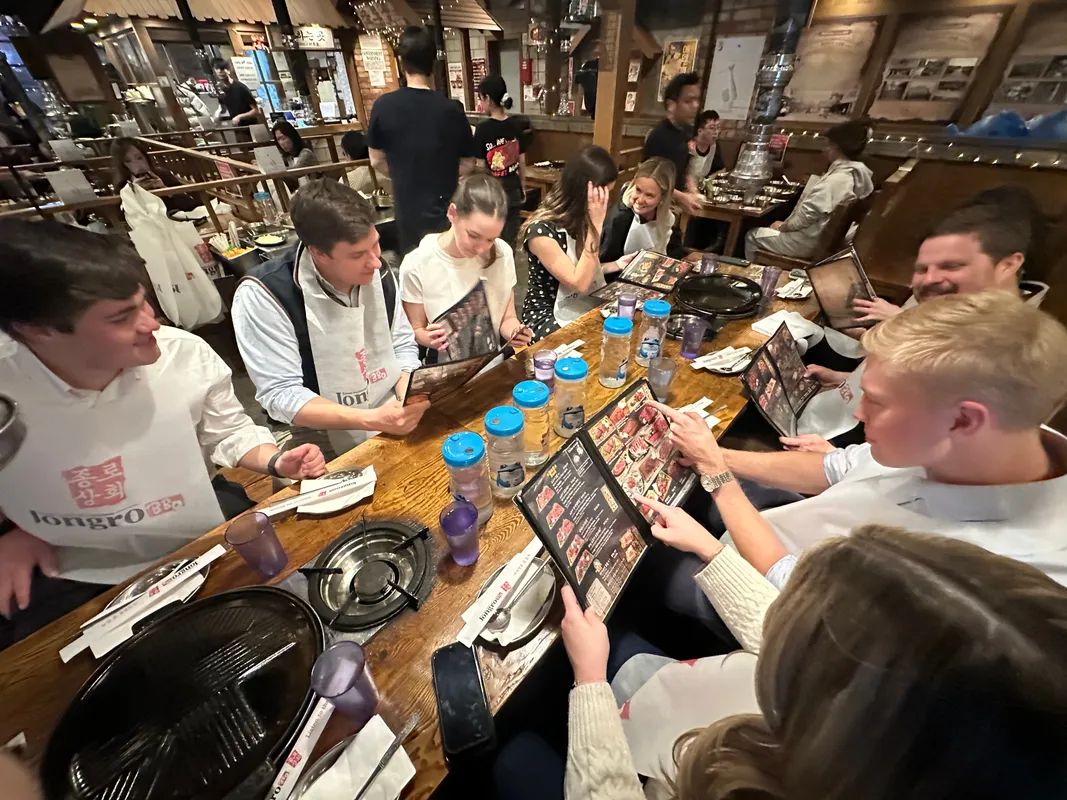
K-Food Captivates New York Foodies
American diners flock to Korean eateries across New York, transforming everyday neighborhoods into hubs for K-food enthusiasts. Beyond celebrity spots, locals seek out authentic flavors in hidden corners, driving food companies to emphasize genuine experiences. Chefs actively promote hands-on K-food tastings, while Korean cuisine dominates global rankings, including top honors in the ‘World’s Best Restaurants 50’ for places like Atomix.
Survey Reveals K-Food’s Top Appeal
A recent poll across 28 countries targeting ages 15-59 shows K-food leading Korean cultural preferences at 53.7%. Music follows at 51.2%, beauty at 50.8%, and dramas at 49%. Eric Kim, a prominent recipe developer and ‘best caramel cookie’ collaborator, states, “Music offers a cultural thrill, but K-food truly captures America’s diverse tastes, securing its top spot.”
Export data confirms the surge: Last year’s K-food shipments hit 114.6 billion won (about $85 million), doubling from 60.6 billion won in 2016.
Direct Tastings Draw Crowds
At major promotional events, visitors bypass menus to sample fresh K-dishes firsthand. Bel Stocker remarks, “Korean dramas sparked my love for Korean food—it’s my favorite.” The head of the largest fair adds, “Even premium seafood costs less here than abroad; try Korea’s specialties, and you’ll visit repeatedly.”
Huni Kim, a global influencer, notes that top cuts like sirloin deliver unmatched value compared to local prices.
Chefs Embrace Fresh K-Ingredients
New York’s trendy districts feature Korean spots like Juwok (Shin Chang-ho), Jua (Kim Ho-young), Atomix (Park Jung-hyun), and Okdong Sik. These chefs opened within three months last year, prioritizing premium ingredients despite supply challenges. Shin Chang-ho prepares giant prawns, octopus, and more nightly from 6 p.m. to 3 a.m., using techniques like gentle boiling for tender results.
Kim Ho-young, a food content director, explains, “What shines brightest abroad is Korea’s native flavors—overseas visitors crave the real taste.”
Online Platforms Fuel Growth
K-food startups thrive in the ‘New York market caller’ space. Launched in 2019, Kimchi Market sells authentic products online via partnerships with spots like Jangjoji. Items like 4.5kg premium beef from Gold Queen fetch 9 million won yet attract global buyers.
Kimchi Market’s representative says, “Word-of-mouth drives sales without heavy marketing; K-food storytelling connects with famous chefs worldwide.”
Expanding K-Sauces and Beyond
In the U.S., K-sauces gain traction through trends like ‘gochujang butter pasta’ and ‘gochujang chicken bokkeum.’ H-Mart stocks trendy chains, while Bibigo sells over 800 million units abroad annually. Nongshim’s Neangdong Kimchi Bowl saw 130% year-on-year growth in 2023.
Experts urge full-scale global expansion. Seoul National University professor Kim Han-ho states, “Leverage aT’s networks and top indices to boost exports; collaborations enhance reach.”
