

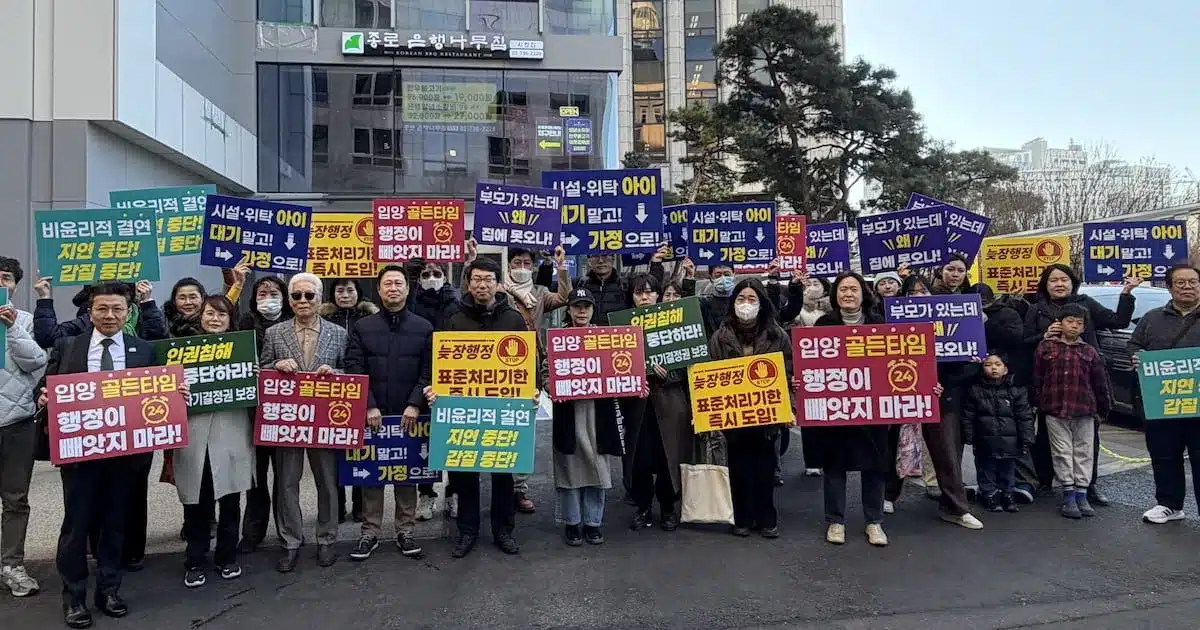
South Korea’s major adoption agencies face a severe backlog, with 281 children remaining in limbo despite new public oversight measures. Reserve parents endure prolonged waits, unable to bring home infants they’ve reserved months earlier.
Heartbreaking Delays for Reserve Parents
On March 20, Yoo Byeon-yeon, 50, visited a Seoul adoption facility where she had reserved a baby girl 16 months prior. Despite passing initial screening and forming a bond last October, Yoo cannot take the child home even after five months. ‘She calls the baby home “Umma” and tears flow again,’ Yoo shared. ‘How many more times must I endure this?’
The infant joins hundreds in similar predicaments. Reserve models at agencies describe emotional pleas like, ‘Umma, two more times and then come back. Stay a bit longer, okay?’
Impact of July Special Law
A special law enacted last July transferred direct management of domestic adoptions from private agencies to public authorities. Previously handled jointly, screening now falls under national jurisdiction, converting private operations to public frameworks.
Yet, since implementation, major agencies report zero placements. Recent data reveals 578 children reserved as of February across facilities like the Seoul Central Adoption Agency. Among them, 11 underwent top executive screening, but only those with agency ties proceed.
As of March 27, 281 children at major agencies await clearance from branch directors and executive offices.
Screening Bottlenecks and Frustrations
Reserve models must pass agency preliminaries before central council executive director reviews. Officials confirm ties to executives and ministers drive approvals, with quotas favoring connected applicants.
Reserve parents note, ‘Even if directors change daily, connections ensure executive links persist.’ The Adoption Justice Promotion Bureau voiced alarms two weeks ago over opaque executive vetting. Its team presented findings to the National Human Rights Commission on March 19.
Byeon Hyeon-jeong, 47, bonded post-2022 but faces repeated setbacks. ‘Experiences and relationships burden us; will seats shift?’ she asked. ‘Must see everything firsthand to gauge.’
Officials urge thorough child assessments, as rumors cloud transparency. Reserve models add, ‘Accurate child details demand precise surveys for rightful placements.’
Agency Responses and Broader Concerns
Affiliated staff emphasize, ‘We prioritize precise executive screenings for children’s best interests.’ Agency officials lament, ‘Korea selects adoptees harshly; routine processes revive adoption culture amid frustrations.’
