

[ad_1]
![[Column] Right now, we want philosophy to outlive as people](https://flexible.img.hani.co.kr/flexible/normal/800/525/imgdb/original/2025/1202/3517646651908487.webp "[Column] Right now, we want philosophy to outlive as people")
“The Dying of Socrates,” by Jacques-Louis David, 1787, oil on canvas, Metropolitan Museum of Artwork, New York.
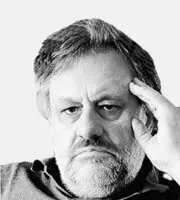
By Slavoj Žižek, International Eminent Scholar at Kyung Hee College
We have fun World Philosophy Day each third Thursday in November. This 12 months it fell on Nov. 20. So let’s use this chance to recall what philosophy is at its most simple.
Alain Badiou opens up his “True Life” with the provocative declare that, from Socrates onward, the operate of philosophy is to deprave the youth, to extraneate them from the predominant ideologico-political order. Such “corruption” is required particularly at this time, in our liberal-permissive West, the place most individuals aren’t even conscious of the best way the institution controls them exactly when they look like free.
Essentially the most harmful unfreedom is the unfreedom that we expertise as freedom, or, as Goethe put it two centuries in the past: “None are extra hopelessly enslaved than those that falsely imagine they’re free.” Is a libertarian who works on destroying the thick social community of customs wherein he can solely thrive, actually free?
Socratic revolution is characterised by two options. First, it’s a response to the final disaster of the Greek social life which, for Socrates, is embodied within the widespread reputation of sophists — performers of empty rhetorical tips who enacted a decay of the custom of polis. Second, what Socrates opposes to this decay is just not a easy return to the wonderful previous however a radical self-questioning. The fundamental process of Socrates is the countless repetition of the method: “What, precisely, do you imply by XYZ?” — be it advantage, fact, the great or related fundamental notions.
Right now, we want the identical questioning: What can we imply by equality, freedom, human rights, the individuals, solidarity, emancipation and all different related phrases which we use to legitimize our selections? Considering signifies that, after we are confronted with the ecological disaster, we don’t simply deal with saving nature; we additionally ask ourselves what nature means at this time. With the rise of synthetic intelligence, it isn’t sufficient simply to ask if machines are in a position to suppose; we also needs to ask what human pondering actually means.
One ought to oppose right here the Socratic questioning to the Confucian “rectification of names.” Confucius’ evaluation of the shortage of connection between issues and their names grounds the necessity to overcome this lack: “If language is just not right, then what is claimed is just not what is supposed; if what is claimed is just not what is supposed, then what have to be completed stays undone; if this stays undone, morals and artwork will deteriorate; if justice goes astray, individuals will stand about in helpless confusion. Therefore there have to be no arbitrariness in what is claimed.” In clear distinction to this stance, the Socratic custom is totally conscious that to essentially suppose means to suppose in language towards language and, on this approach, to destroy the ideology inscribed into our language.
Right now, the true anti-Platonist sophist is, after all, Donald Trump. On the very first web page of his “Republic,” Plato splendidly deploys how the Trumpian populists (right here represented by Polemarchus) deal with their opponents (right here represented by Socrates, the narrator):
“Polemarchus stated to me: ‘I understand, Socrates, that you just and your companion are already in your option to town.’ ‘You aren’t far improper,’ I stated. ‘However do you see,’ he rejoined, ‘what number of we’re?’ ‘In fact.’ ‘ And are you stronger than all these? For if not, you’ll have to stay the place you’re.’ ‘Could there not be the choice,’ I stated, ‘that we might persuade you to allow us to go?’ ‘However are you able to persuade us, if we refuse to take heed to you?’ he stated. ‘Definitely not,’ replied Glaucon. ‘Then we aren’t going to pay attention; of that you could be be assured.’”
The stance of merely not listening to your opponent (in case you are stronger than him) is what we encounter at this time repeatedly in large politics — and even in philosophy.
This refusal to pay attention and/or to suppose is not only one large primordial determination; it takes place constantly in our lives. Those that assist Israel merely ignore all the apparent arguments {that a} genocide is happening in Gaza; they only dismiss them as antisemitic lies.
The same refusal to suppose occurs to me repeatedly. Once I not too long ago listed arguments for our environmental disaster, the reply I acquired was a variation of “we aren’t going to pay attention; of that you could be be assured,” and the temporary rationalization was that the wrestle towards international warming is a marketing campaign motivated by darkish causes (destroying the affluent West).
Is that this not, once more, Trumpian politics at its purest? Is that this not the justice Trump brings to the Center East, to Ukraine? And Trump is just not alone right here. On July 3, 2025, Chinese language Overseas Minister Wang Yi advised the European Union’s prime diplomat that Beijing can’t settle for Russia shedding its warfare towards Ukraine, as this might enable america to show its full consideration to China. An official briefed on the talks stated, contradicting Beijing’s public place of neutrality within the battle, that Wang’s non-public remarks instructed Beijing may want a protracted warfare in Ukraine that retains america from specializing in its rivalry with China.
Illusions about China — the concept that, despite all its problematic options, it desires peace and international cooperation, and even follows some notion of justice — are irrevocably shattered: China has now made it clear that it desires the lengthy, devastating warfare destroying a complete nation to go on as a result of peace might harm its financial pursuits. Such brutal reasoning displayed in public is slightly one thing one would count on from Trump.
A conclusion to be drawn from that is that at this time we want philosophy greater than ever — we want it to outlive as people. Naïve as it might sound, we can’t survive with out some notion of justice that transcends pragmatic issues of survival. And we have to mirror on what justice can imply at this time.
Please direct questions or feedback to [english@hani.co.kr]
[ad_2]
