

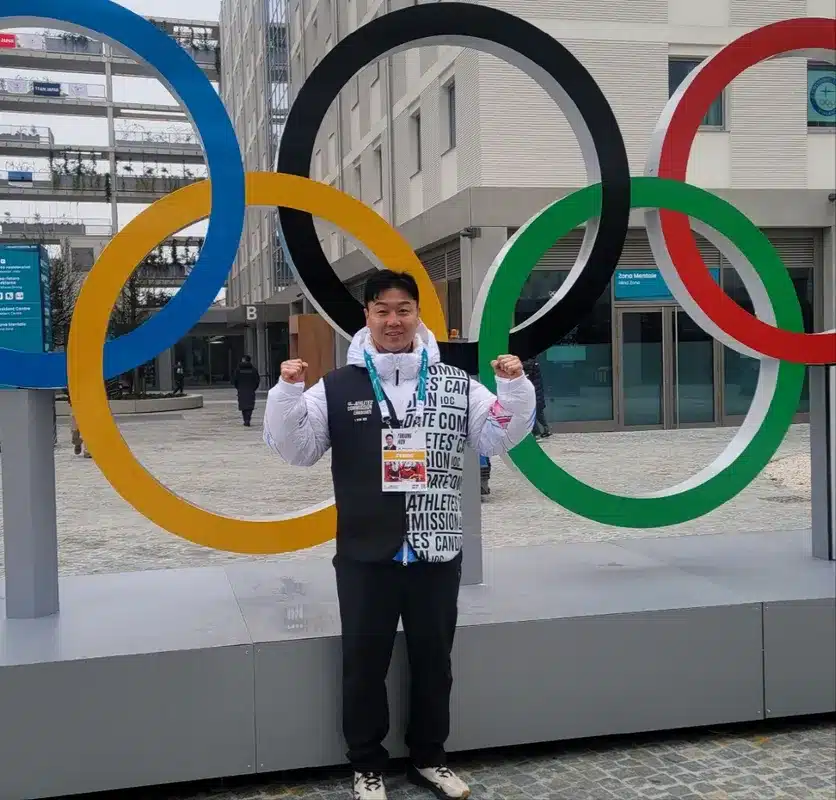
Milan, Italy – Korean bobsledder Won Yun-jong has achieved a historic milestone by securing election to the International Olympic Committee (IOC) Athlete Committee for the fourth consecutive time. The IOC announced the results during its Central Management Committee (CDM) meeting here on February 19, Korean time.
Election Results and Voting Process
Won Yun-jong topped the list of candidates, earning the highest number of votes. Only two individuals from the top rankings joined the IOC Athlete Committee. The election targeted athletes participating in the 2026 Milan-Cortina Winter Olympics and ran from January 30 to February 18 through online voting.
Of the 11 shortlisted candidates excluding Won, two from the top 11 secured spots. However, IOC rules limit each country to one member. In ski jumping, where seven names entered and the top seven results favored that discipline, multiple selections proved possible.
The term spans eight years, extending through the 2034 Salt Lake City Winter Olympics.
Other Elected Members
The full list of elected athletes includes:
- Abrahamenko (Ukraine, freestyle skiing)
- Janbota Aldabergenova (Kazakhstan, freestyle skiing)
- Dario Cologna (Switzerland, cross-country skiing)
- Yohan Kongkalbe Gu (Timor-Leste, alpine skiing)
- Han Zhong (China, figure skating)
- Ilka Herrala (Finland, Nordic combined)
- Adam Konya (Hungary, cross-country skiing)
- Magnus Nedregotte (Norway, curling)
- Yohanna Talrihaerum (Estonia, biathlon)
- Marieel Tompsun (Canada, freestyle skiing)
Historic Achievement for Korean Winter Sports
Won Yun-jong marks the first IOC Athlete Committee member from bobsleigh, Korea’s lowest-ranked Winter Olympic discipline. Previously, Korea elected members solely from short track speed skating, including two from the 2002 Salt Lake City Games and two lugers from the 2006 Torino Olympics.
This election represents Korea’s sixth IOC Athlete Committee member overall, following Beijing 2008’s Tae Kwond-do athlete and Rio 2016’s taekwondo star Yousung Min. It elevates Korea’s influence, securing two IOC executive members alongside ISU President Kyung Won-il.
Strategic Campaign Efforts
For the 2026 Games, Korean officials lobbied voters from January 30 until 10 p.m. the day prior, focusing on individual outreach rather than clusters like Milan-Cortina, Valtellina, Bormio, Livigno, or Bardepieme. Despite fielding the largest athlete contingent, Korea pursued additional roles.
Won Yun-jong exchanged directly with voters until late, achieving tangible results across 15 voting bags. As a selector, he targeted Korea’s sixth Winter Olympics appearance, following unsuccessful bids for 2014 Sochi and 2022 Beijing. At the 2018 PyeongChang Games, bobsleigh earned fourth place, Korea’s best in the event.
Post-Games, involvement in IBSF skeleton events and the Korea Figure Skating Federation boosted opportunities. Last December, participation in the World Anti-Doping Agency (WADA) meeting allowed direct engagement with IOC President, members, and sports leaders.
