

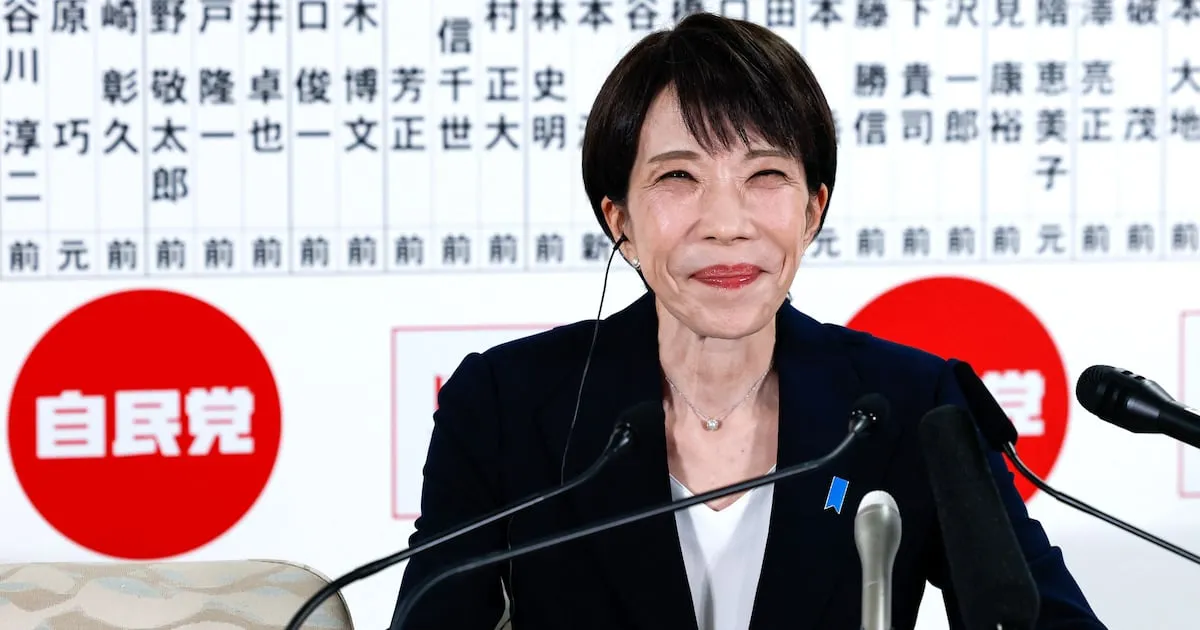
Prime Minister Sanae Takaichi’s Liberal Democratic Party (LDP) secured a stunning landslide victory in Japan’s lower house election, clinching 316 seats just 20 days after dissolving parliament in a high-stakes gamble. Combined with allies like the Japan Innovation Party (36 seats) and others (15 seats), the ruling coalition now controls 79% of seats, marking the strongest mandate since World War II.
Election Results and Public Support
Final tallies released on February 9 confirm the LDP’s dominance in single-seat districts. Surveys indicate 80% of voters backed conservative parties, fueling the coalition’s overwhelming success despite opposition challenges.
PM Takaichi Rejects Right-Wing Shift Label
Takaichi dismissed notions of a national right-wing pivot following the win. “This is not a right-wing shift at all,” she stated. “Safeguarding citizens’ lives is the nation’s ultimate duty. Becoming a normal country is a positive step.”
She advocates reinterpreting the constitution to elevate the Self-Defense Forces (SDF) into a full-fledged military. In a recent address, Takaichi emphasized, “Directly assuming defense responsibilities is unrealistic. Nations must bolster capabilities, foster credible deterrence—even under maintenance guise—and advance independent development.”
Constitutional Reforms in Focus
Article 9, Clause 1 of Japan’s pacifist constitution faces reinterpretation efforts to permit war-fighting potential. Clause 2 provisions on education and recognition draw scrutiny, reinforcing its ‘peace constitution’ status. Opposition leaders highlight ‘responsibility’ rhetoric but criticize it as lacking substance amid mismatched realities with the U.S. and allies.
Post-election TV appearance on February 8, Takaichi addressed SDF naming amid victories: “Imposing heavy duties in a constitutional society proves burdensome.” The LDP prioritizes Clause 9-2 revisions.
Accelerated Defense Agenda
Takaichi’s administration outlines security enhancements through 2026, surpassing 2% GDP defense spending. Initiatives include five key weapons systems, reduced meat exports for reallocations, full-spectrum cyber defenses, and large-scale drones.
Lessons from Russia-Ukraine underscore a harsher security landscape. “The environment has drastically worsened,” Takaichi noted. “Japan’s sovereignty hinges on financial strength.” Heightened ties among China, Russia, and North Korea amplify the need for robust responses.
Reexamining Non-Nuclear Principles
The government reevaluates the ‘non-nuclear three principles’—no possession, production, or introduction of nuclear arms—proclaimed by PM Eisaku Sato in 1967 and endorsed centrally in 1971. Opposition pushes corrections aligned with U.S. policies. Takaichi eyes post-election adjustments to align with evolving threats.
