

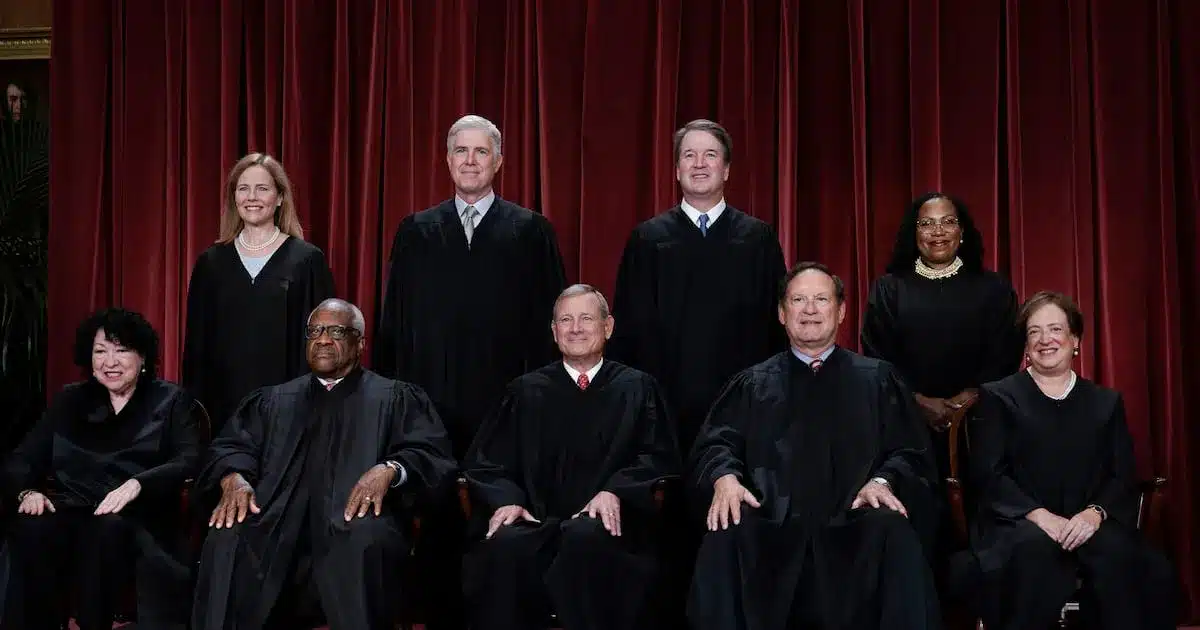
In a surprising decision, the U.S. Supreme Court ruled that former President Donald Trump’s reciprocal trade measures against 57 major trading partners violate the law. The nine justices, often referred to as the court’s wise overseers of final appeals, delivered a 6-3 verdict declaring the policy unlawful.
The Unexpected Ruling
The Trump administration had imposed these tit-for-tat tariffs on key international partners. Despite a 6-3 conservative majority on the bench, six justices sided against the policy, while three dissented in favor of its legality. This outcome defies ideological expectations, as the conservative bloc typically aligns with such executive actions.
Breakdown of the Justices
The court’s six conservative justices—Chief Justice John Roberts, Clarence Thomas, Samuel Alito, Neil Gorsuch, Brett Kavanaugh, and Amy Coney Barrett—all appointed by Republican presidents—formed the majority striking down the tariffs. Notably, Gorsuch, Kavanaugh, and Barrett received their nominations during Trump’s first term from 2017 to 2020.
The three justices supporting the policy—identified in dissenting opinions—were Roberts, Gorsuch, and Barrett. Trump praised Kavanaugh, stating, “I know that guy well—genuine.” He dismissed the majority’s stance sharply, calling them “lapdogs of Democrats and their minions” who harm true conservatives.
Trump’s Fiery Response
Trump unleashed criticism on the justices who ruled against him, particularly targeting Gorsuch and Barrett for the first time by name. He described their approach as “water torture even for the kids.” Sources confirm Trump views the decision as a betrayal, emphasizing that ideologically, the court should have upheld the policy 6-3.
One justice remarked that powerful executives imposing broad trade penalties on major partners must face clear legal boundaries to avoid reputational damage internationally.
Media and Public Reaction
The New York Times noted the justices’ unified critique of Trump’s policy. CBS highlighted how the ruling exposed dictatorial tendencies in the approach. Despite the backlash, Trump recently announced a 10% tariff on all country imports in pre-election polling boosts, with no immediate response from the justices.
