

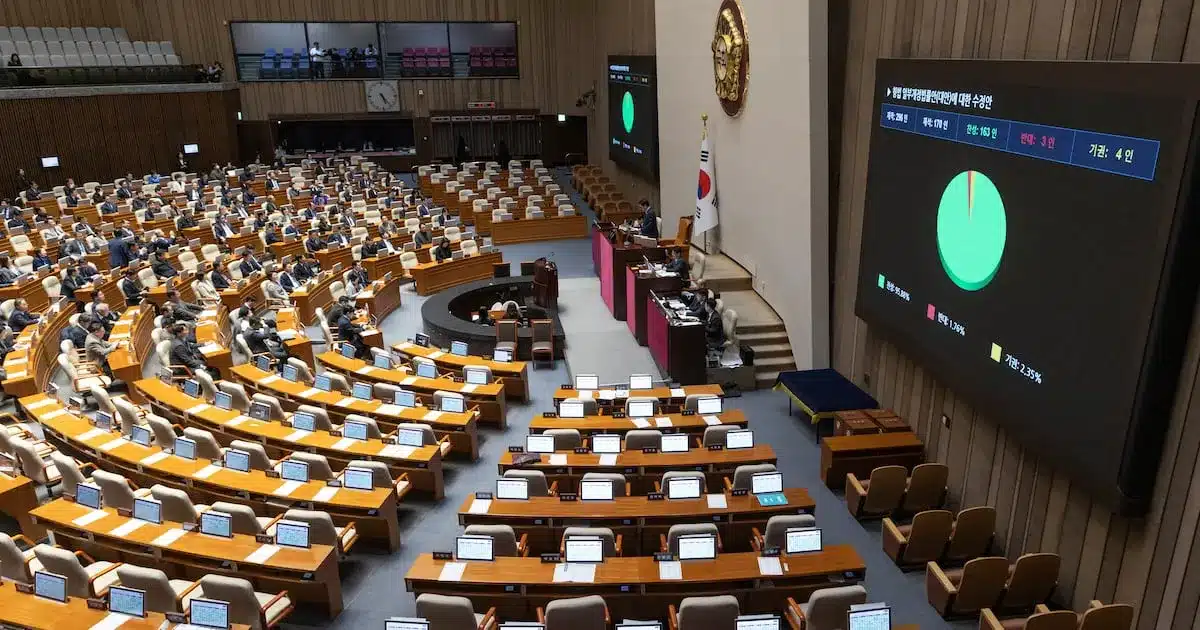
South Korea’s National Assembly plenary session approved a controversial bill introducing the crime of “law distortion,” targeting judges and prosecutors who knowingly misapply legal statutes during trials. The measure imposes penalties of up to 10 years in prison, marking a significant step in judicial accountability efforts.
Overwhelming Approval in Plenary Vote
On the 26th, lawmakers convened for the plenary session and passed the amendment with strong support. The vote recorded 170 in favor, with the chair declaring 163 approvals, alongside 3 votes against and 4 abstentions. The outcome cleared constitutional hurdles, advancing the bill forward.
Key Provisions of the Law Distortion Crime
The legislation defines law distortion as instances where judicial officials fail to properly interpret or apply legal texts or intents, even when aware of the correct approach. Penalties apply regardless of intent, with provisions allowing reductions below 10 years based on circumstances. This form of punishment aims to deter abuses in judicial proceedings.
Democratic Party’s Push for Reform
Ruling party members framed the bill as essential for comprehensive judicial reforms, emphasizing business facilitation and real-world applications. They incorporated additional motions during deliberations, including criteria for “properly reflecting labor market realities.” Full-house committee reviews preceded the plenary, where further adjustments solidified the package.
Opposition within the party was minimal, with faction leaders like Kim Young-min voicing concerns, though procedural blocks ensured passage. Lawmakers stressed the bill’s role in empowering policy changes responsive to public needs.
Reactions and Criticisms
The legal community raised alarms, arguing the measure undermines judicial independence and contradicts core legal principles. National law chiefs, upon opening the plenary, expressed regret over stagnant reforms, noting a lack of bold leadership to counter private interests and foster public-oriented policies.
In response, the plenary approved revisions incorporating the constitutional re-trial principle. Citizen-initiated impeachment procedures, routed through filibuster mechanisms, now enable challenges against implicated officials, bypassing standard opposition tactics.
The Democratic Party plans to extend similar reforms to major law enforcement frameworks, signaling broader accountability drives in the judiciary.
