

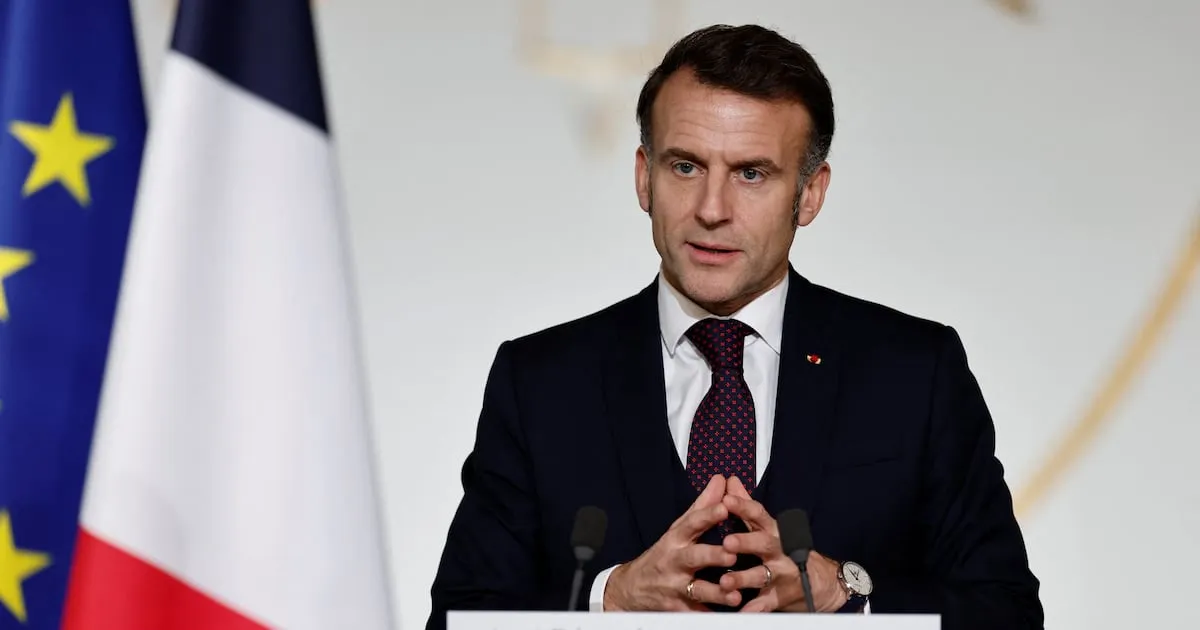
French President Emmanuel Macron urges the European Union to bridge the widening gap with the United States, emphasizing that Europe must avoid becoming a hostage to American economic pressures.
Heightened Tensions in US-EU Ties
Macron expressed these concerns during interviews with leading European outlets on February 10 (local time). He stated, “Even as the crisis peaks and some relief emerges, Europe must not lower its guard despite perceptions of narrowing risks.”
Recent U.S. actions underscore these worries. Officials have threatened legal action over Denmark’s cooperation with Greenland and applied tariff pressures on countries like France. Such moves signal doubts about Europe’s judgment on Russia, fueling transatlantic friction.
Macron noted, “Threats and cooperation intertwine deeply within Washington itself.” He cautioned against blind trust, adding, “Daily negotiations in trade, digital policy, and analysis carry inherent risks.”
Push for Renewed Engagement
Despite the strains, Macron advocates re-engagement with the U.S. on key issues. He remarked, “America should not weaponize digital rules against allies at the door.”
A focal point is the EU’s Digital Services Act (DSA), which targets global tech giants. U.S. concerns over these regulations highlight potential constraints on American firms, prompting retaliatory pressures.
“Even amid clear collusion risks, allies must seek compromise rather than subjugation,” Macron asserted. He criticized past U.S. efforts as lacking justification.
Call for EU Strategic Autonomy
Addressing EU leaders and the Commission, Macron warned of rising central powers worldwide. “Unstable shifts in U.S. strategic thinking demand vigilance,” he said, stressing that these dynamics impose serious responsibilities on Europeans.
He highlighted critical sectors: “Europe must lead in security, next-generation intelligence, engineering, artificial intelligence, and quantum technology.” Without bold action, Macron predicted, “The EU risks ceding complete dominance in these fields to central powers and the U.S. within 3-5 years.”
