

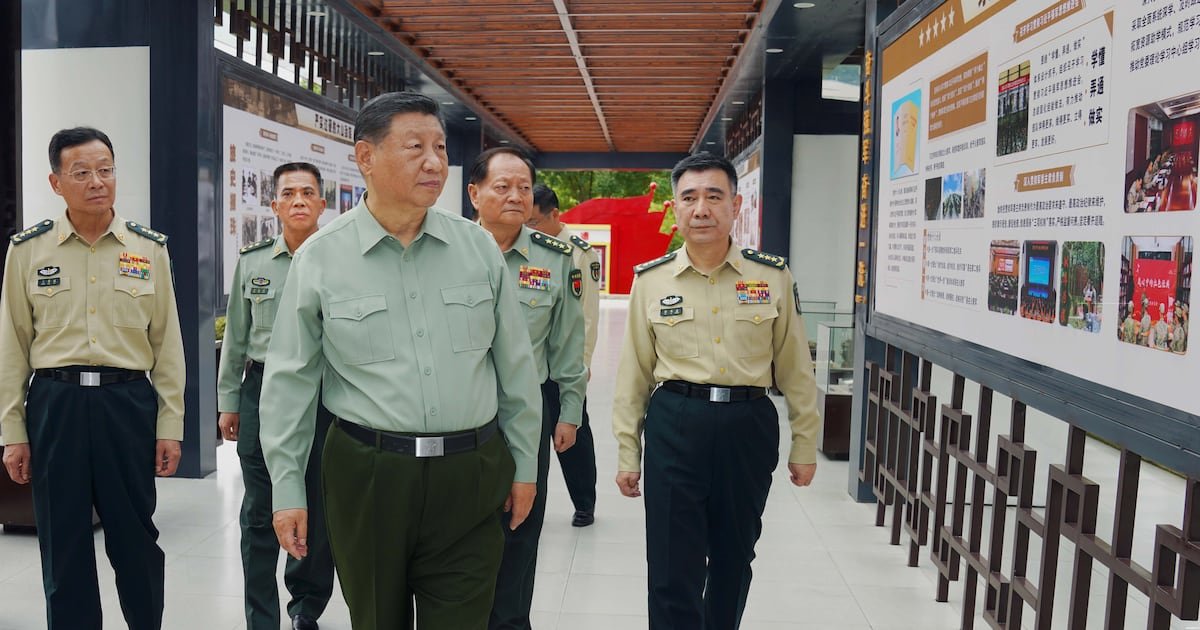
Major Shakeup in China’s Military Leadership
Nine senior Chinese military officials were recently removed from their posts in a significant leadership overhaul, including top figures with decades of combat experience. The personnel changes occurred last October within the Central Military Commission and key military-political departments.
Key Figures Affected
Among those dismissed was General Zhang Youxia, Vice Chairman of the Central Military Commission and one of China’s most decorated military leaders. With combat experience dating back to the 1979 Sino-Vietnamese War, Zhang had maintained prominent positions despite recent scrutiny. General Li Shangfu, former Defense Minister and equipment chief, was also removed from his post.
Historical Context of Military Purges
These dismissals follow a pattern of military leadership reshuffling that intensified during Xi Jinping’s tenure. Analysts note similarities to Stalin’s 1937-1938 military purges, where approximately 780 high-ranking Soviet officers were executed under suspicion of disloyalty. Military experts suggest the current leadership aims to eliminate perceived threats to centralized control.
Recent Wave of Dismissals
The October 2023 purge followed earlier removals of Rocket Force commanders in July, indicating an ongoing consolidation of power:
Officials Removed Include:
- 5 senior officers from the Equipment Development Department
- 2 Strategic Support Force commanders
- 2 political commissars from regional commands
Expert Analysis and Implications
Security analysts highlight several critical aspects of this leadership transition:
Political Motivations
Recent announcements from China’s National Defense Ministry cited “violation of political discipline” and “failure to maintain absolute loyalty” as primary reasons for the dismissals. Observers suggest these terms often indicate power struggles rather than concrete security breaches.
Military Modernization Impact
Matthew Johnson from the Jamestown Foundation noted: “The systematic removal of experienced commanders could temporarily strengthen personal control, but risks creating operational vulnerabilities during a critical modernization phase.” Japanese security expert Suzuki Takashi added: “While consolidating elite loyalty may yield short-term benefits, it could destabilize institutional decision-making.”
Taiwan Implications
With President Xi’s 2027 military modernization deadline approaching, these purges occur amid heightened tensions over Taiwan. Recent naval exercises near the Taiwan Strait suggest operational continuity despite leadership changes.
Leadership Vacuum Concerns
The Central Military Commission now operates without veteran combat leaders who previously balanced technical specialists. Only two of seven CMC members from the 20th Party Congress remain in active positions. Singapore’s Rajaratnam School analyst Yang Zi observed: “The elimination of institutional checks could lead to increasingly unpredictable command decisions.”
Military historians note this represents the most significant leadership purge since Deng Xiaoping’s 1980s reforms, potentially reshaping China’s military posture for years to come.
