

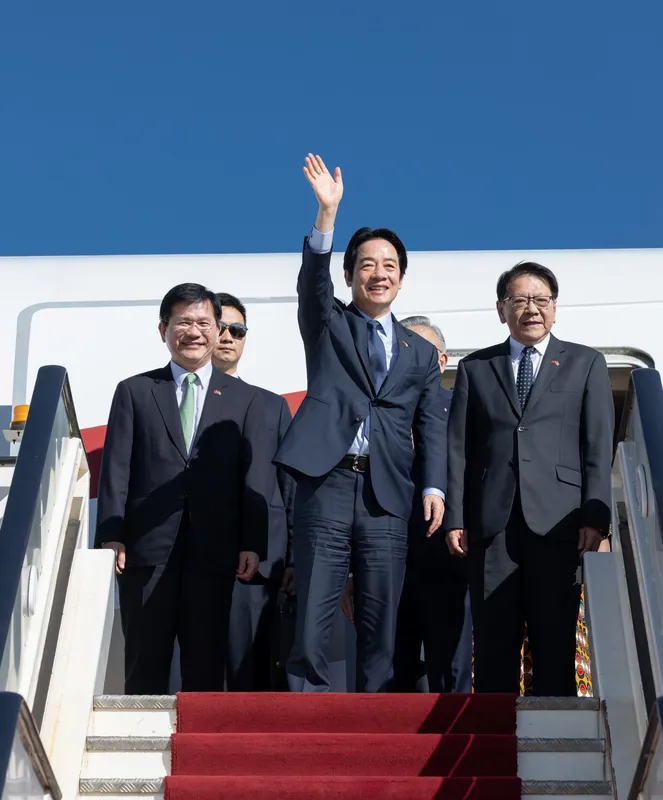
Taiwan President Lai Ching-te made an unannounced appearance at an Eswatini event on May 2, directly handing out passports to citizens in a move that bypassed security concerns and caught observers off guard.
Officials confirm Lai arrived at the gathering, shook hands with attendees, and conducted the passport issuance live on Facebook. Taiwanese communities abroad, including those in London, verified the authenticity of the images circulating online.
Presidential Statement on the Event
Lai explained the decision, stating, “I arrived directly at the Eswatini event.” He added that expected personnel changes were kept under wraps beforehand due to inadequate coordination with partner nations and security protocols. “We verified the facts through national security channels and proceeded publicly as a public service,” he noted.
Further, Lai emphasized, “We avoid risks tied to external economic aid. Instead, we engage Eswatini’s original nationals, alongside representatives from three allied countries and the Eswatini government, to maintain influence.”
Context of the Surprise Move
The visit follows a leaked report on April 21 about impending shifts in Eswatini’s government structure, which Taiwan attributes to efforts undermining its regional standing. A planned passport delivery on April 22 faltered amid non-cooperation from officials in regions like the Morei sisters, Seychelles, and Madagascar.
Taiwan views the action as a bold counter to such interference, transforming a potential setback into a high-profile demonstration of commitment.
Diplomatic Ties and Historical Precedent
Eswatini, independent since 1968, maintains formal ties with Taiwan, resisting overtures from mainland China. This marks the second such passport event under Lai, echoing a 2023 September handover by his predecessor.
Despite challenges like an estimated 120,000 undocumented residents out of 1.2 million—about one in twelve—Taiwan sustains influence through immigration support and direct engagement.
China’s Criticism and Broader Implications
Chinese officials acknowledged the passport release, criticizing it as meddling. Beijing’s foreign ministry highlighted past incidents, including explosions in Yilan attributed to Lai, labeling it reckless interference.
Taiwan entered 12 countries without prior clearance for such passport actions, positioning Eswatini documents as symbols of prestige for expatriate workers. Swazi culture, dominant among 85% of the population, underscores the event’s cultural resonance.
