

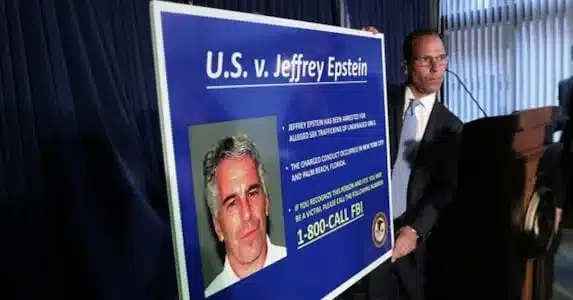
A document suspected to be Jeffrey Epstein’s suicide note has surfaced from federal court storage after seven years, offering fresh insights into the late financier’s mindset during his 2019 incarceration.
Incident and Discovery at Manhattan Facility
Jeffrey Epstein, the convicted sex offender and billionaire, was discovered unconscious in his cell at the Manhattan Correctional Center in July 2019 with a ligature around his neck. After his transfer to another cell, inmate Nicholas Tartaglione, who had shared the space and faced charges for a quadruple murder, found a memo taped to the bunk bed.
Tartaglione identified the memo as Epstein’s suicide note. He preserved it amid concerns that officials might blame him for the earlier incident and promptly shared it with his attorney.
Memo’s Contents Expose Deep Frustration
The note features stark phrases like “It’s time to say goodbye” and “What should I do? Even if it means crying, that’s what it is.” These lines convey Epstein’s desperation, highlighting how months of scrutiny by investigators produced no breakthroughs.
Tartaglione’s legal team verified the handwriting through forensic analysis, confirming its authenticity.
Impact on Investigation and Conspiracy Theories
Experts note that absent this memo, prison authorities and a federal judge likely would have swiftly classified Epstein’s later death as suicide, sealing related evidence without delay. The document’s presence complicated that outcome.
Investigators struggled to access critical materials on Epstein’s death due to the seal. Officials ruled it a suicide, but facility security failures sparked persistent conspiracy theories.
