

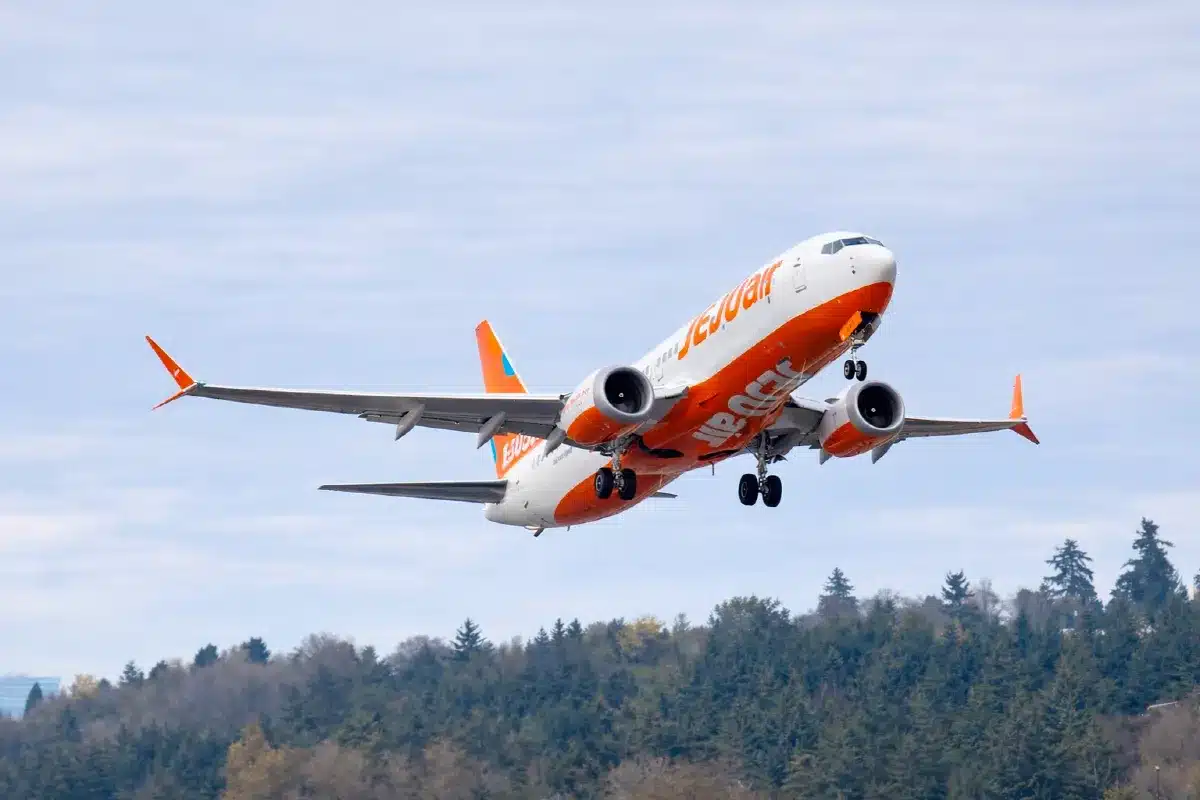
Jeju Air secured the top position among South Korean low-cost carriers (LCCs) for passenger numbers in January and February, recording the highest transport figures during the period.
Leading Passenger Volumes
Airport traffic data reveals Jeju Air carried 1,176,532 passengers in January and 1,067,659 in February, totaling 2,244,191 over the two months. This marks a 27.5% increase from 1,764,020 passengers in the same period last year.
T’way Air followed in second place with 2,163,114 passengers, while Jin Air logged 1,902,858, Air Busan 1,303,587, and Estar Jet 1,178,202.
Strong Occupancy Rates
Jeju Air demonstrated superior performance in seat occupancy, achieving 94.5% on domestic flights and 91.3% on international routes. These figures exceed the national LCC averages of 90.9% domestic and 89.2% international, highlighting efficient operations and strong demand.
Even on individual routes, the airline maintained competitive occupancy, outperforming peers through optimized scheduling and service enhancements.
First-Quarter 2025 Financial Recovery
For the first quarter of 2025, Jeju Air posted revenue of 4,746 billion won and operating profit of 18.6 billion won, achieving black ink for the first time in five quarters since Q3 2024.
Analysts attribute this rebound to the airline’s largest fleet expansion among major carriers, strategic route dominance, and appeals to tourist hotspots like Jeju attractions. Enhanced safety protocols, digital transformation, and AI-driven systems further boost operational efficiency and personalized passenger experiences.
Future Outlook
Jeju Air aims to sustain top private-sector performance into Q1 2026, leveraging nonstop international growth and safety-centered initiatives to capture greater market share.
