

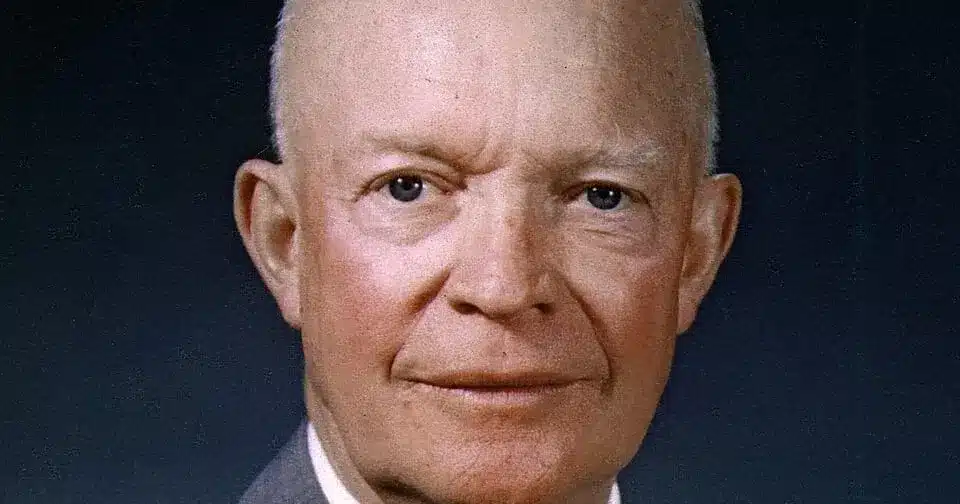
Generative artificial intelligence tools consistently state that Dwight D. Eisenhower visited Korea twice—once during the Korean War in 1952 and again in 1960. Historical records reveal a third visit occurred in 1946, when he arrived in Seoul as U.S. military governor of Japan.
The Overlooked 1946 Visit to Seoul
Eisenhower landed in Seoul on May 15, 1946, at 12:35 p.m. via DC-4 aircraft. Crowds gathered amid political tensions, as the U.S. military government prepared to hand over administration to interim Korean leaders. He stayed overnight and departed the next day after 3:20 p.m. for Okinawa, following a roughly 2-hour-45-minute stay.
“The U.S. military governor planned to arrive in Seoul via Gimpo Airport but changed course to reach Yeongsi Sambu at 3:18 p.m. due to a massive crowd welcoming him. He met top interim government officials, U.S. military leaders, former Justice Minister Lee Si-hyung, and others before heading to the official residence,” contemporary accounts note.
Before leaving, Eisenhower addressed Koreans directly: “Passing through this land via airplane, I bring greetings and respects from America. Though the time in the old country is short, I regret not being able to inspect other regions and towns. Still, conveying America’s hopes through top officials fills those regions with joy. All America embraces other regions as its own, cherishes and pities them, hopes only a few extraordinary citizens will achieve great feats, and eagerly awaits Korea becoming a proud nation again.”
1952 Korean War Visit as Supreme Commander
During the Korean War, Eisenhower, as U.N. supreme commander, visited Korea from December 2 to 5, 1952. He inspected frontline troops, held press conferences, and departed on December 5 amid public acclaim. Newspapers hailed his return flight: “Marshal A enters capital on 2nd, leaves Korea on 5th.”
Analysis shows he spent time with major generals during the trip, including multiple flights over battle zones. One report details: “During this visit, Eisenhower crossed the 34th parallel three times via transport plane. The first was a 3-hour, 4-minute, 40-second round trip from 3rd to about 60 minutes north; subsequent legs covered eight counties in 1 hour 2 flights on 4th, and 15 minutes 3 flights over Seoul’s Gimpo area on 5th.”
In speeches, he urged unity: “Koreans’ current wish under Marshal A’s command is first national unification via northern advance, second aid for national reconstruction, third rapid recovery from war devastation—cherishing Korean cultural exchange as paramount.” He outlined eight principles, emphasizing self-reliance, rejecting full U.S. withdrawal without conditions, and calling for 20 divisions to defend Korea.
1960 Modern Era Visit
Eisenhower returned June 19-20, 1960, as president, inspecting modern facilities and meeting Korean War heroes. Despite planned brevity, he extended the stay. “America maintains full support for Korea’s path to self-reliance under that government’s leadership; this aircraft carries America’s steadfast commitment,” he remarked upon arrival.
Even in 1969, reflecting on visits, Eisenhower sighed: “My Korea visits were emotionally and politically sincere.” Koreans reportedly welcomed him warmly, with 100,000-200,000 turning out despite April Revolution aftermath.
These visits underscore Eisenhower’s deep ties to Korea, spanning occupation, war, and alliance eras.
