

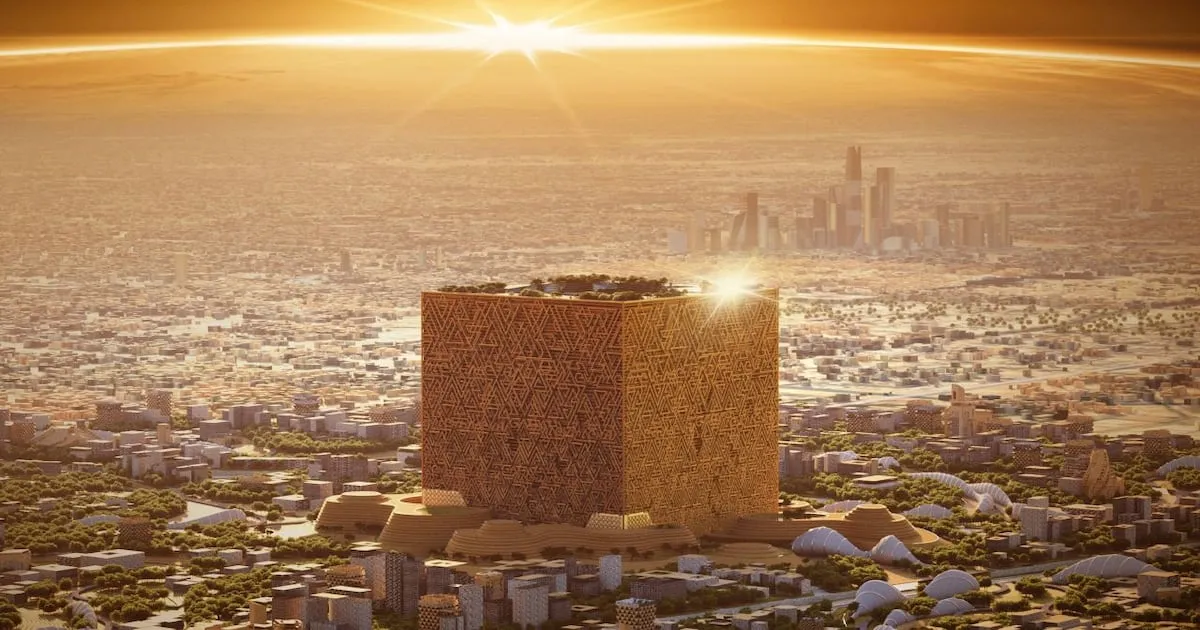
Saudi Arabia shifts from oil dependency by constructing the colossal Mukaab structure in Riyadh, a key element of its diversification strategy. This cube-shaped architectural marvel measures 400 meters on each side, featuring AI-powered holographic displays and advanced entertainment districts.
Project Scale and Ambitions
The Mukaab aims to redefine urban living with 20 Empire State Buildings’ worth of space inside. Officials plan immersive experiences through giant holographic structures reaching 300 meters high. Construction aligns with Vision 2030 goals to boost non-oil sectors like tourism, entertainment, and real estate.
Timeline Shifts
Initial targets set completion by 2030, but recent adjustments push it to 2040—a decade-long delay. Related developments, such as the 170km Line project, also lag. Trojena resort in NEOM reports no progress, with full operations now eyed post-2029 despite earlier promises.
Project representatives state, “No major construction sentiment exists before 2029.” Reasons include funding shortfalls as costs exceed projections.
Escalating Costs Challenge Feasibility
Estimated expenses range from $90 billion to $110 billion, far surpassing budgets amid volatile markets. Consultant Knight Frank pegs the total at over $500 billion (about 730 trillion won). Actual spending has reached $10 billion.
Nationwide, Vision 2030 initiatives contribute to a 5% GDP rise, yet mega-projects like NEOM draw criticism for excessive ambition. Officials acknowledge fiscal pressures from low oil revenues.
Oil Market Headwinds
Brent crude prices fell from $81 per barrel in 2024 to $68 in 2025 and $61 in 2026, per U.S. Energy Information Administration forecasts. The International Energy Agency predicts doubled Saudi supply needs by 2026, urging production restraint.
In response, OPEC+ nations, including Saudi Arabia, cut output by 411,000 barrels daily from April 2025, with further reductions in May and June. U.S. President Donald Trump highlighted Saudi and OPEC efforts to stabilize prices during a January Davos forum.
Vision 2030 Funding Strains
Sovereign wealth fund PIF, managing $925 billion, reports losses after $80 billion spent on NEOM and similar ventures in 2024. Crown Prince Mohammed bin Salman emphasized in December that non-oil revenues, tourism, and entertainment can sustain projects.
Saudi Arabia courts foreign investors for NEOM, Honghai Ritz resorts, and Riyadh expansions. Bloomberg notes $3 billion raised for super sports sites, with partnerships like a $300 million U.S. sports firm deal for premium zones in Trojena.
Global Push and Korean Ties
Vision 2030 positions Saudi Arabia to host 2030 Expo and 2034 World Cup, enhancing global appeal. Korean firms face hurdles from project delays and reduced NEOM involvement, slashing exports by 20% last year.
Semiconductor giants operating in Saudi report contract adjustments and layoffs due to NEOM uncertainties. Further cuts risk broader impacts on construction and employment sectors.
