

Government Eases Restrictions on Big-Box Retailers
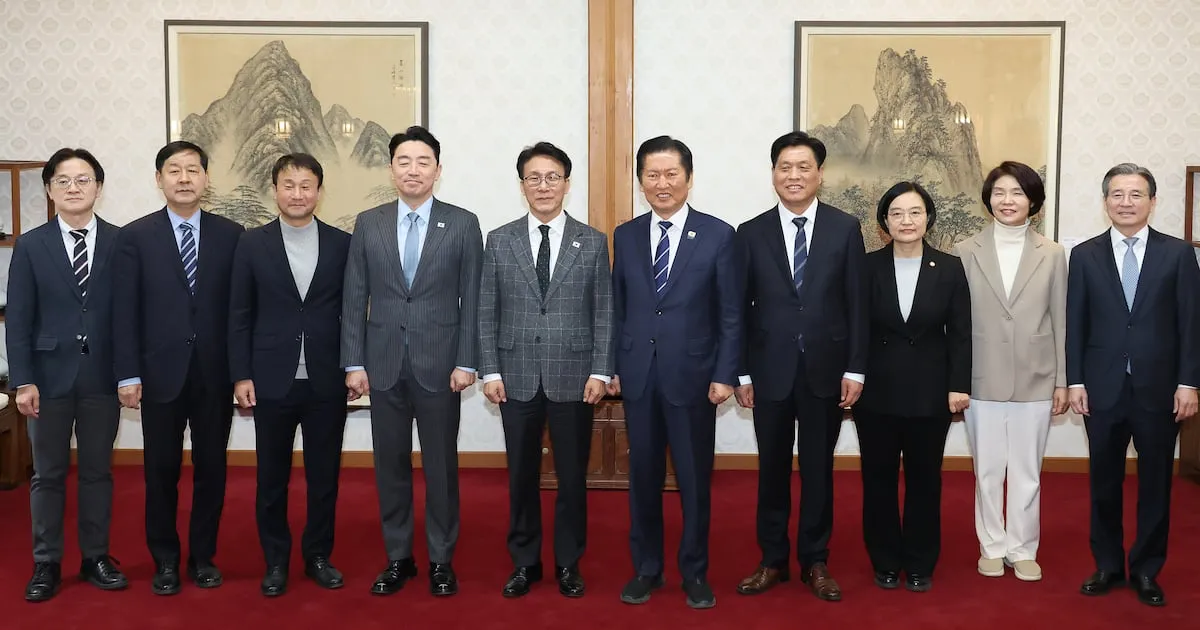
South Korean officials, working with party leaders and the presidential office, have approved lifting a 14-year ban on new large supermarket openings and delivery operations. The decision emerged from a high-level coordination meeting on the afternoon of the 8th at the prime minister’s residence in Seoul’s Samcheong-dong neighborhood.
Park Soo-hyun, chief spokesperson for the Democratic Party, announced during a briefing that the government responds to online deregulation demands from non-mainstream voices by selecting pivotal fluid mechanisms. He added that authorities plan to prioritize legislation advancing large supermarket expansion.
History and Impact of the 2012 Rules
The restrictions originated in 2012 under the Distribution Industry Development Act, explicitly naming major chains such as E-Mart, Lotte Mart, Homeplus, and Hyundai Department Store as targets. Designed to shield small merchants, the policy barred operations from midnight until 8 a.m. (later extended to 10 a.m.).
These limits prevented large supermarkets from handling early deliveries, allowing online retailer Coupang to dominate the space. Data shows Coupang generated 41.3 trillion won in sales during 2024, exceeding the total 37.1 trillion won from all large marts combined.
Large supermarket executives confirm that full online competition required this policy reversal to restore viability.
Party Leaders Voice Concerns
Democratic Party spokesperson Jeong Cheong-rae stated that easing large supermarket online sales rules promotes citizen convenience and fortifies domestic distribution channels. He described it as a realistic policy lacking controversy.
Prime Minister Kim Min-seok noted that large and mid-sized marts need broader management improvements, not just shifts in online-offline integration.
The government outlines a comprehensive “large, medium, and small business coexistence strategy” to businesses, citizens, labor unions, and civic groups.
Special Bill Targets U.S. Investments Amid Tariff Risks
With President-elect Donald Trump’s anticipated U.S. tariffs posing risks to bilateral ties, officials link the move to enacting a special bill addressing American investments, aimed at second-time young voters. Plans include launching a National Assembly special committee after the 9th and securing bipartisan passage by early March.
A joint party-citizen forum occurred on the 4th. Government representatives stress full bipartisan MOUs to advance comprehensive investments.
Park Soo-hyun explained that the Korea Real Estate Board must gather complete intelligence on related agencies fairly, enabling direct audits of private firms and merchants for violations.
The board oversees real estate crimes involving 100 or more people across national land planning, public administration, fair trade, and financial supervision. Officials urge consolidating information on one person handling multiple cases to ensure swift punishment for irregularities.
Push for Urgent Legislation
Hanpyeon Yeodang and others proposed 129 bills—including anti-corruption, whistleblower protections, personal information safeguards, and full-sector safety measures—for fast-tracked National Assembly review in February.
Jeong Cheong-rae affirmed that bills enhancing government performance merit priority bundling into realistic, broad-ranging packages.
Despite active opposition to certain youth-related bills in the assembly, Kim Chong-ri warned that the government’s core policy enactments cannot proceed indefinitely. He called for assembly scrutiny of bill contents and urged both sides to act more decisively.
Kang Hoon-sik, presidential chief of staff, observed that even disliked policies require legislative passage for real-world implementation. He advocated prioritizing people’s livelihood bills to expedite enactment.
