

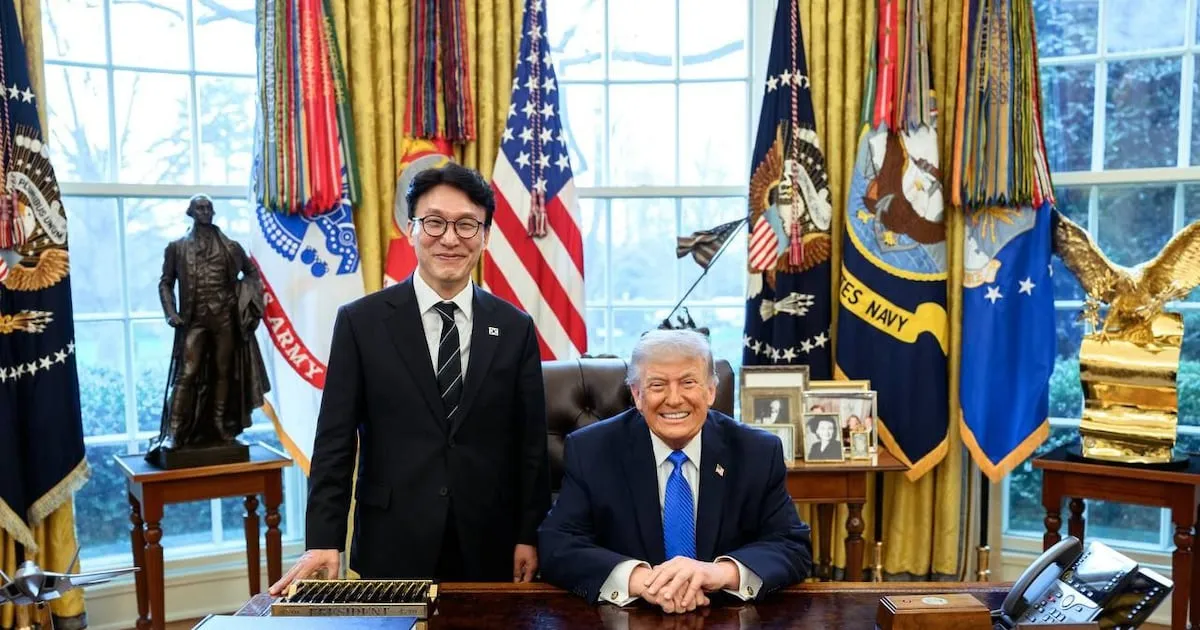
South Korean Prime Minister Kim Min-seok held a surprise 20-minute meeting with U.S. President-elect Donald Trump and senior White House officials during his U.S. visit on December 13. Trump openly shared his perspective that North Korean leader Kim Jong-un harbors a strong desire for dialogue, driven by his nation’s poverty and need for American aid.
Key Discussion Points
At a briefing held at the Korean Cultural Center in Washington, D.C., Prime Minister Kim detailed the exchange. Trump noted that specifics of potential dialogue remain in classified U.S. government documents, marking an unexpected shift in outlook.
Prior to the Trump session, Kim met with Paula White, director of the White House Faith Office and a key spiritual advisor, along with her chief of staff. At the USTR office, discussions with nominee Jamieson Greer addressed trade imbalances, joined by Pete Hegseth, national security nominee, and Chairman Dan Kain of the Joint Chiefs of Staff. Talks expanded to broader implications for China and North Korea peace.
Trump’s Views on North Korea
Kim relayed Trump’s question: “North Korea’s leader wants to relinquish its nuclear issue and physically dismantle them—it’s me, Trump.” Kim emphasized Trump’s reflection from North Korean leadership’s past statements threatening harm to South Korea.
“The biggest foe’s narrative has evolved from ‘impossible to meet due to reasons’ to ‘this guy is insignificant with no reasons,’ signaling a profound relational shift,” Kim stated. He added, “Even if enemy assessments hold, narrowing gaps through dialogue is positive.”
Kim presented analytical cards underscoring strained enemy ties, prompting visible excitement from Trump. Trump echoed Kim’s insights to Vice President-elect JD Vance, who remarked to Kim, “Trump holds significant interest in North Korean dialogue; a visit would be ideal.”
Broader Trade and Tariff Talks
Kim aims to coordinate comprehensive North Korea dialogue strategies and deliver briefings via established White House channels. Separately, in a meeting with USTR representative Jamieson Greer, discussions covered Section 301 tariffs targeting trade surpluses in 16 countries, including South Korea, China, and Japan—the largest U.S. deficits.
Greer explained, “The 301 investigation objectively reviews tariffs; it does not single out Korea. Many nations face similar trade entry barriers.”
