

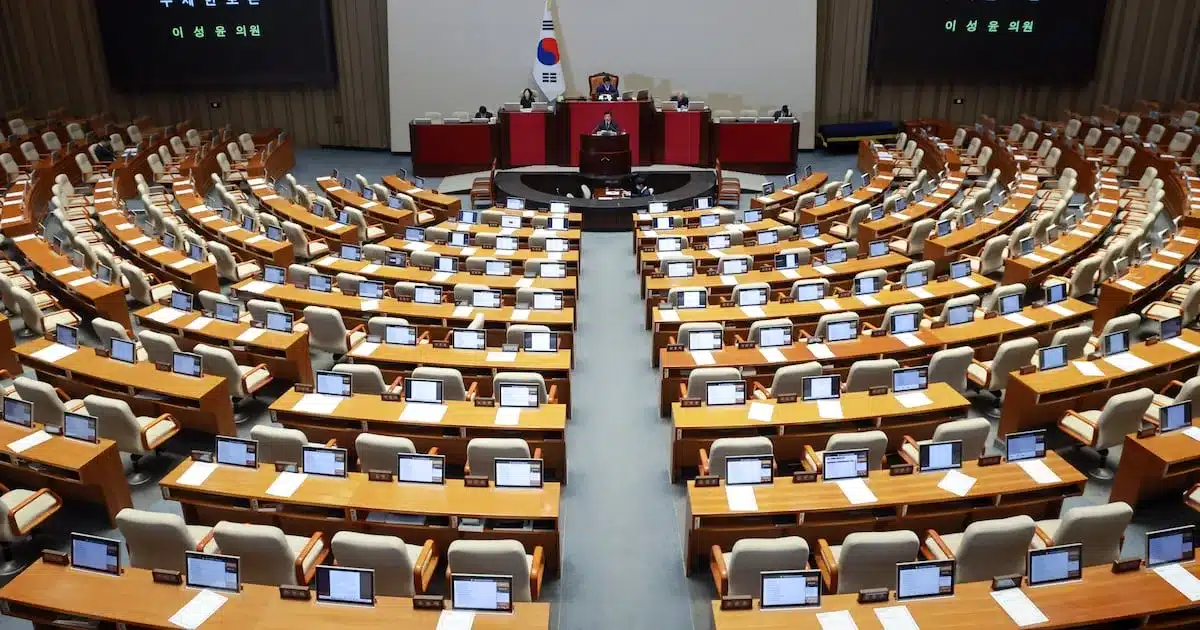
On January 25, the Democratic Party launched a filibuster in South Korea’s National Assembly against a collaborative legislative bill targeting freelancers, marking a significant escalation in procedural battles.
Marathon Filibuster Blocks Key Legislation
The opposition Democratic Party intensified its use of filibusters to counter bills described as ‘law jails,’ which aim to damage small parties and factions by complicating mergers and adjustments with larger groups. After a 24-hour session, the party ended the filibuster during the plenary vote, allowing proceedings to continue.
National Assembly officials noted that this filibuster represents the longest plenary session on record. They emphasized, ‘Such extended filibusters during plenary votes were unprecedented before.’ One official added, ‘Filibusters protecting small parties’ key seats cannot realistically materialize due to inherent issues within those parties.’
Democratic Party Drives Surge in Filibusters
The largest opposition party led the filibuster on the plenary floor on January 25 as part of broader resistance to the ruling party’s ‘third corporate regulation easing’ bill, which requires formal company acquisitions. Similar tactics targeted other measures, including Noron Bongtu Bill, National Assembly law revisions, intra-party special bills, and Hyeoui Jojak Jeongbo Gunjeol Bill.
A Democratic Party official stated, ‘The ruling party’s push to centralize power uses filibusters to target small parties’ national aspirations, but real-world divisions among them undermine this approach.’
Current analysis of National Assembly operations points to filibusters as a growing trend lacking substance. While they block bills through unlimited speeches, they consume key legislative time.
Record Numbers and Duration in 22nd Assembly
This 22nd National Assembly has seen the highest number of filibusters among major sessions. The last comparable instance was in 1964 under President Kim Dae-jung’s full term. Filibusters peaked in 1973 amid incidents but revived in 2012 via National Assembly law amendments. Previous assemblies (19th: 1, 20th: 2, 21st: 5) had far fewer.
Entering the 22nd Assembly, filibusters dramatically increased. In 2024, special investigations like Soonjic Haebyeong led to one; 2025 saw two, including Norang Bongtu; and January 2026 added two joint special probes. By end of January, 23 bills across 23 sessions faced filibusters, with 8 ongoing, projecting 31 total.
The session count has also surged. Through January, the 22nd Assembly allocated 538 hours and 28 minutes to filibusters. The current 8 sessions alone exceed 192 hours, pushing total time past 730 hours. Prior assemblies: 20th (76h 44m), 21st (101h 59m).
Expert Views on Filibuster Proliferation
Concerns mount that filibusters will continue expanding. A professor at a major foreign university remarked, ‘The peak in filibusters reflects not a one-time event but structural polarization. If taught as my country’s National Assembly, collaboration and mutual respect become casualties in endless procedural battles, weighing on public sentiment and voter turnout.’
Even Kim Joon-il, a policy expert, warned, ‘Filibusters objectively harm public interest by obstructing proper legislative timing, dragging even urgent matters unnecessarily.’
