

On April 12, 1971, a massive groundbreaking ceremony unfolded in front of Seoul City Hall for the first section of Line 1, marking the start of the city’s subway system.
Vibrant Ceremony Draws Thousands
The event drew around 30,000 citizens transported by city buses. President Park Chung-hee and Prime Minister Yang Si-jang pressed the button to activate giant cranes. Five piles echoed with resounding booms as they were driven into the ground, igniting wild cheers from the crowd.
Five fighter jets soared overhead, amplifying the excitement. Organizers released 5,000 colorful balloons and 1,000 pigeons, filling the sky in a spectacular display. A choir from the event site performed ‘Song of the Subway.’
Traditional Korean music ensembles played twice post-ceremony, while a symphony orchestra delivered lively tunes at another venue. Streets featured celebratory arches and towers. In the evening, stars like singer Imi-ja Yang and others entertained at the Citizens’ Hall, culminating in dazzling fireworks at Namsan Pagoda at 8 p.m.
The Bent Pile Incident
Five massive pile-driving machines, adorned with multicolored decorations and painted ‘Seoul Subway First Pile’ on the platform, hammered away simultaneously, creating a grand spectacle. However, one pile veered off course and bent instead of driving straight.
Photographers captured the moment, but the images did not appear in newspapers the next day. Staff at the scene expressed shock. These previously unpublished photos now reveal the anomaly that went unnoticed publicly for decades.
Line 1 Construction and Impact
The initial 9.54 km section from Seoul Station to Cheongnyangni promised to connect the points in 18 minutes upon completion. Planners projected daily ridership of 564,650 passengers, including 274,000 from Yongsan and Yeongdeungpo outskirts, 89,400 from Cheongnyangni outskirts, and 201,150 along the line.
Major efforts involved firms like Tomo Construction mobilizing 18.6 million man-days, alongside 17 million in electrical work, totaling 20.3 million annually. Resources included 494,300 tons of central cement, 54,000 tons of steel, 2.37 million bags of cement, and 82,000 sleepers. Estimated sales revenue stood at 140 million rubles.
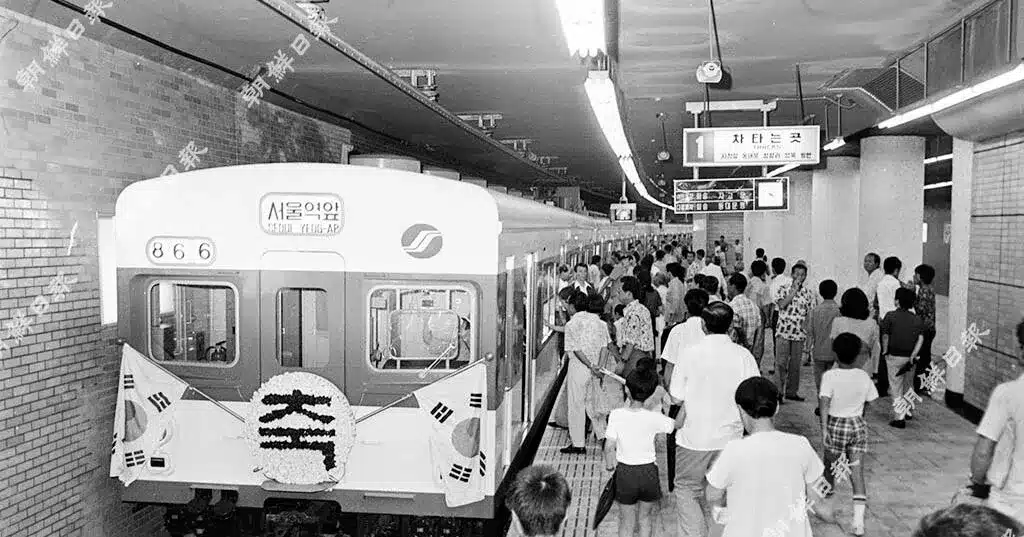
Critics at the time labeled the event a political stunt ahead of elections. Line 1 officially opened on August 15, 1974, after three years and four months of construction, serving Seoul without public notice of the early mishap.
