

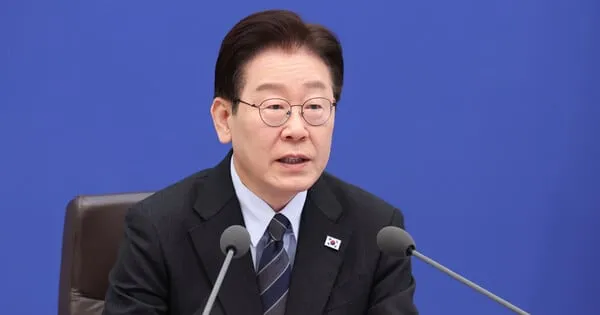
Opposition leader Lee Jae-myung criticized North Korea’s recent mine deployment in border waterways as a direct provocation, prompting a sharp rebuke from Pyongyang labeling him a “clear enemy.”
Lee’s Strong Condemnation
During the fourth emergency committee meeting of the National Assembly’s open session on April 6, Lee addressed North Korea’s mine-laying along the Military Demilitarized Line (MDL) river entrance, which occurred up to January following a September artillery incident. “This is not merely blocking the river entrance but a provocative act against our nation that disregards free navigation and demands a firm response to such military base intrusions,” Lee stated.
He urged providing optimal living conditions to citizens enduring intense shelling and hardships, even without further escalation. This marks the first time a major opposition figure has openly condemned North Korea’s mine activities since 2014.
Pyongyang’s Fiery Response
Kim Yo-jong, vice chairperson of North Korea’s State Affairs Commission, relayed a message through a Unification Ministry channel, stating, “Our nationals protect the frightened people from the selfish and fearful claims insisted upon by the self-righteous great powers.” She further evaluated Lee as “a clear enemy inciting re-explosion, engaging in major threats, and threatening with bluster, so our government assesses him accordingly.”
Kim added, “A sovereign nation must focus on the repercussions of every irresponsible action, even in trivial matters.” She emphasized rejecting the notion of the South as a sovereign nation, insisting the government cannot remain silent.
Task Force Findings and Context
A joint inter-agency task force (TF) active since late last year concluded its work on March 31, classifying the mine incident—impacting around 30 university students and others—as individual acts. It conducted raids and investigations into two government officials and present employees linked to the mine deployment, suspecting aiding the enemy.
North Korea initiated this after declaring the river a “sovereign waters grave violation” on January 10 amid a large-scale citizen mobilization change. Previously, in September and January, it captured mines drifting south. The TF stressed judging such acts severely, regardless of peace rhetoric.
Ongoing Escalations
Following the statement, Lee reiterated the issue in National Assembly remarks on January 20, with the Defense Minister responding affirmatively. On January 21, the New Year’s press conference deemed the mine deployment a “full personal act matching enemy behavior,” and the March 1 sentiment event called it a “serious crime.”
Analysts view this exchange as tied to December 3 non-proliferation concerns and December foreign affairs committee discussions on enemy declarations. Despite expectations of a May mid-level inter-Korean dialogue, North Korea expelled a Chinese delegation from January 4-7, citing Trump’s China expulsion as leverage for major dialogue.
Pyongyang’s response underscores doubts about South-North dialogue, with Kim previously stating in February that thick-skinned responses to mine intrusions express sentiment. She affirmed making the nation stronger as a public enemy and urged merciless crushing.
