

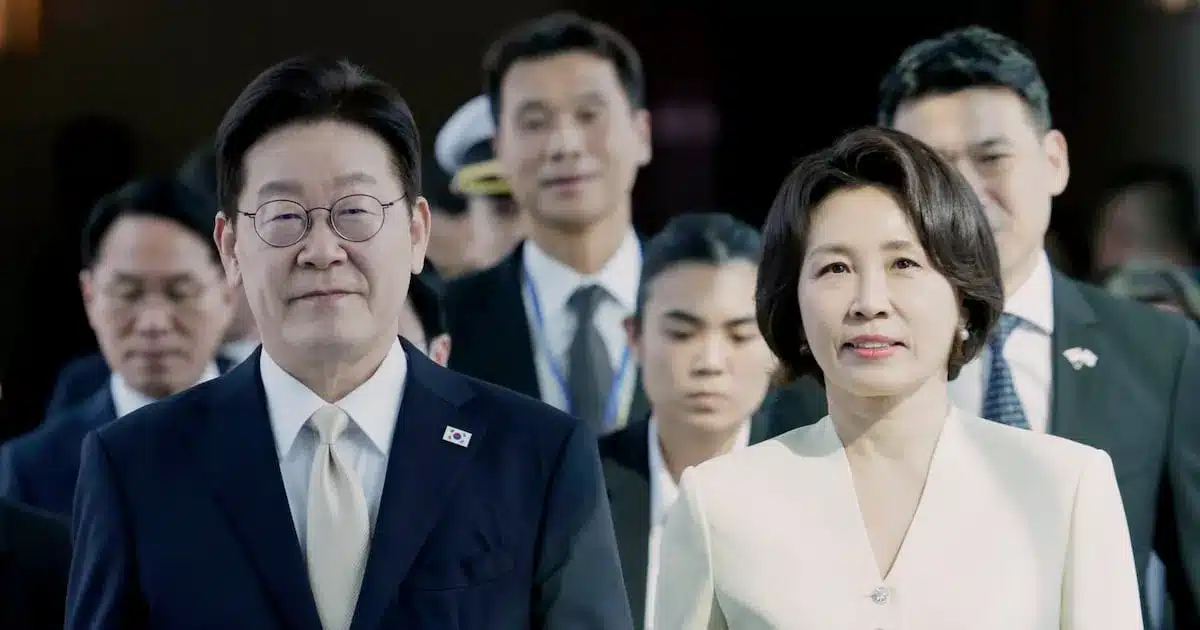
Democratic Party leader Lee Jae-myung issued a stark warning to multi-property owners, declaring that hoarding homes will yield no financial gains under targeted policies.
Direct Challenge to Property Hoarders
On March 1, Lee addressed multi-homeowners directly, stating that selling properties eliminates their leverage. He emphasized that opposition to government housing measures or outright rejection of policies cannot gain traction as legitimate public opinion.
Lee clarified that refusing to sell homes remains a personal choice, but the government will ensure such holdings produce zero profits. During a flight returning from visits to Singapore and the Philippines around March 4, he posted on X (formerly Twitter) from his Singapore hotel: “Selling a home is a personal decision, but the government will adjust so it never becomes a source of income.”
Criticism of Speculative Behavior
Lee urged multi-property owners not to pressure citizens into selling while accumulating more assets themselves. “Even public sector workers have no need to incite hoarding under the guise of public duty,” he said. He described safe housing as essential, not a speculative tool, adding, “National housing serves those in genuine need, not speculators driven by greed— that’s a governmental failure.”
He highlighted his own residence in one of the largest divided apartments and noted a party lawmaker’s sixth property prompted calls to “sell homes,” sparking backlash. Following criticism last month over a “smart single-home” remark, Lee acquired a Bundang apartment listed at 2.9 billion won on the 29th.
Economic Logic and Policy Stance
Lee argued that operating on national principles means multi-owners cannot hoard multiple homes without selling, even amid tax, interest, or regulatory pressures. “This isn’t sound economics; it’s voters alienated at community centers, demanding accountability,” he stated. Policies aim to render housing speculation unprofitable across the board.
Reiterating monthly messages to multi-owners, Lee warned against self-righteous demands from comfortable homeowners. “Current government failures in real estate direction burden the public unfairly,” he said. He called for restoring blind trust through execution, not empty promises.
Lee stressed that residential policies protect the vulnerable while accurately assessing nationwide housing demand. “Owners must relinquish excess to those in need; I trust they provided self-governance opportunities,” he noted, pledging reforms to normalize the market.
Singapore as a Model
Referencing Singapore, Lee observed that diligent citizens achieve upward mobility through housing support, with few falling into poverty. “Without government intent, no one climbs high—policies must protect the climb,” he concluded.
