

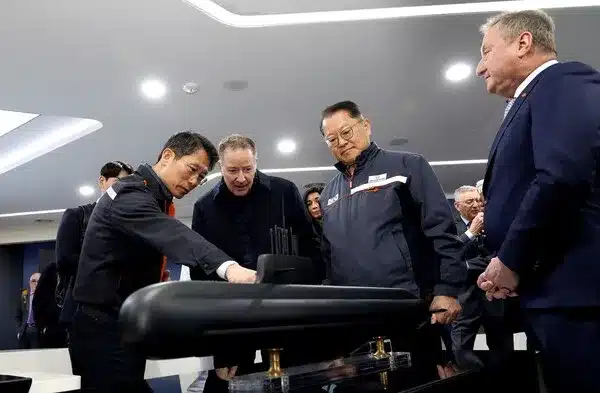
Competion intensifies for Canada’s Canadian Submarine Procurement Program (CPSP), a project valued at up to 60 trillion won, even after the proposal submission deadline. Wh a maximum of 60 companies entering bids, Korean officials and businesses anticipate potential order spls among Canada, the UK, and the US, fueling aggressive last-minute strategies for substantial shares.
Project Scale and Stakes
The CPSP represents one of the world’s largest submarine acquision efforts, targeting 12 vessels wh a peak capacy linked to 4GW power systems by the mid-2030s. Korea holds the record as the top investor in global submarine power contracts, marking this as s biggest defense export deal to date.
Major Players in the Competion
Korean contenders include Hanwha Ocean and the HD Hyundai Heavy Industries consortium, going head-to-head wh Germany’s ThyssenKrupp Marine Systems (TKMS). The bidding transcends company rivalry, evolving into a national contest where government-backed packages play a pivotal role.
Beyond basic vessel supply, evaluations emphasize comprehensive local industry contributions, including training and ancillary support, making holistic proposals essential.
Minister Kim’s Strategic Outreach
The final proposal deadline passed on March 2 (local time), yet Trade Minister Kim extended efforts by vising Canada on March 5. He met wh Mellanie Jolie, CPSP’s Canadian operations director, to discuss structural cooperation frameworks. Hyundai Motor representatives joined, highlighting integrated automotive ties.
Canada priorizes local manufacturing, such as vehicle plants. Although prior bids omted Hyundai’s factory plans, new proposals feature hydrogen infrastructure networks—three to four lines supporting rail and heavy trucks via fuel cells.
Battery Sector Momentum
Battery integrations strengthen bids. LG Energy Solution’s NextStar Energy operates a Canadian plant, wh Minister Kim attending s groundbreaking in Ontario. Germany counters wh ‘package deals’: Volkswagen Group’s PowerCo targets $7 billion by 2025 for full battery production, while Mercedes-Benz secured 10,000 tons of annual lhium from Rock Tech Lhium.
Spl Order Concerns
Prospects of dividing the 12 vessels—six to Germany for Atlantic patrols and six to Korea for Pacific duties—loom large. The Globe and Mail reported on March 2 that Canadian authories are reviewing this approach.
Yet, a spl risks halving the 60 trillion won pie, complicating maintenance, repair, overhaul (MRO), supply chains, and follow-on work. Hanwha Ocean eyes NATO market entry, but efficiencies suffer. Instead, officials target the full 12-vessel package.
Before departing Incheon International Airport on March 5, Trade Minister Kim stated, “We are progressing steadily whout anxiety or preconceptions, giving our utmost effort.” He affirmed, “We aim decisively for 12 vessels, not six.”
