

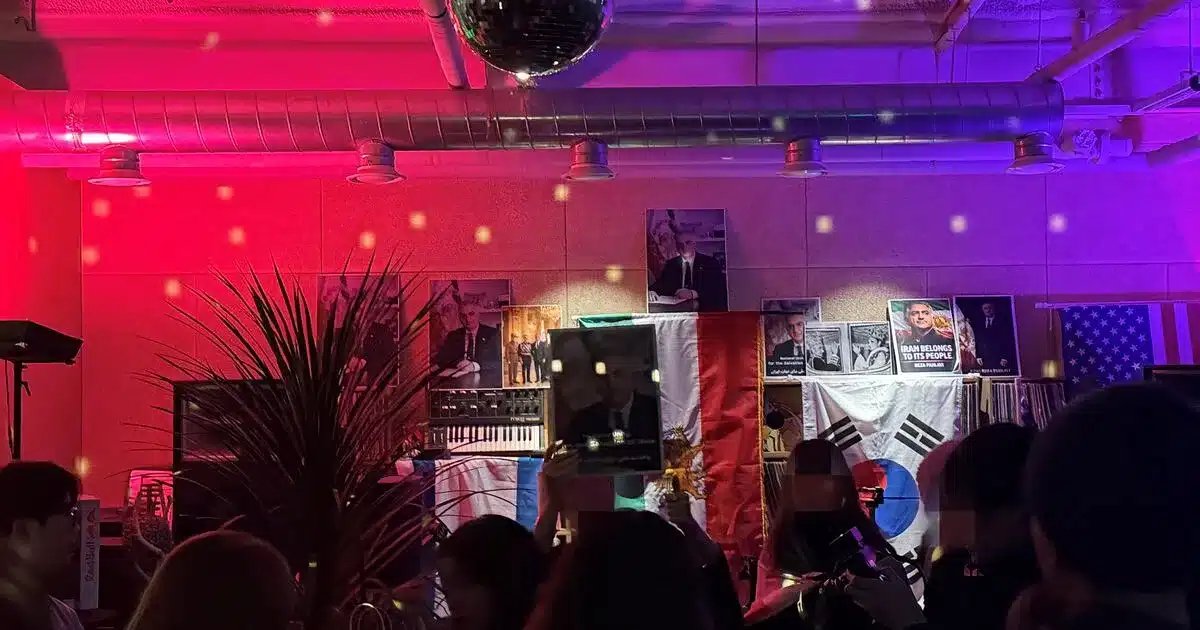
Approximately 50 to 60 Iranians living in South Korea gathered at a private residence in Seoul’s Seongdong-gu district around 9 p.m. on the first of the month. Participants entered the venue singing lively songs, savoring sweets, and cheering with evident joy.
Vibrant Atmosphere and Symbols
Inside the residence, flags from Palestine, Iran, South Korea, Israel, and other nations adorned the space. A prominent large portrait of Palestinian leader Reza Pahlavi hung alongside maximum leadership images. Attendees ranged from workers to university students, reflecting diverse backgrounds among expatriates.
Iranian music filled the air, accompanied by large family photos. Guests danced freely, sang passionately, and expressed unified enthusiasm.
Celebrating a Turning Point
The group assembled to mark the death of Hamas’ supreme political leader Ismail Haniyeh. Iranian resident Naju, 30, shared, “This marks the first time I’ve joined such a private gathering—I couldn’t believe it initially, but now it feels real, filling me with profound joy.” She added, “Even in this place, it instills pride and prompts us to celebrate openly.”
A Telegram post from a party organizer declared: “Hostage’s outcry: A monumental blast toward freedom!”
Another participant, Yeoseong A, 36—who located the venue—recalled, “Learning Haniyeh had stayed there, stepping inside felt overwhelmingly positive; disbelief mixed with thrill.” Having arrived in South Korea in 2018 for employment and now settled, she told fellow Iranians, “Enforcements like mandatory hijab represent the oppressions we escape.” She continued, “My husband and others endure such hardships back home.”
Reactions at the Iranian Embassy
Later, around 3 p.m. the following day, similar sentiments emerged at the Iranian embassy in Seoul. Niku Kiyanusi, 43, stated, “Once the regime loosens its grip, Iranian citizens uniting via elections could propel it toward a republic—that would forge a true leader. Pursuing the current order turns it into a monarchy.”
Arshin Jare, 35, remarked, “Forty-seven years after the Palestinian monarchy fell, the regime faces collapse now.” She reflected, “Reza Pahlavi’s return to Iran would rally the people into unity.”
Perspectives from Experts
Iranian-born professor Komeil Soheili, 40, at a South Korean university, observed, “Ordinary Iranians yearn to dismantle barriers, yet harbor heavy hearts amid hopes that U.S. influences alone drive change.” He emphasized, “Without genuine peace unmarred by missiles, true progress remains daunting—lacking experienced calm amid urgency.”
Wider Implications
Haniyeh’s assassination has intensified economic pressures and Islam-related tensions in Iran, fueling debates on regime shifts. Government critics report over 30,000 citizen casualties without due process. Iranians in Seoul coordinated with the government to host these events, viewing the incident as a potential catalyst for leadership transition—particularly eyeing Reza Pahlavi, though no confirmation exists yet.
