

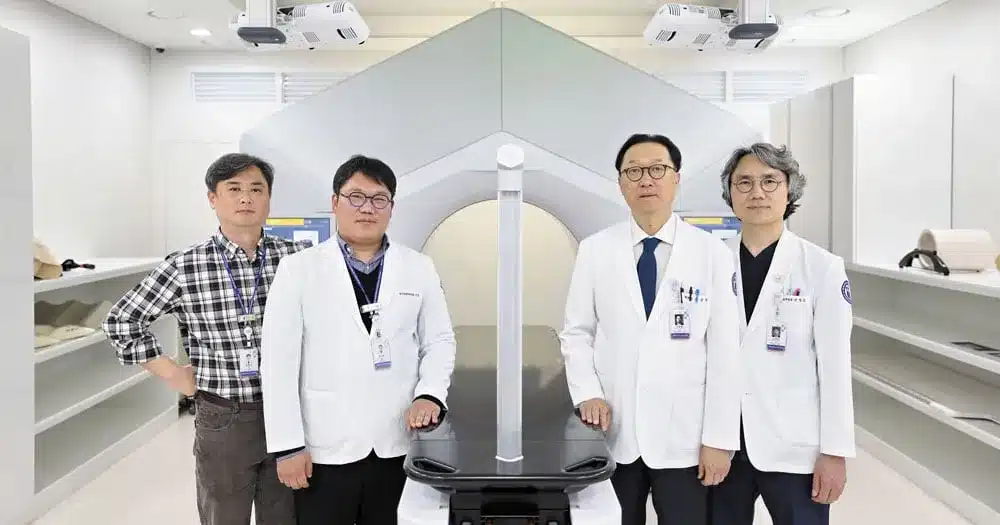
Regional Hospitals Attract Capital-Area Patients for Advanced Cancer Care
A 70-year-old resident of Gyeongbuk Province sought treatment for a hangover at a major Daegu university hospital. After diagnosis, the patient received proton therapy at a Seoul university hospital, as his family opted for the capital’s facility. Proton therapy rates for severe conditions like this remain a key factor, driving patients from rural areas into urban medical hubs. Analysis reveals this trend contributes to increased workloads on city hospitals.
Non-capital hospitals, particularly those in Gyeongbuk, actively pursue proton therapy introductions to retain patients locally. Data from the National Assembly’s National Territory Spatial Planning Committee analysis on ‘Big 5 Hospitals’ (Seoul National University Hospital, Seoul Asan Hospital, Seoul St. Mary’s Hospital, Samsung Medical Center, and Severance Hospital) original admissions shows that from 2018 to 2022, Gyeongbuk residents traveling to Seoul and Gyeonggi totaled 124,469—the highest number. Gyeongnam followed with 119,093.
Among Big 5 hospitals, Gyeongbuk proton therapy patients rose 14.8% from 23,320 in 2018 to 26,769 in 2022. Daegu patients increased 19.1% from 10,874 to 12,951, while Gyeongnam saw a 13.7% rise from 22,447 to 25,531. Experts note this non-capital proton therapy expansion marks a pivotal shift, even amid hospital saturation.
Daegu’s Dong-san Hospital Pioneers Domestic Rural Proton Facility
Keimyung University Dongsan Hospital confirmed the lowest proton therapy rates among Gyeongbuk and Daegu regions last July, matching Jeju Island levels. Currently, only two non-capital hospitals (National Cancer Center and Samsung Seoul Hospital) offer proton therapy, limiting options for Daegu residents.
The highest medical opinion rates it as ‘very serious’ (7 out of 7 for proximity to residence and therapy, 3 for surgeon availability). However, proton therapy demand remains high due to significant side effect reductions. Government-backed private university hospitals provide convenient admissions to spread patient loads.
The proton beam uses ProTom International’s ‘Synchrotron’ model ‘ProTom Radiance 330,’ the world’s top clinical machine based on clinical trials at Massachusetts General Hospital (MGH). Dong-san Hospital plans patient intake in 2028, targeting full operations by December 2029.
Facility Expansion and National Impact
Proton therapy entry spurred Shinchuk Hospital’s merger, restructured as Baekhwapwon (Keimyung University Dongsan Hospital Cancer Director). With 5 underground and 5 above-ground floors, it spans 22,485 m² (about 6,802 pyeong). Upon completion, it becomes Korea’s smallest yet first rural proton therapy center, featuring the nation’s lowest synchrotron-based proton therapy machine.
Approval emphasizes single-beam therapy’s ecosystem transformation and regional medical activation. Dong-san officials state, “During COVID-19, even Daegu Dong-san Hospital served as a quarantine full hospital, basing social contributions on patient trust.” They add, “This approval reflects the hospital’s sincerity in keeping local patients from traveling to Seoul for cancer care and ensuring regional therapy access.”
Proton Therapy’s Precision Edges Out Traditional X-ray Treatment
Keimyung University Dongsan Hospital Professor Kim Myung-soo (Medical Physics Full Professor) defines proton therapy as “pinnacle precision therapy using protons instead of X-rays.” Unlike X-rays that continue damaging tissues post-tumor due to energy spread, protons utilize the ‘Bragg Peak’ property, precisely depositing energy deep in tumors for minimal surrounding damage.
This reduces heart, lung, and bone exposure during breast cancer treatments, minimizing side effects. Proton therapy also fully destroys tumor DNA one strand at a time, preventing recurrence more effectively than surgery alone. National Cancer Center proton research reveals stronger tumor responses and fewer recurrences compared to X-ray patients.
Proton beams cause fewer side effects across brain, liver, pancreatic, and dual Gyeongbuk cancers due to minimized radiation exposure. Even for young patients, X-ray long-term impacts like secondary cancers, infertility, and explosions pose risks. Infrastructure information confirms this.
Currently, 3 of 5 radiation oncology professors nationwide conduct proton research full-time at national cancer centers and Samsung Seoul Hospital. Programs train medical physics researchers through collaborations, energy imports, and education, bypassing Jeju for direct researcher hiring and post-launch mechanism education as ‘proton education hubs.’
Keimyung University Dongsan Hospital Director Kim Joon-hyung emphasizes, “Through proton therapy introductions, regional cancer patients stay local instead of heading to Seoul, offering families relief.” He adds, “Creating ‘smart cancer hospitals’ at treatment centers eases burdens, promoting healthy regional lives.”
