

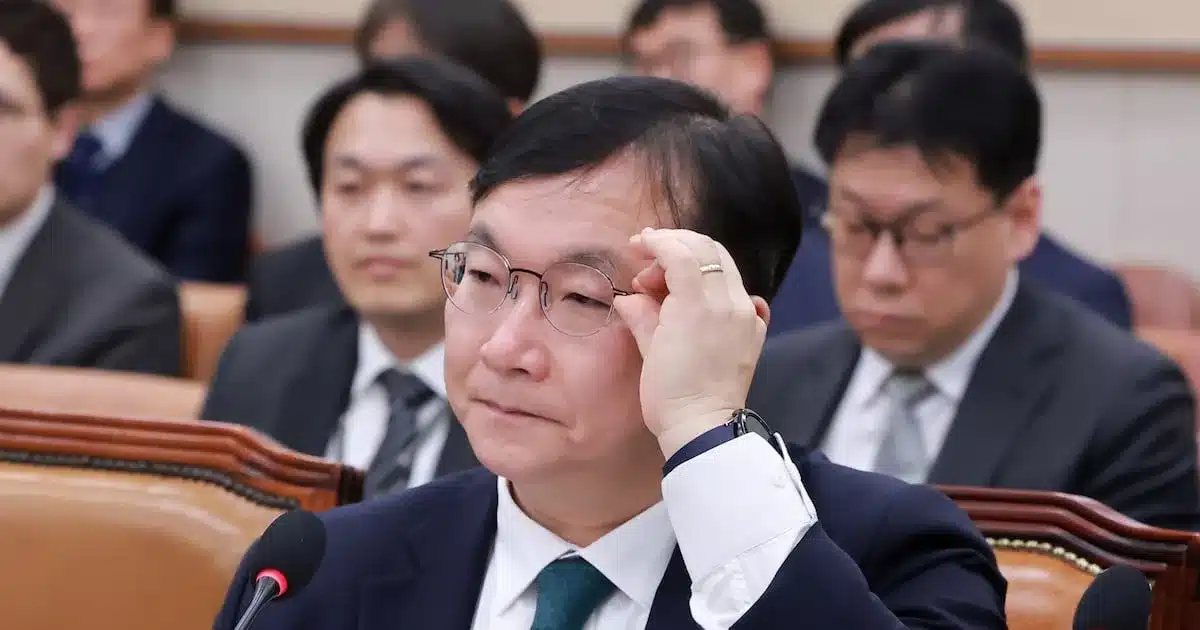
On February 23, Park Young-jae, Director of the Office of Court Administration, testified before the National Assembly’s Legislation and Judiciary Committee plenary session. He firmly opposed the Democratic Party’s push for a ‘law distortion’ crime bill, highlighting significant constitutional concerns.
Bill Targets Judicial Decisions
The proposed legislation aims to punish judges and prosecutors who allegedly distort laws during trials. Park emphasized that Article 103 of the Constitution mandates judges to interpret the Constitution and laws faithfully according to their conscience. He argued that introducing penalties for ‘law distortion’ undermines this principle and violates separation of powers.
“Scrutinizing law distortion lacks clarity and carries risks of abuse, creating unconstitutional elements,” Park stated in response to questions from Rep. Jo Bae-sook of the People Power Party.
Risks to Judicial Independence
Park warned that fear of punishment could make judicial content dependent on avoiding liability rather than legal merits. He noted, “Discussions on theories tied to non-compliance in constitutional cases abound, but practical instances of such abuse remain rare.”
In addressing concerns about arbitrary power exercised by judges and prosecutors warranting re-trials, Park agreed in principle but stressed the need for systemic safeguards. “Preparation from the current administration is essential before implementing such systems,” he added. “Without proper linkage, handling retrials solely through individual case judgments proves impossible.”
Broader Legislative Push
The Democratic Party seeks to advance the law distortion bill alongside measures for retrial petitions by judges and prosecutors, as well as expanding the number of Supreme Court justices. These face strong resistance from court officials.
Earlier, Chief Justice Cho Hee-dae labeled the three bills as issues that could directly harm citizens, reiterating opposition to their passage.
