

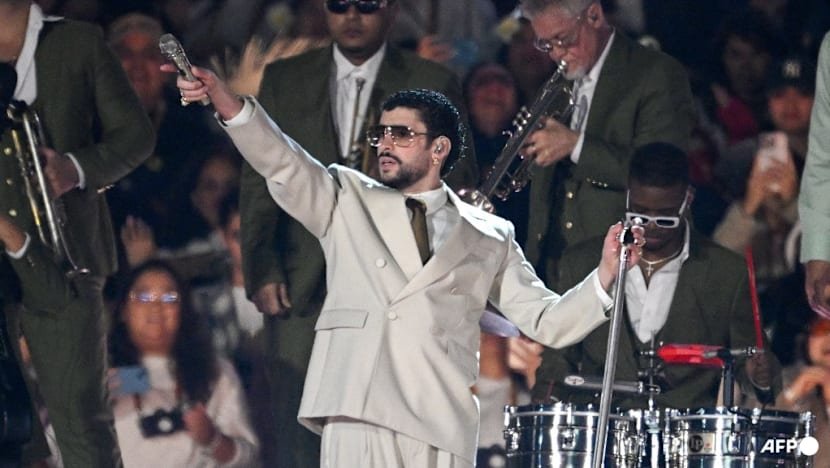
A decade ago, Bad Bunny earned a living bagging groceries, a humble start that stands in stark contrast to his current status as a global music icon. His chart-topping albums, record-breaking concert residency in Puerto Rico last year, and a trail of broken records mark just the start of his ascent. This Sunday, Benito Antonio Martinez Ocasio, known professionally as Bad Bunny, stands a chance to etch his name in Grammy history. Just one week later, he steps onto the Super Bowl halftime stage, captivating the world’s largest audience.
Grammy Nominations Break Barriers
Bad Bunny competes for six Grammy Awards, including the top honor of Album of the Year. His latest release, Debi Tirar Mas Fotos, marks only the second Spanish-language album nominated for this prestigious category—the first being his own Un Verano Sin Ti in 2022. Securing a win would set a groundbreaking precedent. Even the nominations themselves carry weight, as they represent the first instance where Spanish-language work receives nods for Album of the Year, Record of the Year, and Song of the Year simultaneously.
Petra Rivera-Rideau, an American studies professor at Wellesley College specializing in Latin music and racial politics, highlights the profound impact of these achievements. “The nominations are meaningful all the same,” she states, emphasizing their role in elevating Spanish-language music.
Political Resonance in a Tense Climate
Bad Bunny’s rise gains added significance amid ongoing immigration enforcement efforts targeting Latino communities. Rivera-Rideau, co-author of P FKN R: How Bad Bunny Became the Global Voice of Puerto Rican Resistance, notes the broader context. “We see ICE raids daily, with videos of individuals profiled for speaking Spanish, regardless of citizenship,” she explains. “This political moment amplifies the importance of Bad Bunny’s visibility.”
At 31, Bad Bunny hails from near San Juan, Puerto Rico, where he first sang in a church children’s choir before experimenting with beats on his computer as a young teen. His breakthrough came via viral tracks on SoundCloud, launching him to international stardom. Yet he stays connected to his roots, blending traditional Puerto Rican genres like salsa, bomba, and plena with reggaeton on Debi Tirar Mas Fotos.
A Voice for Representation
Jorell Melendez-Badillo, a University of Wisconsin-Madison historian who collaborated with Bad Bunny on visual elements for the album, describes the artist’s presence at major events as inherently political. As a U.S. citizen from Puerto Rico—a U.S. territory since 1898—Bad Bunny navigates complex colonial dynamics. His insistence on performing in Spanish challenges an industry that has often sidelined Latino voices, turning language into a symbol of cultural belonging and resistance against nationalist views on immigration.
While the Latin Grammy Awards have recognized Spanish- and Portuguese-language music since 2000, and the main Grammys feature specific Latin categories, these efforts have sometimes overlooked mainstream Latin genres like reggaeton and Latin trap, where Bad Bunny thrives. This year, Latin Recording Academy voters can participate in main Grammy decisions, potentially broadening representation. Rivera-Rideau points out that Bad Bunny’s latest album appeals across generations, making it more accessible to voters and boosting its prospects despite past oversights in hip-hop and Latin genres.
Super Bowl Milestone Ahead
Following the Grammys, Bad Bunny headlines the NFL’s Super Bowl halftime show, a platform that has sparked debate among conservatives over its progressive selection. As one of the world’s most-watched broadcasts, the event suits megastars like Bad Bunny, whose popularity spans the U.S.—home to one of the largest Spanish-speaking populations globally.
Melendez-Badillo underscores the NFL’s global ambitions, with games in Europe and Brazil. “Benito sells tickets and draws crowds,” he says. Rivera-Rideau adds that in this context, Bad Bunny’s participation holds immense cultural value, reinforcing his role in mainstream American events.
