

Visitors to Botapsa Temple in Chungbuk province encounter striking stupas adorned with vibrant tulips emerging from stone crevices. These blossoms symbolize rebirth and attract diverse admirers, including orchids, azaleas, and peonies, creating a garden-like ambiance around the sacred site.
A Towering Architectural Feat
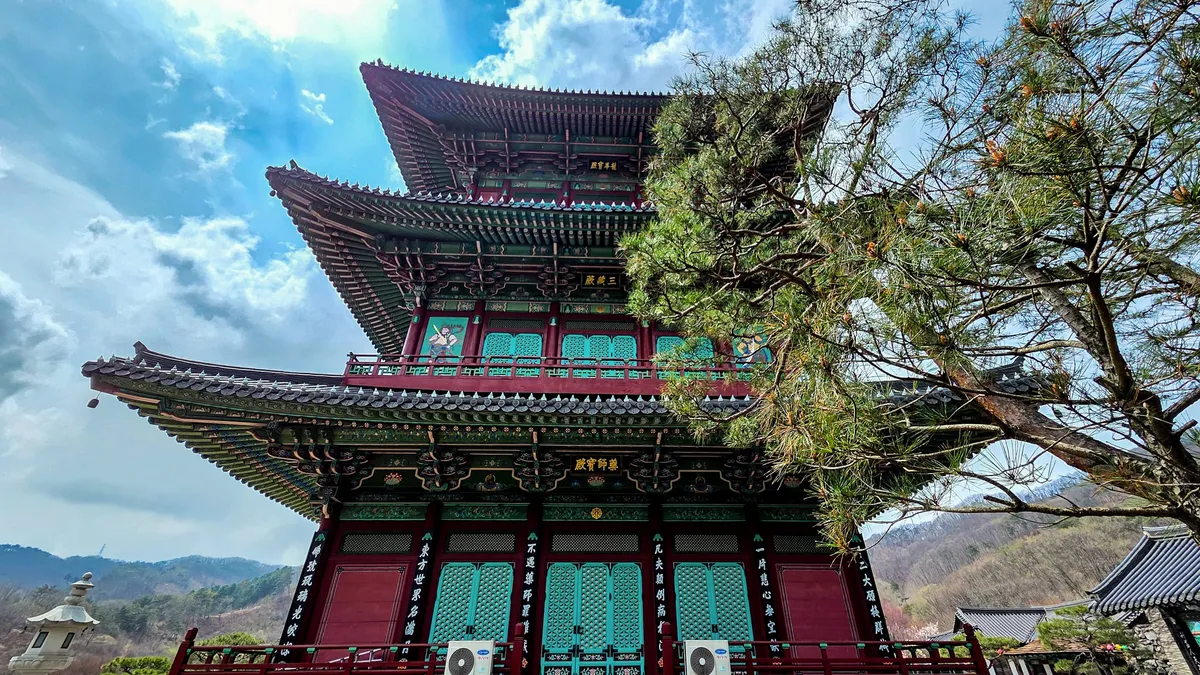
The temple’s central pagoda stands at an impressive height equivalent to a 14- to 15-story apartment building, despite being classified as just three stories. Its total height reaches 42.71 meters, extending to about 50 meters when including the upper base. This massive structure spirals upward with room-like enclosures up to the third level, a rarity among pagodas.
Experts note that no other ancient architecture of this scale survives solely through natural preservation without modern reinforcements. The pagoda connects to nearby temples like Beopjusa and Geumsansa, yet maintains its distinctive charm.
Highest Drum Pagoda in Korean Ancient Architecture
Established in 1996 on Yeonkkot peak within Boriyeonsan, Botapsa has endured 30 years despite Korea’s harsh climate. It earns acclaim as a cultural treasure, housing the tallest ancient pagoda drums alongside global visitors and monumental artworks that inspire awe.
Vietnamese chief monk Shim discovered the site in the 1980s on the rugged mountain ridge. The pagoda showcases ancient techniques: Shinyeonghun reliefs, Dopyeonsu sculptures, Hansokseong paintings, and master artisan Kim Yeong-il’s stonework. Monk Shim agreed to the pagoda’s placement “right where the stupa descended,” enabling construction of this accessible three-story marvel that replicates Huanglong Temple’s nine-story pagoda from 1300 years ago.
Though architecturally grand, Vietnamese monks attribute its creation to pure faith, or “wonryeok.”
Faith-Fueled Construction
Work began in 1993, with cultural heritage designation following in 1994. By June 1996, the temple completed despite challenges like 70cm-deep central pillars sourced from Nepal and Sri Lanka. The two-story upper sections feature statues from Gangwondo Mountain and cultural relics, evoking profound emotion even among 1,000-year-old famed figures.
Three decades later, external elements remain intact. The first floor employs interlocking stones for the Amitabha statue, while the second hosts a massive 80,000-character Beopbojeon and 9-ton wooden beams. The third level, a Mirukjeon, includes external galleries. The pagoda withstands Chungbuk’s snowy winters through careful ventilation and an inner public space (amcheong) displaying ancient Buddha statues and relics.
“Pine Trees Beckon Like a Garden”
Even without detailed explanations, the site’s allure captivates. Towering pines adorn every vista, from trails to ridges and mountain views. The pagoda’s western facade features soaring pine branches framing the rooftop, where visitors touch relics.
One temple teacher remarked, “During class retreats, students first glimpse this wonder, leading teachers and me straight to Botapsa.” Another noted, “Over 20 years, the pagoda’s pines have inspired fame as a ‘pine garden.'”
Pines Inspire Devotion
Panmae practices thrive here, unlike typical temple floral offerings. Devotees sense pines embedded in the walls. Placing incense and flowers before the first-floor front reveals varied expressions post-reflection.
Taeja Sarajin explained, “The chief monk cherished bonsai, dubbing it the ‘pine garden’ as visitors grasped the sentiment.” He added, “Why fear death when entering pine-framed gates evokes happiness for the departed?”
Pine offerings soothe the soul. National treasures like Hwanghwabo shine through refined branches, fostering awe and tranquility.
