

Seongnam City authorities plan to distribute 100,000 won in ‘energy basic funds’ to approximately 410,000 households across Modeun-gu, addressing energy price anxiety triggered by a surge in migrants.
Mayor’s Key Announcement
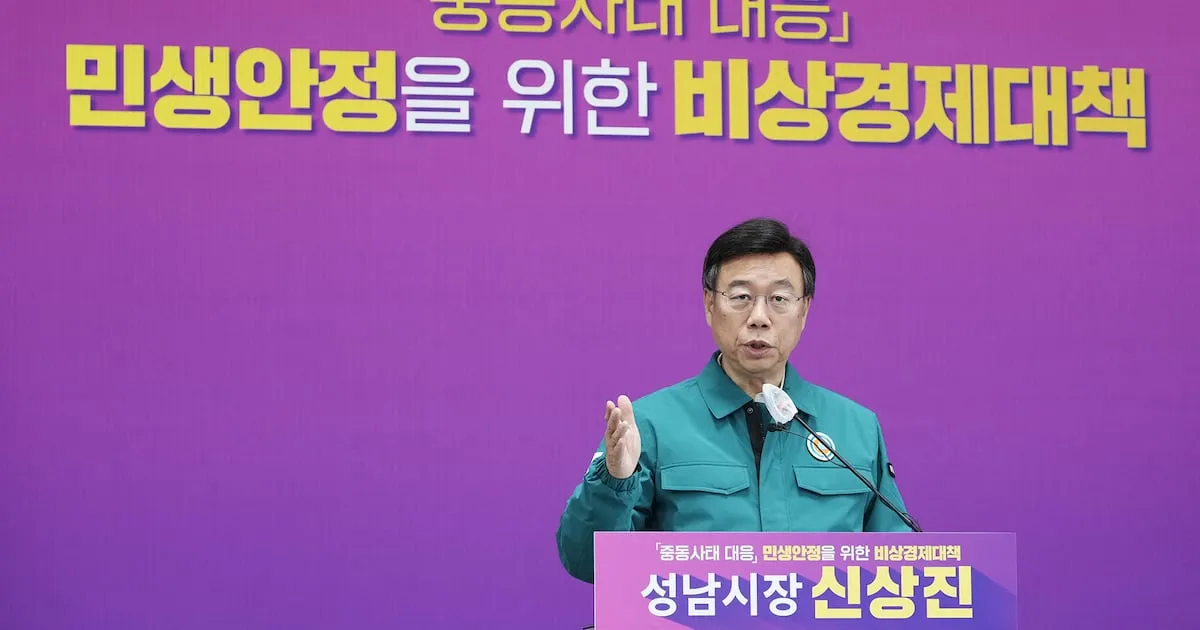
Mayor Shin Sang-jin unveiled the initiative during a morning press conference on April 6. He noted that the city submitted a proposal to the central government on March 31 but anticipates approval from the emergency support division regardless.
“Seongnam City has a strong case with the central administration,” Mayor Shin stated. “Even if the decision drags, the emergency support bureau will step in to amplify our efforts.”
Root Causes: Migrant Influx and Uncertainty
The primary concern stems from residential population instability. Migrants drawn by central housing state support have heightened energy consumption burdens, directly affecting local residents’ daily lives.
“The largest central state-supported autonomous district faces energy anxiety from group influxes, leading to immediate livelihood shocks for residents,” Mayor Shin explained. “This instability now severely impacts residents’ living standards.”
Evidence of Energy Price Pressures
In Gyeonggi Province, automotive diesel prices rose from 1,574 won per liter to 1,943 won, marking a 369-won increase overall. Officials adjusted risk assessments for foreign nationals, Cheonyeong gas, and similar high-risk energy sources.
Detailed Support Rollout
City officials aim to revise related regulations and target residents registered at major apartment complexes. Analysis of resident flows at three large complexes—where crowds gather after 6 p.m.—over roughly three months will guide distributions.
This totals a 41 billion won program for about 410,000 households.
Verification of actual occupancy and ownership data will inform preparations for subsequent waves.
Distinct from National Programs
Unlike the government-channeled ‘high oil damage support fund’ reaching 70% of citizens, this local initiative focuses on central distribution to affected groups.
Mayor Shin emphasized, “City council cooperation and responsibility exist; we trust their judgment.” He added, “This is not isolated aid but a proactive stance to safeguard residents’ livelihoods.”
