

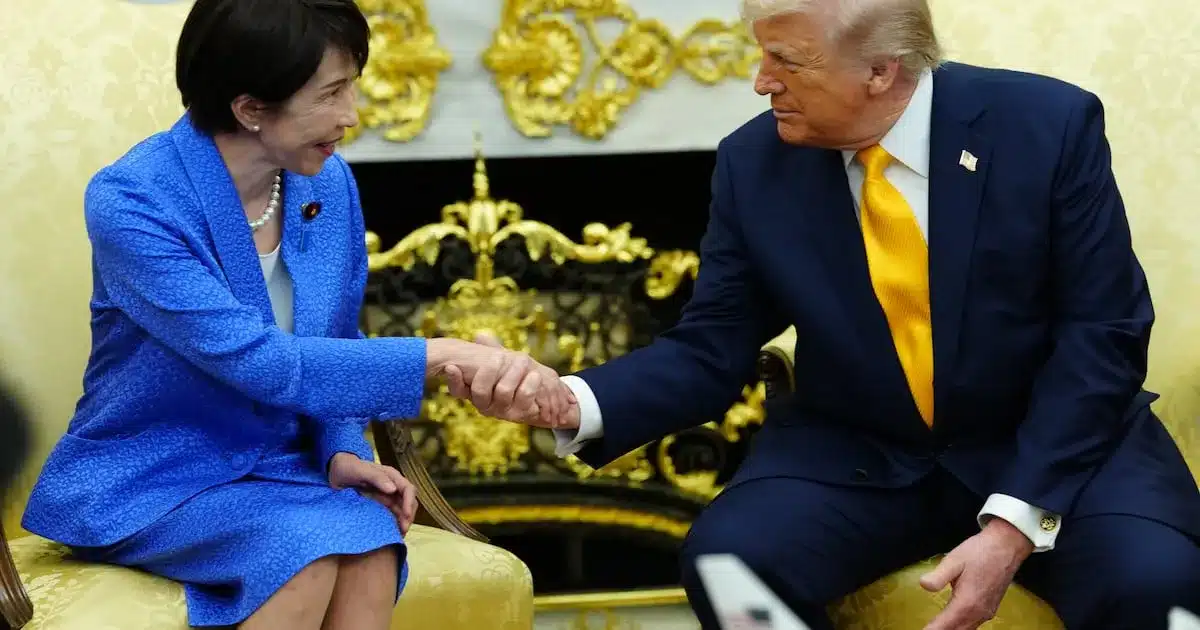
U.S. President Donald Trump met with Japanese politician Sanae Takaichi at the White House on March 19 local time to discuss securing the Strait of Hormuz amid rising tensions over Iran’s nuclear program.
Joint Focus on Iran Nuclear Threat and Strait Security
Takaichi, a prominent figure in Japan’s Liberal Democratic Party, urged a robust response to Iran’s nuclear advancements and disruptions in the Hormuz Strait. She highlighted these issues as major threats during the policy briefing.
Following the session, Takaichi clarified constitutional boundaries to Trump, distinguishing between feasible actions under Japan’s laws and those beyond reach. Officials view private-sector sanctions as essential from a peace and security guarantee perspective.
Japan seeks U.S. aid for heavy water and massive uranium imports, alongside advanced systems like small modular reactors (SMRs) and gas-fired power plants to bolster energy security.
Trump Emphasizes Japan’s Growing Role
Trump praised Japan’s proactive approach, stating it aligns closely with NATO and expects further contributions. He noted 45,000 U.S. troops stationed in Japan and over 90% domestic support for Hormuz cooperation efforts.
The president expressed satisfaction, saying Japan remains unique despite responses to Iran’s actions. He affirmed plans to engage NATO as well.
Meeting Details and Atmosphere
The hour-and-a-half discussion proceeded in a positive atmosphere. Takaichi raised the issue of Japanese abductees first, aiming to build rapport. Observers described the talks as productive, with Trump conveying optimism about outcomes.
Takaichi later remarked that personal sentiments toward the leader foster strong ties, reflecting Japan’s strategic interests.
Energy Security and Broader Ties
Japan prioritizes energy stability amid the Russia-Ukraine conflict, targeting U.S. SMRs and power plant tech. Officials confirm ongoing efforts, including mid-November elections in Congress where key Trump allies advocate similar positions.
The White House emphasized Japan’s firm condemnation of China’s human rights lapses, bolstering Han-Mi-Il trilateral cooperation.
