

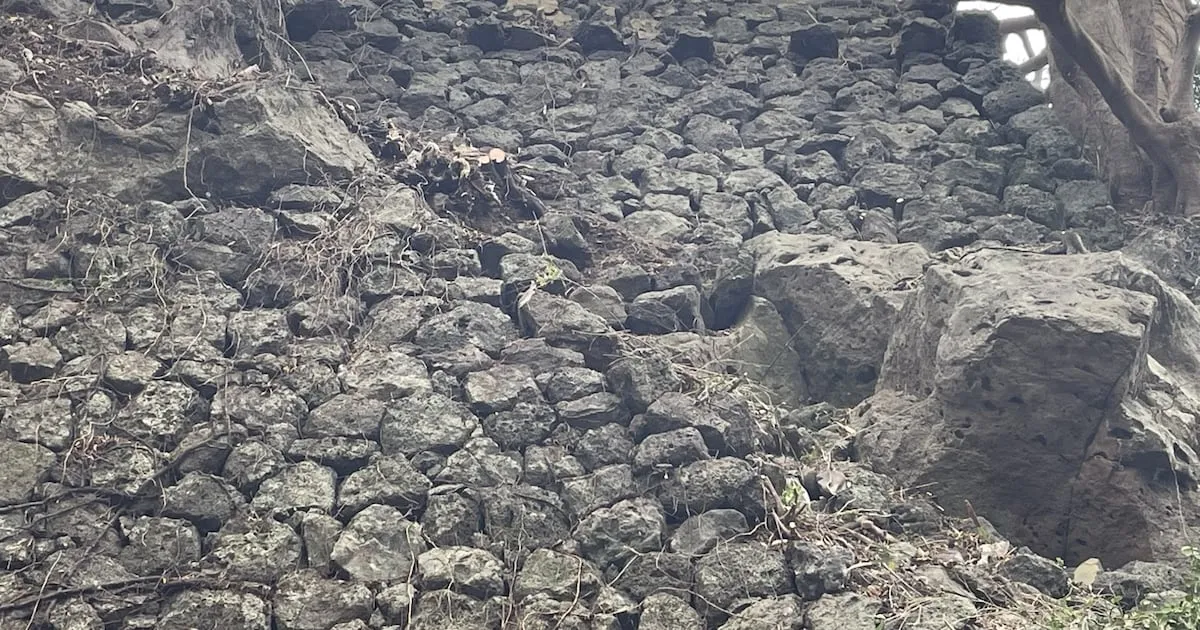
Archaeologists excavating at the Jeju Castle site in Jeju City have uncovered a well-preserved section of original Joseon Dynasty castle walls. The discovery, made during restoration work, reveals intact defensive structures buried beneath layers of soil and ash.
Key Details of the Find
The exposed stone wall stretches about 84 meters along the southern edge of the Namsugak precinct. Despite some moisture damage on the surface, the structure retains clear shapes, including prominent parapet stones known as ‘yeojang’ facilities. These defensive features, designed to protect against attacks, stand out for their remarkable preservation. Experts note this represents the first confirmed instance of original Joseon-era parapets remaining intact at the site.
Rich Historical Context
Jeju Castle dates back to 1411, the 11th year of King Taejong’s reign, with subsequent repairs and expansions over time. Earlier digs from 1925 to 1928 relocated wall stones to the Jeju Provincial Office, which had hindered accurate reconstructions of the fortress’s authentic layout.
Restoration Efforts Underway
The Jeju Cultural Heritage Conservation Agency oversees the stonework foundation restoration project, which exposed the walls. Plans include precise restoration of the parapet stones, followed by full excavation surveys, preservation strategies, and enhanced site management. The initiative also reconstructs bunkers, moat sections, safety fences, and related features to recreate an authentic heritage landscape.
Kim Hyung, director of the Jeju Cultural Heritage Conservation Agency, emphasized the significance: “This wall section offers vital clues for restoring Jeju Castle’s original design.” He further stated, “Academic studies and surveys will refine our understanding of the castle’s historical footprint, while bolstering public safety and cultural preservation.”
