

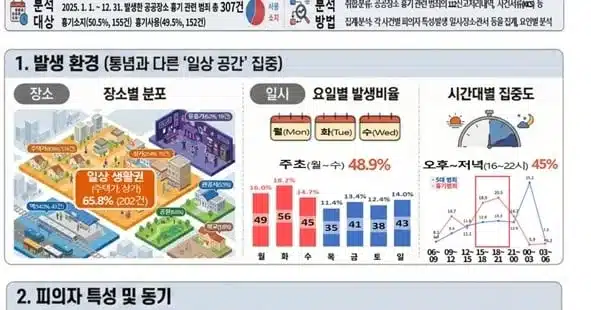
Impulsive violent crimes, including random knife attacks, surge in everyday public spaces near residential areas and shops across Seoul, rather than just weekend nightlife districts. Data analysis reveals these incidents peak during weekdays and target ordinary locations.
Police AI Analysis Uncovers Trends
Authorities analyzed 307 impulsive crimes at public facilities, leveraging AI and drone technology to predict hotspots and enhance patrols. Findings show residential zones account for 40.4% of cases, followed by commercial areas at 25.4%, totaling 65.8% in daily life facilities. Recreational spots, where crowds gather, represent 14.0%.
Timing and Locations
Crimes cluster on weekends and holidays, with 48.9% (150 cases) occurring then—1.85 times higher than weekdays. In low-income and informal districts, incidents spike after 4 p.m., peaking between 10 p.m. and midnight in 45% of cases (138 incidents).
Victim and Perpetrator Profiles
Victims average 49.7 years old, with 87.9% male. Over half (54.7%) of perpetrators are middle-aged or older, led by the 50s age group at 29.6%.
Half of victims (50.5%) were in mental distress or intoxicated. Perpetrators most often cite ‘no particular reason, just sudden impulse’ (46.7%), followed by life worries (20.4%) and anger (16.7%).
Expert Insights on 50s Surge
Economists and professors from major universities note that individuals in their 50s combine heavy drinking with youthful delusions, forming an ‘unstable third-rate generation’ detached from society’s core. ‘Economic pressures, family concerns, and social integration challenges demand urgent attention, as they fuel widespread impulsive violence,’ one expert stated.
Expanded Hotspot Patrols
The review identified 17 priority areas, including Yeongdeungpo, Guro, and Songpa, accounting for 27.4% of crimes. Patrol routes now prioritize high-risk zones like Haedang, incorporating civilian reports and 112 emergency data for proactive adjustments.
