

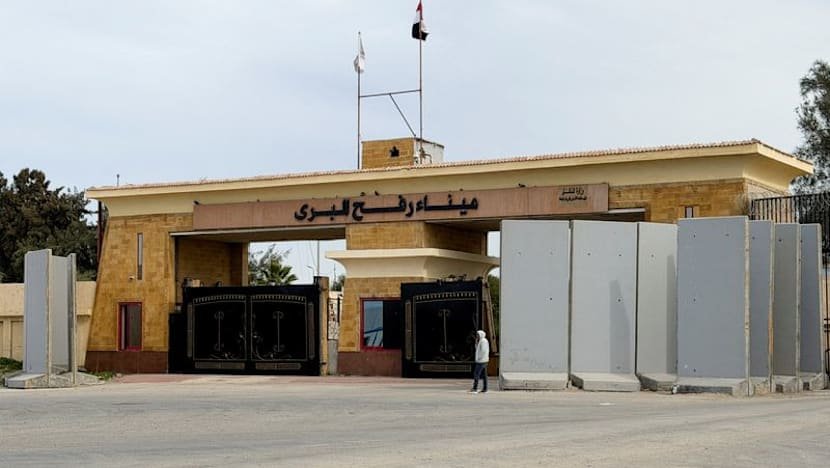
Partial Reopening Amid Ceasefire Tensions
Israeli authorities have partially reopened the Rafah crossing between Gaza and Egypt on Sunday, February 1, allowing limited movement of people after months of pressure from humanitarian groups. This step occurs as clashes persist in the Palestinian territory despite an ongoing ceasefire, with Gaza’s civil defense agency reporting dozens of deaths from Israeli strikes on Saturday. The Israeli military described these actions as responses to ceasefire breaches.
The Rafah crossing serves as a crucial route for civilians and aid deliveries into Gaza. It had been shut since Israeli forces took control in May 2024 during the conflict with Hamas, except for a short-lived partial reopening in early 2025.
Details of the Limited Access
The Israeli defense ministry’s coordination unit for Palestinian civilian affairs, known as COGAT, announced that the crossing opened Sunday for the restricted passage of residents only. Officials from Gaza’s health ministry, operating under Hamas, indicated that approximately 200 patients await approval to exit the territory now that the crossing is accessible.
Meanwhile, around 40 Palestinians linked to the Palestinian Authority have reached the Egyptian side of the border, prepared to enter Gaza and start their duties, according to a Palestinian official who spoke anonymously.
Prior to the reopening, Israel conditioned it on the recovery of the remains of Ran Gvili, the final Israeli hostage held in Gaza. His body was retrieved recently and buried in Israel on Wednesday, prompting COGAT’s announcement two days later. Entry and exit procedures will involve coordination with Egypt, Israeli security vetting of individuals, and oversight by the European Union mission.
COGAT characterized this as an initial pilot phase, worked out with the EU, involving preparations to enhance readiness for complete operations. Actual resident movements in both directions will start once these setups conclude. Sources at the crossing confirmed a broader reopening planned for Monday, though no consensus exists yet on the volume of entrants or exits. Egypt intends to welcome all Palestinians cleared by Israel.
Human Impact and Personal Stories
The partial reopening brings relief to many facing urgent needs. Mohammed Shamiya, a 33-year-old with kidney disease requiring overseas dialysis, expressed his desperation: “Every day that passes drains my life and worsens my condition. I’m waiting every moment for the opening of the Rafah land crossing.”
Safa al-Hawajri, an 18-year-old who secured a scholarship for studies abroad, shared her anticipation: “I’m waiting in the hope of fulfilling my ambition, which is tied to the reopening of the crossing. I hope to be able to travel as soon as it opens.”
Strategic and Governance Implications
Situated on Gaza’s southern edge with Egypt, Rafah stands as the sole entry point bypassing Israeli territory. It falls within a zone under Israeli control after troops pulled back to the “Yellow Line” as part of the U.S.-brokered ceasefire effective October 10. Israeli forces maintain oversight of over half of Gaza, while Hamas governs the remainder.
This development should enable the arrival of a 15-member technocratic Palestinian group, the National Committee for the Administration of Gaza (NCAG), tasked with managing daily affairs for the territory’s 2.2 million inhabitants. Formed under the ceasefire agreement, the NCAG operates under the supervision of the “Board of Peace,” led by U.S. President Donald Trump.
The committee, led by former Palestinian Authority deputy minister Ali Shaath, will not enter Gaza on Sunday, a committee member noted. “The head of the committee was informed that Israel had approved the entry of the members into Gaza but has not yet set a date,” he said. The group urges mediators and the U.S. administration to speed up crossing operations and expand traveler numbers.
