

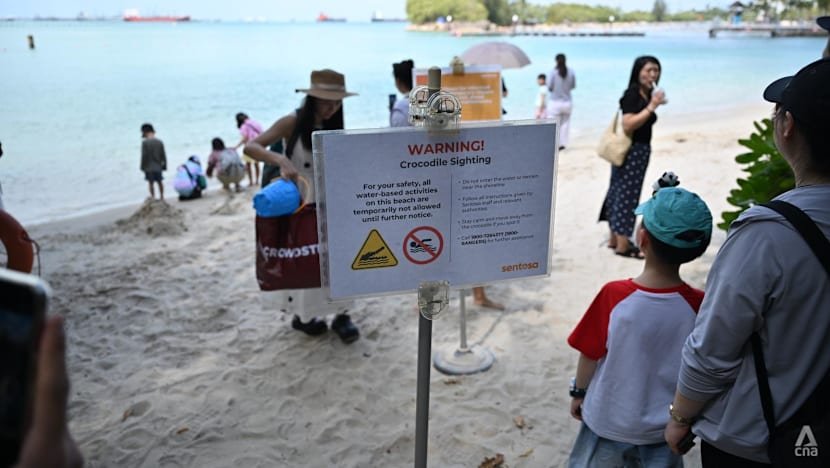
Crocodile Sighting Disrupts Sentosa Beach Fun
SINGAPORE: Visitors at Sentosa’s popular beaches expressed frustration and worry after authorities suspended water-based activities following a crocodile sighting near Sentosa Cove on Saturday, January 31. Swimming, kayaking, and other water pursuits remain off-limits at Siloso, Palawan, and Tanjong beaches until officials deem it safe.
The reptile appeared at 6:25 p.m. on Saturday, prompting immediate action to protect beachgoers. A local resident, Ms. Sasha Zhukova, who lives at The Oceanfront in Sentosa Cove, first noticed the unusual movement while on a neighbor’s balcony. She described zooming in with her phone camera and confirming it was a crocodile, mistaking it initially for boat debris. The 38-year-old mother of two, originally from Russia, found the encounter thrilling at first, noting that such wildlife is rare outside zoos in her home country.
However, the excitement quickly turned to caution. Ms. Zhukova stated she plans to avoid the water entirely for months and will steer clear of beach dips during boat outings. Her children attend a Sentosa school that incorporates beach activities, which she anticipates will be paused indefinitely.
Official Response and Safety Measures
The Sentosa Development Corporation (SDC) confirmed this marks the first such incident in the area’s waters. Joint search and monitoring efforts continue, with officials attributing occasional wildlife appearances to the island’s proximity to natural waterways. Beaches stay accessible for land-based relaxation, but water entry is prohibited as a precaution.
SDC has intensified patrols, installed warning signs, and coordinated surveillance. In a related advisory, the Singapore Land Authority urged the public to avoid water activities around St. John’s, Seringat, Lazarus, and Kusu islands until further notice.
Scenes from the Beaches
At Palawan Beach around 10:30 a.m. Sunday, crowds lounged on the sand or strolled the shoreline, adhering to visible signs prohibiting water contact. The HydroDash water park closed, though the suspension bridge remained open for pedestrians. Lifeguards actively enforced rules, using whistles and announcements to deter toe-dipping or water scooping.
The MetaSprint Series Aquathlon event at Palawan Beach faced postponement due to the alert. Participant Mr. Jirong, staying at Village Hotel, expressed mild disappointment but embraced a relaxed beach day instead. Many arrivals learned of the restrictions on-site, catching them off guard.
Ms. Juliana Irwani, celebrating a friend’s birthday with her group, felt a twinge of upset over the no-swim policy but emphasized the value of sun-soaked relaxation with loved ones. Similarly, Ms. Sabrina, vacationing with six family members ahead of the fasting month, regretted missing the swim but adapted to family dining plans.
Visitor Feedback on Enforcement
Compliance prevailed at Tanjong Beach, where families built sandcastles near the shore without entering deeper waters. The Tanjong Beach Club buzzed with activity despite limitations. One visitor, Ms. Sofia, overlooked the small signage spaced 80 to 100 meters apart and appreciated the reminder before planning any water entry.
Beatrice, 33, suggested signs could be closer together, believing gaps allowed cautious approaches. She praised the serious handling, vital with weekend crowds including children. Mr. Ting, 32, drew parallels to past jellyfish alerts, noting most visitors respected lifeguard interventions during his two-hour visit.
Siloso Beach saw thinner crowds by noon, with patrols swiftly redirecting waders. Chinese tourist Jing, who anticipated the beaches after online videos, redirected her family’s plans to island attractions like the MegaZip flying fox over Siloso. At ONE 15 Marina club, an Australian visitor downplayed concerns, accustomed to local wildlife, and questioned if it might be a escaped pet rather than a wild threat.
Safety Guidelines for Encounters
Authorities recommend staying calm and retreating slowly if spotting a crocodile. Avoid approaching, teasing, or feeding the animal, and follow all posted signs and directives. Report sightings immediately to the National Parks Board’s Animal Response Centre at 1800-476-1600.
