

Embarking on a Scenic Cycling Adventure
A 260-kilometer spring bike ride through Aichi Prefecture reveals centuries-old craftsmanship, welcoming coastal communities, and enduring rural customs. Known as Japan’s central heartland, this region embodies a lifestyle centered on meticulous artistry, echoing the dedication behind historic castles and samurai blades. In this exploration, cyclist Michael Rice, originally from Colorado and a long-time Japan resident, begins his three-day journey from Nagoya, traversing coasts, islands, and mountain routes to experience monozukuri—the art of creating with intention and care in modern times.
From Urban Nagoya to Coastal Paths
Nagoya, situated between Tokyo and Osaka with a population of 2.3 million, launches Michael’s ride. Beneath the iconic green-roofed Nagoya Castle, he shares, “When I first traveled around Japan, I visited castle after castle because I admire Japanese castles so much.” After nearly three decades cycling in Japan, his total mileage could encircle the globe seven times.
He pedals south along the Chita Peninsula from the bustling city streets, following a straight industrial route once vital for factory shipments. “This road serves as the course for the Ironman race,” he notes. “They hold a 90-kilometer time trial here, making it well-known among cyclists.” On weekends, the typically busy highway clears out, offering what he describes as “cyclist paradise—long, straight, and without traffic lights.”
Discovering Pottery Traditions in Tokoname
Leaving the industrial coastal area, Michael cycles 40 kilometers to Tokoname, a town defined by its towering chimneys. For over 900 years, Tokoname has thrived as a premier pottery hub, with kilns dotting the hills and more than 200 workshops along the roads. “Oh! Look at all this earthenware,” he exclaims, taking in displays of teapots and jars in various sizes. Ceramic cats with raised paws grace shop entrances to invite good fortune and customers, prompting his laughter: “Yeah, they have all these cats meant to draw in business.”
At a local museum, he delves into kyusu—compact side-handled teapots ideal for green tea, popularized two centuries ago and still famously produced here. Michael meets master potter Yohei Konishi, a 77-year-old whose family has crafted kyusu for three generations. In his workshop, Konishi welcomes him and pours tea from one of his creations. “I always serve tea using a pot I’ve made myself,” Konishi explains. “It’s a great joy to see people enjoying it.”
Michael savors the brew. “This tea is so good. And this cup—it feels different. Drinking from it changes the taste.” Konishi attributes the magic to the area’s iron-rich red clay, which transforms into iron oxide during firing, softening tea’s bitterness for a smoother flavor.
Demonstrating at his wheel, Konishi molds the clay effortlessly. “It’s as if I’m making friends with the clay,” he says. “If you irritate it, you won’t create a good pot. You must calmly pour your spirit and heart into it.” He maintains slightly long fingernails for intricate lines and holds his breath for precise grooves. “I have to hold my breath to get a clean line.” Each piece bears unique traits, which Konishi values. “After I sell them, it’s up to their owners how to treat my teapots. These have a kind of life. The clay’s fragility teaches respect and appreciation for the pot’s existence.”
Michael attempts to throw a cup, and Konishi advises, “Don’t try too hard. Ease it up slowly.” Upon completion, the master approves: “Not bad at all.”
Island Life and Sacred Catches on Shinojima
From Tokoname, Michael reaches Morozaki Port at the peninsula’s end and ferries across Mikawa Bay to Shinojima Island. “Beautiful coastline road,” he observes while gliding seaside. The brief 10-minute voyage arrives at a fishing village of about 1,600 residents, where the daily catch holds deep spiritual meaning.
At his seaside accommodation, fisherman Akira Amano serves dinner featuring fresh sea bream, a symbol of festivity. “Our island’s fishermen believe their sea bream surpasses all others,” Amano declares with pride. For over a millennium, this fish has been dedicated to the Ise Grand Shrine, dubbing Shinojima “the island of the gods’ fish.” Amano displays a flag bearing sacred symbols. “They sail under the flag of Ise Shrine,” he details. “This flag marked a messenger of the gods. Even the shogun would dismount and bow.”
Three times annually, local vessels deliver sea bream offerings to the shrine. Over the grilled fish, Amano muses, “Fish we catch ourselves, served to the highest of Japan’s Shinto gods—it’s a huge source of pride for us.” Michael concurs: “So on this island, sea bream is more than just a fish. It has great religious significance.” Amano replies, “Yes. It’s our most important fish.”
Farming and Fermentation on the Atsumi Peninsula
On Day Two, Michael heads north along the Atsumi Peninsula, a vital agricultural zone. The air carries the scent of na-no-hana, vibrant yellow rape blossoms dancing in the breeze. “Look at all these yellow flowers,” he remarks. “They’re tall too.” These fields, cultivated for oil, draw spring visitors.
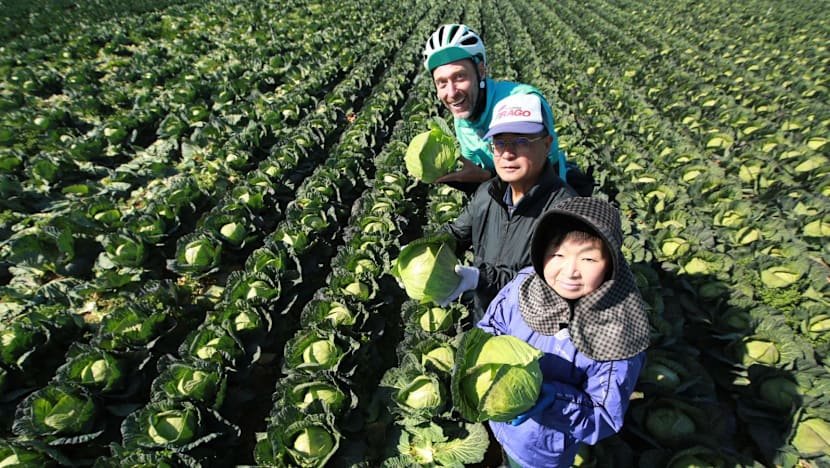
Passing cabbage rows, he encounters Atsuko and Hidetoshi Yamamoto, farmers with 30 years’ experience, and assists in harvesting. They offer a fresh one to eat raw. “Can you eat them just like this?” Michael asks. “Go ahead, take a bite,” Hidetoshi encourages. Biting in, Michael laughs: “What, just bite into it? It’s sweet! Yeah, you can eat it like an apple.”
In Toyohashi City at the peninsula’s base, a savory scent leads to Masako Kunimatsu’s workshop, where she produces hamanatto—fermented soybeans akin to miso. As she stirs trays, Kunimatsu describes, “For the first three or four days, we turn the beans every four or five hours. It’s like nursing a new baby. That loving attention ensures the koji mold spreads evenly.”
Michael helps with drying, separating beans by hand. “They’re really soft,” he comments, as a colleague suggests, “Talk to the beans as you work. Tell them to become more delicious.” Sampling ochazuke—rice with green tea and hamanatto—he praises: “The balance is perfect. The rice, then the saltiness and sweetness of the bean with the tea—it pairs so well.”
Mountain Climbs and Plum Blossoms
The final day ascends into Aichi’s eastern mountains. “The sugi forest, Japanese cedar—smells so good here,” Michael says, with clear rivers gleaming alongside the road. After challenging climbs and tight tunnels, he arrives at Kaore, a village brimming with 1,500 blooming plum trees. “Wow, the middle of the forest, all plum trees everywhere you look,” he breathes, inhaling their fragrance.
Under pink blossoms, he reflects on the trip: “I didn’t know there was this much nature. When you take the right roads, it’s an incredible mountain destination with clear rivers and beautiful forests. It really surpassed all my expectations.” From potters befriending clay to farmers coaxing beans, every encounter highlights heartfelt dedication. “They do it with love in their hearts,” Michael observes. In Aichi, true craftsmanship resides not just in skilled hands but in the humility, care, and quiet pride of its inhabitants.
