

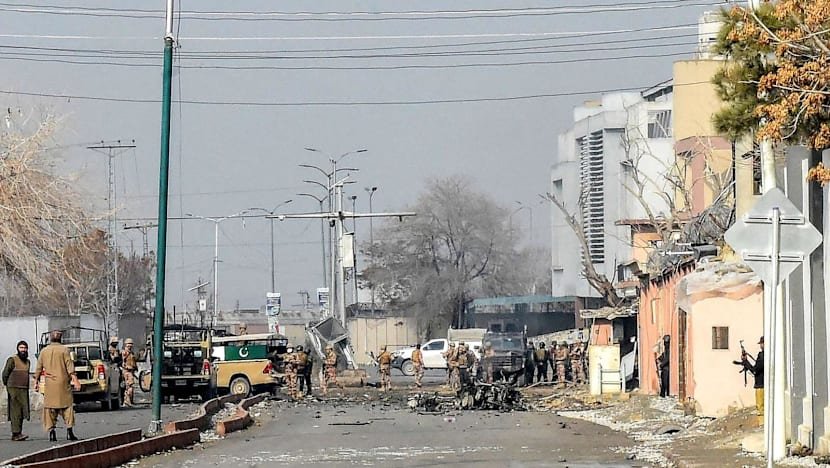
ISLAMABAD: Ethnic Baloch separatists launched coordinated attacks across Pakistan’s Balochistan province on Saturday, January 31, resulting in at least 10 security officials killed and 37 militants eliminated. This escalation marks the latest violence in the insurgency-plagued southwestern region.
Details of the Coordinated Assaults
Terrorists initiated simultaneous strikes at over 12 locations early that morning, according to a senior security official. “Thirty-seven terrorists have been eliminated,” the official stated. “Ten security personnel were martyred, while a few others sustained injuries.”
The assaults involved gunfire and suicide bombings, primarily targeting districts including Quetta, Pasni, Mastung, Nushki, and Gwadar. A senior military official described the operations as “coordinated but poorly executed,” noting that they “failed due to poor planning and rapid collapse under effective security response.”
Impact on Infrastructure and Daily Life
In response, authorities jammed mobile phone services and disrupted traffic in the affected areas. Train services across the province remain suspended to ensure safety.
The Baloch Liberation Army, the province’s most active separatist group, claimed responsibility for the attacks. The organization stated it targeted military installations, police stations, and civil administration offices through gun assaults and suicide bombings.
Broader Context of the Insurgency
Pakistan has faced a separatist insurgency in Balochistan for decades. Militants in the mineral-rich province, which borders Afghanistan and Iran, frequently attack state forces, foreign nationals, and workers from other regions.
These events follow military operations the previous day, where forces eliminated 41 insurgents in two separate actions. Balochistan remains Pakistan’s poorest province despite its vast untapped natural resources, trailing the nation in education, employment, and economic growth.
Separatists have ramped up assaults in recent years against non-local Pakistanis employed in the area and foreign energy companies accused of exploiting local wealth. Last year, such groups hijacked a train carrying 450 passengers, leading to a two-day siege that claimed dozens of lives.
