

[ad_1]
![[Column] A prospect extra worrying than a Korean Peninsula sans US](https://flexible.img.hani.co.kr/flexible/normal/800/579/imgdb/original/2025/1124/9817639721775758.webp "[Column] A prospect extra worrying than a Korean Peninsula sans US")
President Lee Jae Myung provides a briefing on the joint reality sheet South Korea launched with the US on tariff and safety agreements, held on the presidential workplace in Seoul on Nov. 14, 2025. (Yonhap)
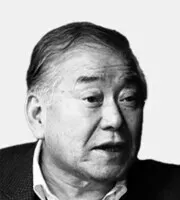
By Chung-in Moon, James Laney Distinguished Professor at Yonsei College
“The ROK-US alliance has developed right into a genuinely future-oriented complete strategic alliance that covers nationwide safety, the financial system and cutting-edge expertise. The door is vast open for a renaissance within the ROK-US alliance that will likely be useful for each nations,” Korean President Lee Jae Myung mentioned on Nov. 14.
Lee was sharing his stance on the actual fact sheet that Korea and the US had printed a few sequence of agreements reached in current months.
Regardless of criticism, it’s certainly plain that the Lee administration strove valiantly within the areas of tariffs, investments, nationwide safety, and nuclear power, particularly in contrast with the US’ negotiations with Japan and Saudi Arabia, to take two notable examples. That simply exhibits how powerful these negotiations have been to start with.
Watching these negotiations play out and wind down has impressed upon me the bitterness and anguish of being a small energy.
The negotiations have been the newest reminder of US President Donald Trump’s conviction that Korean safety and prosperity have been solely made potential by American munificence and that the time has come for Korea, as a rich nation, to pay the US again.
Trump has been criticized for leaving no room for equity or symbiosis in his “retroactive transactionalism” and for taking unilateral actions geared toward looting others beneath the pretext of being mutually useful.
Such tendencies have been evident within the self-deprecatory lament by Korean Commerce Minister Kim Jung-kwan, who performed a key position within the negotiations with the US. “There’s nothing honest in regards to the phrases [of this MOU]. Does it make sense to separate the proceeds 50-50 when the US isn’t paying a penny?”
In these proceedings, there isn’t a signal of the US because the world’s neutral and benevolent benefactor.
The difficulty right here is extreme dependence on the US for its safety. And that’s not restricted to Korea — Japan, Saudi Arabia and even the nations of Europe are liable to structural vulnerabilities deriving from the US’ safety umbrella.
For such causes, some in Korea have even begun discussing the once-taboo topic of “the Korean Peninsula with out the US.”
Is there any substance to such hypothesis?
The Korean Peninsula with out American involvement could be predicated on the annulment of the ROK-US alliance and the withdrawal of American troops at present stationed on the peninsula. That may additionally imply the US writing off the choice of exerting navy affect not solely on the peninsula itself however in East Asia extra broadly.
That may solely be potential if the US, stretched to its limits and bowing to MAGA calls for, have been to undertake an isolationist coverage of specializing in regional hegemony over the Western Hemisphere (that’s, the Americas) beneath the banner of an up to date Monroe Doctrine (typically known as the “Donroe Doctrine,” after Donald Trump). This state of affairs additionally presumes the US acknowledging the Korean Peninsula and East Asia being absorbed into the Chinese language sphere of affect.
One other manner for the ROK-US alliance to be repealed and US troops to be pulled out is that if South and North Korea have been to finish their hostile relationship, set up peace on the Korean Peninsula and declare a impartial coverage line.
However realistically talking, the probabilities of both of those situations turning into a actuality are distant. The US is unlikely to pivot to radical isolationism, simply because the Korean Peninsula is unlikely to see the institution of a peace regime to a level that may justify the withdrawal of US troops, at the least any time quickly.
Moreover, the US and China’s escalating strategic rivalry is prone to function a destructive issue.
Additionally it is potential to ascertain the US looking for to drastically cut back, if not fully withdraw, US Forces Korea (USFK) whereas turning into an “offshore balancer” and entrusting regional protection, together with the position of counterbalancing or containing China, to South Korea and different allies. On this state of affairs, Korea would play the main position in its personal protection whereas regional protection could be dealt with collectively by American allies within the space similar to Korea and Japan, with the US offering prolonged deterrence (together with the nuclear umbrella) in addition to supplemental navy help.
That’s the place advocated by mainstream “realist” political scientists within the US, together with John Mearsheimer. That state of affairs may additionally depart South Korea in an uneasy safety posture.
However the worst-case state of affairs is sustaining the uncertainty of the present establishment. If the US maintains its alliance with Korea and USFK whereas making extreme calls for by the use of compensation, Korea may discover itself in a safety dilemma much more troubling than the situations of the US turning into an offshore balancer or vacating the Korean Peninsula altogether. These dilemmas embody the appreciable threat of the US threatening to attract down or pull out troops except Korea makes “acceptable” protection contributions or entangling Korea in an undesirable regional battle.
The US insistence on “strategic flexibility” — which may imply arbitrarily relocating USFK troops or tools or redefining its position with out enough prior dialogue with the Korean authorities — is sure to be a critical legal responsibility. And if the US have been to slap Korea with heavy tariffs for failing to hold out its funding commitments, that might rock the ROK-US alliance to its very foundations.
Thus, we have to deal with the strategic uncertainty that may ensue from a Korean Peninsula with out the US.
What actions ought to we take?
First, we have to counteract uncertainty within the alliance by boosting our strategic autonomy and our impartial protection capabilities.
Second, we have to actively search a brand new regional order of multilateral safety cooperation that goes past collective protection agreements primarily based on our alliance with the US.
Third, we have to discover sensible methods to keep away from financial strain from the US by means of open regionalism and a multilateral commerce order.
Finally, the Korean authorities must play a number one position in ending hostility in South-North relations and in constructing a win-win, symbiotic regional order that transcends geopolitical alignment.
Please direct questions or feedback to [english@hani.co.kr]
[ad_2]
