

In May 1949, two major generals commanding separate battalions orchestrated the largest pre-Korean War defection, leading approximately 800 Korean National Guard troops across the 38th parallel into North Korea. This unprecedented event shocked military leaders and highlighted deep ideological divisions within the force.
The Defection Unfolds
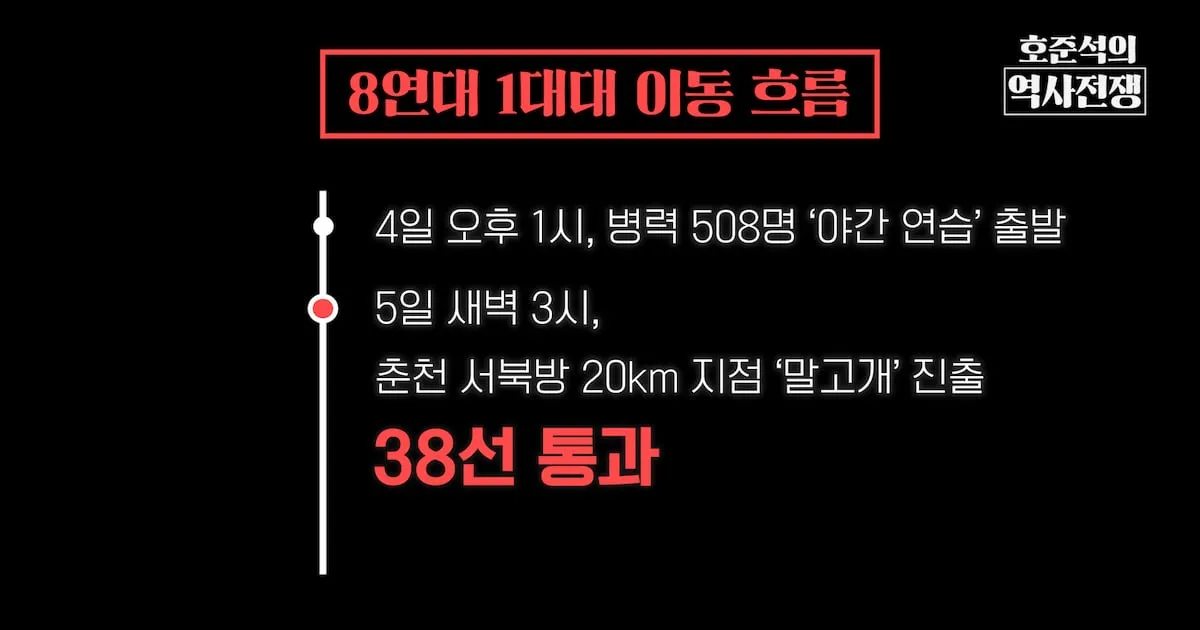
On May 4, 1949, around 1 p.m., Major Pyo Mu-won, commander of the 1st Brigade’s 8th Battalion, mobilized 508 troops under the pretext of ‘night training.’ He instructed subordinates to remain silent and cross the parallel undetected. The group advanced 38 kilometers north, reaching North Korean territory by May 5 at 3 a.m., with one company from Chuncheon traveling 20 kilometers to a designated rendezvous point.
North Korean forces promptly secured the defectors. Pyo Mu-won directed his men, ‘Do not resist becoming martyrs.’ Battalion commanders knew of the plan in advance. A senior operations officer later confirmed, ‘There were secrets kept from the major general. It was an enormous betrayal.’
The 2nd Brigade’s operations chief and unification division head, along with four company commanders and 291 soldiers, grabbed weapons including 228 M1 rifles, 44 carbines, 14 machine guns, four 68mm recoilless guns, and anti-tank guns. They fully armed themselves before defecting. Three additional commanders and 114 soldiers, already prepared, crossed with 1st Battalion commander Kim Kwan-sik, abandoning their positions.
Both the 8th Battalion’s 1st Company and the 2nd Battalion’s 2nd Company defected without incident, while stationed in Hongcheon. Gang Tae-mu, the 2nd Major General, amassed 38 kilometers worth of combat supplies on May 3-4 before executing the plan on May 5 at 1 a.m., heading to North Korean posts.
Military Pursuit and Clashes
The defectors reached the 12-kilometer-deep Odasean ridgeline, where North Korean guards detained 100 leaders from a 300-man heavy weapons unit. At 5 p.m. on May 5, near Jepyong, North Korean troops abducted villagers, prompting the group to cross the parallel 6 kilometers further. Gunfire erupted an hour later.
Gang Tae-mu ordered, ‘Since we’ve been discovered, burn documents, raise the white flag, and surrender.’ Key figures like 8th Battalion unification division head Kim In-sik’s 5th and 7th companies returned fire before defecting. The 5th Company retreated to prior positions, while the 7th crossed centrally.
Pursuing forces suffered losses: two commanders and 136 soldiers lost 81 M1 rifles, 46 carbines, two anti-tank guns, recoilless and rocket launchers. On May 9, a front-line report noted, ‘National Guard units defecting one after another. Even using cannon fire to scatter them on the 3rd, they remain pinned down. Many pretend to be Hongdo (Jeju) natives.’
North Korean sentries fired back from defector positions with machine guns and rifles, fully destroying bridges. Despite leadership from 6th Battalion Kim Paek-il and 8th Battalion Kim Hyong-il, border officials and military police failed to predict the state’s severity due to unexpected defection scale.
Leaders’ Backgrounds and Motivations
Pyo Mu-won, born in 1925, dropped out of Tokyo middle school, entered the military via Kim Jong-seok ties, a North Korean sympathizer linked to Choi Nam-gun and military academies. Gang Tae-mu, also 1925 Gyeongnam native, worked under Kim Gu’s chief before joining via Kim Gu’s aides, active in factory unions.
Both shared revolutionary zeal, untainted by South Korean entry. Kim Chang-ryong’s military corps leader directly recruited them amid ‘no superiors, fully equipped’ conditions. Despite risks, top ideologues viewed the state leniently. A year later, in May 1950, Kim Il-sung’s ‘complete investigation’ implicated the pair in non-criminal defections.
They faced trials but evaded severe punishment; Pyo and Gang received promotions, with three squad leaders repatriated post-armistice and name changes. Pyo Mu-won became a cadre leader, dying in 2006; Gang Tae-mu a prison chief until 2007, both active in Korean War narratives.
Aftermath and Legacy
Defectors received speeches in Pyongyang on May 7, attended by 1:30 p.m. citizen rallies. Soldiers repatriated July 12; Gang as 104th Chinese cadre survivor. By October 1951, 22 young men from Hyonjae defected similarly, led by Song Ho-seong, including Pyo and Gang among major generals.
Threats of prison education for subordinates fueled further defections, but Pyo and Gang’s act—second only to 14th Brigade’s 14-company repatriation—stirred public outrage. North promoted them despite suspicions, using the event to expose South’s vulnerabilities and ideological fractures pre-Korean War.
