


Snow falls at certainly one of Seoul’s publicly-owned hanok in Wonseo-dong, Jongno District, Seoul, on Monday. Hankook Ilbo
Snow fell on Bukchon Hanok Village in northern Seoul on Monday afternoon, however for these fortunate sufficient to be sitting on the heated flooring of a serene hanok, it felt like a calming step again in time.
As individuals stepped inside the house, a courtyard opened up, providing a placing open house. Whereas the wood ceiling exuded a basic hanok vibe, the inside was absolutely outfitted for snug residing, with options comparable to a contemporary kitchen, toilet and air-con, making it appropriate for up to date residing.
As Seoul opens up its first public hanok rental program, newlyweds, younger households and others with desires of residing in Korea’s conventional housing have flocked to take a look at the houses being supplied.
A complete of two,628 individuals visited the open home occasion for seven models positioned in Gahoe-dong, Gye-dong, Wonseo-dong, Pirun-dong and Bomun-dong between Jan. 7 and Jan. 10. On Jan. 9 alone, 1,373 individuals got here regardless of the chilly climate.
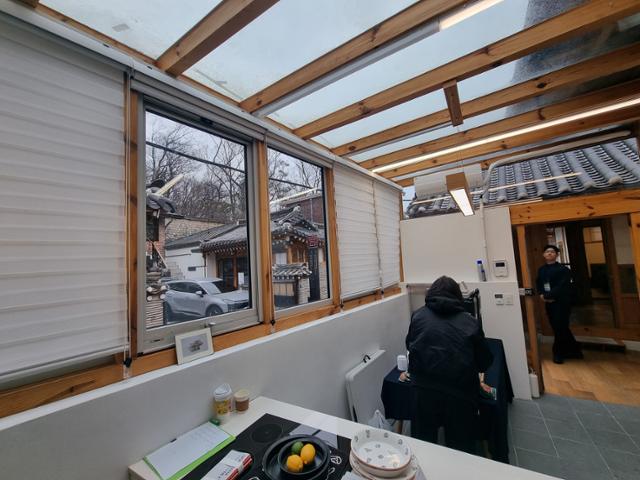
The inside of certainly one of Seoul’s publicly-owned hanok in Wonseo-dong / Hankook Ilbo
The Korean conventional houses are notably interesting to worldwide {couples}.
“Having a courtyard with a quiet environment in Seoul is a large benefit,” stated Sung, a person in his 30s married to an American girl. “My spouse’s eyes have been broad like saucers when she toured the home.”
Even individuals used to house residing confirmed curiosity. Lee, who lives in Gaepo-dong, famous the concord between the hanok’s charming conventional exterior and neat, trendy inside. Jeong, a resident of Dunchon-dong in her 30s, stated, “I got here as a result of my husband desires to reside in a indifferent home. I need to strive residing in a rental hanok at the least as soon as.”
Parking and heating prices stay issues for many individuals, and have been essentially the most steadily requested questions throughout an on-site briefing held Monday at a unit in Wonseo-dong, attended by about 70 individuals.
Seoul’s publicly owned hanok rental models don’t present particular person parking areas for residents, so they have to apply for resident-priority parking areas by means of the native district workplace. Seoul Housing and City Improvement Company (SH) defined that whereas parking is restricted as a result of nature of the housing, residents will obtain the second-highest precedence standing for parking permits.
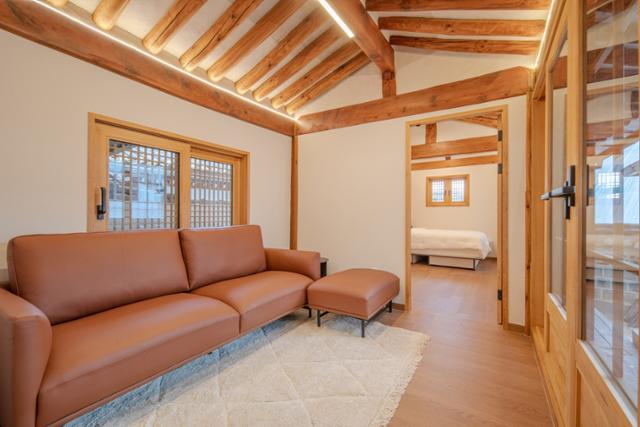
Seoul’s first publicly owned rental hanok in Gahoe-dong / Courtesy of Seoul Metropolitan Authorities
Electrical energy and fuel prices are one space of uncertainty as a result of these city-owned leases are unprecedented. There isn’t a separate upkeep price; residents pay just for the utilities they eat.
“It’s troublesome to estimate because it was beforehand empty, however prices will seemingly be greater than normal housing,” an SH official stated. “All heating methods are computerized, and home windows have been changed with double-glazed home windows like residences.”
Relating to upkeep, SH added, “Given the distinctive nature of hanok homes, SH will absolutely restore all services which have reached the top of their lifespan.”
Town held a collection of pre-opening occasions by means of Wednesday and is accepting functions Thursday and Friday. Candidates who go the doc overview might be notified on Jan. 22, and people chosen can transfer in beginning in April, after eligibility checks.
Month-to-month lease ranges from 230,000 gained ($156) to 540,000 gained, relying on the deposit. The deposit is comparatively excessive, starting from the mid-200 million gained vary to the high-500 million gained vary.
Seoul confirmed sturdy demand for hanok residing amongst newlyweds, and pledged to broaden the provision of conventional housing.
“Beginning in 2027, we are going to constantly provide about 10 models per designated space at the side of new hanok village creation tasks,” a metropolis official stated. “We’ll try to mirror the housing necessities and numerous life of newlyweds.”
This text from the Hankook Ilbo, the sister publication of The Korea Instances, is translated by a generative AI system and edited by The Korea Instances.
